 0
0
 0
0
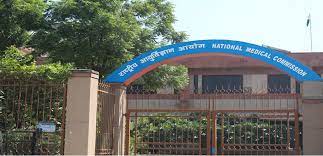
Earlier this year, the National Medical Commission (NMC) introduced the Medical Institutions (Qualifications of Faculty) Regulations, 2025, allowing senior consultants to be appointed as faculty in medical colleges. The NMC’s Postgraduate Medical Education Board (PGMEB) has now issued FAQs offering clarity regarding eligibility criteria to be recognized as senior consultants for faculty appointment in medical colleges.
Key Findings: Definition and Eligibility for Senior Consultant
A senior consultant is defined by the NMC as a consultant or specialist working in a broad specialty or super specialty department of a government institute that is accredited by the National Board of Examinations in Medical Sciences (NBEMS). Such an institute must run NBEMS-accredited postgraduate or superspeciality teaching programs. Candidates must fulfill the eligibility criteria prescribed by NBEMS regarding qualifications and experience to be recognized as senior consultants and postgraduate (PG) teachers of the relevant specialty. Additionally, the individual must be actively working as a PG teacher in that specialty at the accredited government institute.
Teaching Experience Prerequisite for Professorship
The NMC clarifies that senior consultants who meet these criteria and have completed a minimum of three years of postgraduate teaching experience in the relevant specialty become eligible for appointment as Professors in any NMC-recognized medical college or teaching institute. Applicants must provide an official experience certificate from the recognized government institution at the time of appointment to confirm their senior consultant status and teaching experience.
Context and Background
These regulations come amid efforts to relax rigid faculty eligibility norms and accelerate the expansion of medical education across India, especially in underserved regions. Previously, faculty appointments required strict service norms and limited consideration was given to experienced clinicians outside direct medical college teaching roles. This policy shift focuses on competency, teaching experience, and academic merit rather than solely service length. It unlocks opportunities for senior consultants in leading government medical institutions such as AIIMS, PGIMER Chandigarh, NIMHANS Bangalore, JIPMER Puducherry, and SCTIMST Trivandrum to transition into academic roles and enrich medical education.
Implications for Public Health
This regulatory update is poised to strengthen medical education capacity by enabling experienced clinicians engaged in postgraduate teaching at reputed government institutions to contribute as full-time faculty in medical colleges. This could enhance the quality of medical training, foster academic growth, and ultimately improve clinical care standards by integrating seasoned specialists into educational roles.
Expert Perspectives
Dr. Anil Kapoor, a senior medical educator not involved in the regulation drafting, comments, “Recognizing senior consultants working in NBEMS-accredited institutes as faculty is a logical and progressive step. It bridges gaps in faculty shortages and values real-world clinical and teaching expertise.” However, some experts urge caution regarding ensuring that all senior consultants appointed as faculty possess adequate pedagogical training.
Limitations and Considerations
The major limitation is that eligibility is restricted to senior consultants actively engaged as postgraduate teachers in NBEMS-accredited government institutes. Private practitioners or clinicians without formal postgraduate teaching roles do not qualify under this regulation. Furthermore, successful transition into academic roles requires credible experience documentation, and institutions must ensure the quality of teaching standards.
Practical Advice for Readers
For medical professionals aspiring to academic roles, this regulation highlights the importance of gaining NBEMS accreditation and postgraduate teaching experience within government institutions to qualify as senior consultants and eventually Professors. For health-conscious readers, these reforms potentially raise the educational and professional standards of future healthcare providers.
Medical Disclaimer: This article is for informational purposes only and should not be considered medical advice. Always consult with qualified healthcare professionals before making any health-related decisions or changes to your treatment plan. The information presented here is based on current research and expert opinions, which may evolve as new evidence emerges.
References
- https://www.ndtv.com/education/eligibility-criteria-and-experience-requirements-under-nmc-medical-faculty-regulations-2025-9543925
- https://medicaldialogues.in/health-news/nmc/who-will-be-considered-as-senior-consultant-nmc-clarifies-on-medical-faculty-regulations-157889