 0
0
 0
0
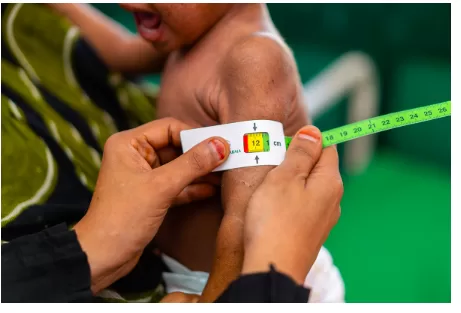
Islamabad, June 4, 2025 – The World Health Organization (WHO) and Pakistan’s Benazir Income Support Programme (BISP) have reaffirmed their commitment to addressing the country’s childhood malnutrition crisis by expanding their life-saving partnership. Currently, the collaboration provides annual treatment to 43,000 children under the age of two who are affected by severe acute malnutrition with medical complications at 169 nutrition stabilization centres (NSCs) nationwide.
The partnership, which operates under the Benazir Nashonuma programme, was highlighted during a high-level visit to the Federal Government Polyclinic in Islamabad, led by BISP Chairperson Senator Rubina Khalid and WHO Representative in Pakistan Dr. Dapeng Luo. Senator Khalid expressed gratitude to WHO for its support and emphasized that the goal is to reach even more vulnerable families across the country. “We want to strengthen and expand our efforts so that no mother or child is left behind,” she said.
Since 2022, WHO-supported centres funded by BISP have treated over 46,000 children and provided counselling to more than 64,000 mothers and caregivers. In 2025, WHO will support 199 centres—169 of them funded by BISP—to treat close to 80,000 children under five per year, with counselling for 120,000 mothers and caregivers. The programme boasts a remarkable cure rate of over 98%, significantly exceeding the international standard of 75%.
Dr. Dapeng Luo underscored the importance of early intervention and collaboration. “A 98% cure rate is an excellent result, but even a single child lost to malnutrition is already one too many,” he stated. He also highlighted the need to address emerging challenges such as climate change, which is worsening acute malnutrition in Pakistan.
The partnership involves a comprehensive referral system, with WHO, UNICEF, and the World Food Programme (WFP) working together to detect, treat, and prevent malnutrition. WHO provides technical guidance, human resources, and operational support, including infrastructure and therapeutic supplies, while promoting best practices and evidence-based counselling.
Pakistan remains among the top ten countries globally with high rates of stunting and wasting among children under five. Approximately 40%—or 10 million children—are stunted, and 17.7%—or 5 million—are wasted. The economic cost of inaction is estimated at US$17 billion annually, equivalent to 6.4% of the country’s Gross National Income.
Disclaimer:
This news article is based on information from the World Health Organization’s official website and related news releases. While every effort has been made to ensure accuracy, the details may be subject to change as the partnership evolves. For the most up-to-date information, please refer to the official WHO and BISP communications.