 0
0
 0
0
MÁLAGA, SPAIN / MALMÖ, SWEDEN – April 23, 2025 – While body mass index (BMI) has long been the standard for assessing obesity-related health risks, new research suggests that for men, simply measuring waist circumference (WC) may be a more accurate predictor of developing obesity-linked cancers. For women, however, both BMI and WC showed similar associations with cancer risk.
The extensive study, led by Dr. Ming Sun, Dr. Josef Fritz, and Dr. Tanja Stocks from Lund University in Malmö, Sweden, analyzed health data from nearly 340,000 individuals collected across various Swedish population cohorts between 1981 and 2019. The findings are scheduled for presentation at the European Congress on Obesity (ECO 2025) in Málaga, Spain (May 11–14) and have been published in The Journal of the National Cancer Institute.
Researchers tracked participants, with an average starting age of 51.4 years, for a median of 14 years, recording 18,185 cases of obesity-related cancers during that time. These cancers, defined by the International Agency for Research on Cancer (IARC), include types strongly linked to excess weight, such as oesophageal (adenocarcinoma), colon, liver, pancreatic, postmenopausal breast, endometrial, and kidney cancers, among others.
The study meticulously compared the predictive power of WC and BMI, adjusting for potential influencing factors like age, smoking, and socioeconomic status. Crucially, the researchers also accounted for the inherent variability in WC measurements and standardized the comparison by looking at risk increases per standard deviation (1-SD) – roughly equivalent to an 11 cm WC increase or a 3.7 kg/m² BMI increase for men, and a 12 cm WC increase or a 4.3 kg/m² BMI increase for women.
Significant Gender Difference Found
The results showed a marked difference between sexes. In men, a 1-SD increase in waist circumference (approx. 11 cm) was associated with a significant 25% higher risk of developing an obesity-related cancer. In contrast, a comparable 1-SD increase in BMI (approx. 3.7 kg/m²) was linked to a 19% increased risk. Furthermore, even after statistically adjusting for BMI, a larger waistline remained an independent risk factor for these cancers in men.
This suggests that abdominal fat (adiposity), which WC measures more directly than BMI, carries specific risks beyond just overall body size.
In women, the picture was different. Both a 1-SD increase in WC (approx. 12 cm) and a 1-SD increase in BMI (approx. 4.3 kg/m²) were associated with a similar, slightly lower risk increase of 13%.
Why the Difference? Location, Location, Location (of Fat)
The researchers propose that the difference lies in how men and women typically store fat. “BMI is a measure of body size, but does not provide information on fat distribution, whereas waist circumference is a proxy more closely related to abdominal adiposity,” the authors explained.
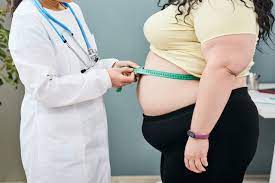
They elaborated, “Men are more likely to store fat viscerally [around abdominal organs], while women generally accumulate more subcutaneous and peripheral fat. Consequently, waist circumference is a more accurate measure of visceral fat in men than in women.” Visceral fat is known to be more metabolically active and linked to inflammation and insulin resistance, factors implicated in cancer development. This may explain why WC adds extra risk information beyond BMI in men, but less so in women.
The researchers also noted that higher central adiposity tends to lead to higher circulating insulin levels in men compared to women, potentially contributing to the stronger WC-cancer link in males. They suggest future research could incorporate hip circumference, especially for women, as the waist-to-hip ratio might provide a better estimate of visceral fat in females.
“Our study provides evidence that waist circumference is a stronger risk factor than BMI for obesity-related cancers in men, but not in women,” the authors concluded. They call for further research exploring these sex differences, potentially incorporating more precise body fat measurements, to better understand the complex relationship between adiposity, fat distribution, and cancer risk.
Disclaimer: This news article is based on findings from a specific research study presented at a scientific conference and published in a peer-reviewed journal. It is intended for informational purposes only and does not constitute medical advice. Individuals should consult with qualified healthcare professionals for any health concerns or before making any decisions related to their health or treatment.