 0
0
 0
0
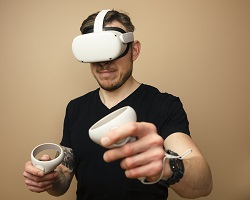
Buffalo, NY – A new study published in the journal Scientific Reports indicates that virtual reality (VR) headsets may offer significant pain relief for cancer patients. Researchers found that immersing patients in realistic underwater scenes through VR led to a notable decrease in reported pain, supported by real-time brain imaging.
The study involved 41 cancer patients who used VR headsets to explore virtual underwater environments. During the VR experience, researchers monitored brain activity using functional near-infrared spectroscopy (fNIRS), a headcap that tracked changes in blood flow related to neural activity. These results were compared to 13 healthy individuals and 93 cancer patients who wore the headcaps for 10 minutes without the VR experience.
“This study signals a new era in precision medicine where neuroimaging and digital therapeutics revolutionize pain assessment and treatment,” said lead researcher Somayeh Besharat Shafiei, an assistant professor of oncology at Roswell Park Comprehensive Cancer Center. “This combination therapy could reshape clinical pain management protocols, reduce reliance on opioids, and improve the quality of life for millions of cancer patients worldwide.”
The findings revealed that over 75% of cancer patients who used VR reported a reduction in pain, exceeding the clinically relevant threshold of 30%. Furthermore, the brain imaging demonstrated a measurable impact of VR on the communication of pain signals within the brain.
Researchers highlighted that managing cancer pain remains a significant challenge, with an estimated 60% to 80% of cancer pain being inadequately treated, and 40% of patients experiencing severe pain in late-stage illness. Distraction techniques, such as those provided by VR, offer a potential avenue for non-pharmacological pain management.
“Study findings highlight VR’s potential as a useful, non-invasive pain management tool, capable of inducing significant reductions in perceived pain severity among cancer patients,” the research team concluded.
The study suggests that VR could become a valuable tool in comprehensive cancer pain management, potentially reducing the need for opioid medications and improving patient quality of life.
Disclaimer: While the study findings are promising, it’s important to note that this was a small study, and further research is needed to validate these results on a larger scale. Virtual reality should not be considered a replacement for standard medical care and pain management protocols. Patients experiencing cancer pain should always consult with their healthcare providers to determine the most appropriate treatment plan. The information provided in this article is for informational purposes only and does not constitute medical advice.(
More information: Somayeh B. Shafiei et al, Pain classification using functional near infrared spectroscopy and assessment of virtual reality effects in cancer pain management, Scientific Reports (2025). DOI: 10.1038/s41598-025-93678-y