 0
0
 0
0
Recent US cuts to foreign aid for tuberculosis (TB) programs may lead to more than 2.2 million additional deaths across 26 high-burden countries by 2030, according to a major new modeling study published in PLOS Global Public Health. The findings have sparked alarm among global health experts, who warn that progress toward ending TB may be set back by decades if critical funding is not restored or replaced.
Urgent Findings: Aid Cuts and Projected Mortality
A research team led by Dr. Sandip Mandal of Avenir Health, along with partners at the Stop TB Partnership, highlighted that the United States contributed over 55% of all external TB program funding in 2024. In March 2025, an 83% cut to the US Agency for International Development (USAID) TB budget was enacted, setting the stage for what experts label a global health emergency.
The study modeled three scenarios: minimal, moderate, and severe disruption to TB services. In the worst-case scenario—where funding is not replaced—an estimated 10.7 million additional TB cases and 2.2 million deaths could occur across high-burden countries between 2025 and 2030. Countries analyzed include India, Pakistan, Bangladesh, South Africa, and several African nations, where dependence on US funds is significant. For example, India relies on US funding for about 15% of its national TB programs.
How TB Programs Are Disrupted
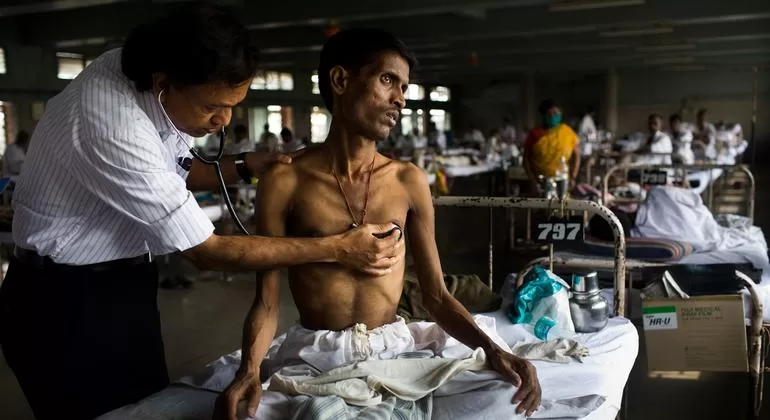
TB programs rely on sustained funding for essential services such as diagnosis, medication supply, health worker salaries, community outreach, and disease monitoring. Cutbacks have already led to:
-
Staff layoffs and suspended technical assistance in several countries
-
Disrupted drug and diagnostic supply chains
-
Delayed testing and reduced access to life-saving treatment
-
Halting of research trials for new TB drugs and vaccines
WHO warns that even short interruptions result in rapid increases in TB incidence and deaths, as witnessed during the COVID-19 pandemic when service interruptions led to over 700,000 excess TB deaths worldwide.
Expert Perspectives: Global Health at Risk
Dr. Tereza Kasaeva, Director of WHO’s Global TB Programme, stated, “Any disruption to TB services—whether financial, political, or operational—can have devastating and often fatal consequences for millions worldwide”. She emphasized that, without immediate action and resource mobilization, decades of global progress could be undone.
Dr. Suvanand Sahu, Deputy Director at the Stop TB Partnership and co-author of the study, noted, “We stand at a crossroads. Sustained financial support is not optional if the world hopes to reach End TB and Sustainable Development Goals targets”.
What This Means for Public Health
-
Vulnerable populations most at risk: People living with HIV, children, and those in low-resource settings are at greatest risk from TB service disruptions.
-
Potential reversal of progress: Over the past two decades, foreign-funded interventions have saved more than 79 million lives through prevention, testing, and treatment.
-
Global repercussions: Although the direct impact is most severe in high-burden countries, reduced TB control anywhere poses a threat everywhere. Drug-resistant forms of TB thrive when treatment is interrupted, increasing the risk of global spread.
Limitations and Dissenting Views
The study’s authors acknowledge certain limitations:
-
The assumption that funding cuts directly translate to proportional reductions in service delivery may overestimate or underestimate true effects.
-
The model primarily addresses short- and medium-term impacts, without fully accounting for countries potentially increasing domestic funding or finding alternative donors.
-
Some health economists argue that investment in health system integration or new financing mechanisms may blunt some negative effects in the long term, but short-term risks remain extremely high.
Practical Takeaways for Readers
-
For health professionals: Be alert to possible increases in undiagnosed and untreated TB, particularly in vulnerable communities.
-
For policy makers: Rapid efforts to find alternative funding or to increase domestic investment in TB services are urgently needed.
-
For the public: Maintaining awareness, reducing stigma, and supporting civil society efforts are essential as service cutbacks may reduce early detection and treatment access.
The Path Ahead: International and National Response
Global health leaders are calling for swift action to secure alternative funding, increase domestic investments, and strengthen TB surveillance and response. The WHO has reaffirmed its commitment to help affected countries safeguard progress toward ending TB. Experts urge policymakers worldwide not to lose sight of the interconnectedness of global health security, urging shared responsibility in funding and innovation.
Medical Disclaimer
This article is for informational purposes only and should not be considered medical advice. Always consult with qualified healthcare professionals before making any health-related decisions or changes to your treatment plan. The information presented here is based on current research and expert opinions, which may evolve as new evidence emerges.
References