 0
0
 0
0
The Apex Court rules that private practitioners who died on duty during the pandemic are entitled to government insurance, stating the nation cannot forget their sacrifice.
December 14, 2025
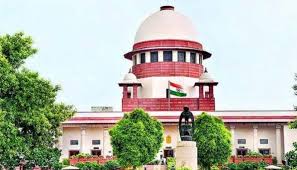
NEW DELHI — In a landmark verdict that acknowledges the immense sacrifices made by the medical fraternity, the Supreme Court of India has ruled that private doctors who lost their lives while treating patients during the COVID-19 pandemic are eligible for the ₹50 lakh insurance cover under the Pradhan Mantri Garib Kalyan Package (PMGKP).
Setting aside a previous Bombay High Court judgment, the bench comprising Justices P.S. Narasimha and R. Mahadevan asserted that technicalities regarding “formal requisition” cannot deny relief to the families of those who served on the frontlines.
“Our doctors and health professionals rose as unwavering heroes, turning challenges into courage,” the bench observed in its judgment delivered on Thursday. “The country has not forgotten the situation that prevailed at the onset of COVID-19, when every citizen contributed in some measure, despite fear of infection or imminent death.”
The Verdict: Broadening the Safety Net
The case centered on the interpretation of the PMGKP insurance scheme, which provides a personal accident cover of ₹50 lakh to healthcare providers. Insurance companies and lower courts had previously rejected claims from families of private practitioners, arguing that these doctors were not formally “requisitioned” (officially drafted) by the government for COVID-19 duties.
The Supreme Court rejected this narrow view. The bench noted that during the unprecedented crisis—which it compared to the 1918 influenza pandemic—the government had invoked the Epidemic Diseases Act of 1897 and other emergency regulations. These measures effectively mandated all medical professionals to serve, rendering the need for individual requisition letters moot.
“We have no hesitation in concluding that invocation of laws and regulations were intended to leave no stone unturned in requisitioning the doctors,” the Court stated. “The insurance scheme was equally intended to assure doctors and health professionals in the frontline that the country is with them.”
A Battle for Dignity
The ruling comes as a significant relief for hundreds of families who have been fighting legal battles for compensation. The specific case before the court involved the widow of Dr. Bhaskar Surgade, a private practitioner from Navi Mumbai who kept his clinic open during the lockdown to serve patients and subsequently succumbed to COVID-19 in June 2020.
Her claim was initially rejected on the grounds that her husband was not a government employee and had not received a specific order to treat COVID patients. The Supreme Court’s decision now clarifies that a “deemed requisition” existed due to the emergency notices issued by municipal authorities at the time.
The Toll on the Medical Fraternity
The judgment highlighted the severe toll the pandemic took on India’s healthcare workforce. The Court cited data from the Indian Medical Association (IMA) COVID-19 registry to underscore the gravity of the situation:
-
748 doctors lost their lives during the first wave.
-
Over 798 doctors died during the devastating second wave alone.
“The courage and sacrifice of our doctors remain indelible,” the bench remarked, noting that the pandemic exposed “acute systemic fragility” in the global healthcare sector.
Implications for Families
While the judgment is a major victory for healthcare rights, the Court clarified that eligibility is not automatic. Families must still provide evidence to support their claims.
-
Evidence Required: Claimants must prove that the deceased doctor was actively performing professional duties and that the death was caused by COVID-19.
-
Onus of Proof: The responsibility lies with the family to demonstrate the link between the doctor’s service and their demise.
-
Case-by-Case Basis: Insurance companies will now have to assess these claims based on the Court’s broader interpretation of “requisition,” rather than dismissing them on technical grounds.
Expert Perspectives
Legal and medical experts have welcomed the decision as a necessary step in validating the role of the private sector in public health crises.
“This judgment bridges a painful gap between public service and private practice that existed during the pandemic,” says Dr. A.K. Sharma, a senior public health policy analyst. “The virus did not discriminate between a government hospital and a private clinic. This ruling acknowledges that the risk—and the service—was the same.”
The Court’s strong language also serves as a reminder of the state’s moral obligation. During the hearings, Justice Narasimha had poignantly remarked, “Society will not forgive us if we don’t take care of our doctors,” emphasizing that the state’s assurance to frontline workers must be honored.
The Pradhan Mantri Garib Kalyan Package (PMGKP)
Launched in March 2020, the PMGKP was designed as a safety net for community health workers and private health workers drafted for COVID-19 related responsibilities.
-
Coverage: ₹50 Lakh per health worker.
-
Scope: Covers loss of life due to COVID-19 and accidental death on account of COVID-related duty.
-
Beneficiaries: Originally estimated to cover 22.12 lakh public healthcare providers, the interpretation now explicitly includes private practitioners who served during the crisis.
Looking Ahead
As the world moves past the acute phase of the pandemic, this judgment ensures that the “unwavering heroes” who did not survive are treated with the dignity they deserve. It sets a legal precedent that in times of national health emergencies, the definition of a public servant expands to include anyone who risks their life for the greater good.
Medical Disclaimer:
This article is for informational purposes only and should not be considered medical advice. Always consult with qualified healthcare professionals before making any health-related decisions or changes to your treatment plan. The information presented here is based on current research and expert opinions, which may evolve as new evidence emerges.
References
-
Supreme Court Judgment: Pradeep Arora & Ors. v. Director, Health Department & Ors. (Civil Appeal arising from SLP). Judgment delivered December 11, 2025.
-
News Report: “Doctors rose as unwavering heroes during COVID-19 pandemic: Supreme Court,” Medical Dialogues, December 13, 2025.