 0
0
 0
0
Read Time:6 Minute, 28 Second
Blood glucose monitors are devices that measure blood glucose levels electronically. They are indicated for individuals with diabetes mellitus type 1 or 2.
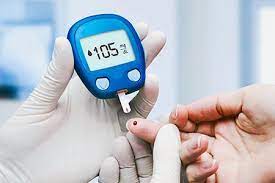
Traditional blood glucose monitors utilize a small drop of blood from the fingertip, placed on a disposable test strip. A digital meter obtains information from the blood on the strip, and within seconds the glucose level is displayed on a screen. Other models use interstitial fluids to measure blood glucose. Patient discomfort and inconvenience are minimal, and compliance with testing regimens is therefore high.
Continuous glucose monitors
A continuous glucose monitor (CGM) assesses blood glucose levels on a near-continuous basis. A typical system consists of a glucose sensor placed subcutaneously, a non-implanted transmitter, and a receiver worn like a pager, which records blood glucose levels at frequent intervals and monitors trends. Devices can have apps that can be linked to insulin pumps for real-time adjustments and may use a sensor that does not penetrate the skin.
CGM systems monitor interstitial fluid glucose levels and must be calibrated with traditional fingerstick tests.
Continuous monitoring provides documentation of blood glucose response to insulin dosing, eating, exercise, and additional influences. Overnight monitoring may identify problems with insulin dosing and allow adjustments of basal levels. Many units are equipped with alarms to warn patients of hyperglycemia or hypoglycemia and provide time for treatment.
CGM accuracy has increased significantly since the end of the 20th century. Indeed, most CGMs can now measure glucose values every 1-5 minutes, and there have been improvements in the precision of CGM data (with lowering of “the random noise component overlapped to the true glycemic signal”). CGM use has, in fact, seen a significant rise since 2010 due to advances in sensor size, accuracy, features, algorithms, and connectability with insulin pumps and “smart” insulin pens. (Launched in 2020, the first smart insulin pen with CGM integration, Medtronic Diabetes’ InPen with Real-Time Guardian Connect CGM Data, allowed glucose readings and insulin dose information to be viewed in the same app.)
A study by Lacy et al determined that in the United States, between 2010 and 2013, 20.12% of commercially insured children and adults with diabetes mellitus type 1 used CGMs, while between 2016 and 2019, this figure had reached 49.78%, a 2.5-fold increase.
Studies have demonstrated that patients using CGMs experience fewer hyperglycemic episodes and may decrease their glycated hemoglobin (hemoglobin A1C [HbA1C]) levels.
One concern, however, is proper calibration as well as availability of control solutions at pharmacies and appropriate use by patients during calibration. Lack of adherence to prescribed methodologies of use may lead to erroneous data and thus possible mistreatment of diabetes by patients.
Although the use of CGMs has been aimed primarily at persons with type 1 diabetes, the devices have come to increasingly be employed in type 2 diabetes. For example, the CGM device sugarBEAT (Nemaura Medical; Loughborough, UK) was developed specifically for individuals with diabetes mellitus type 2, being produced for patients who are not at high risk for hypoglycemia; it can also be utilized in persons with prediabetes. The sugarBEAT CGM uses an adhesive patch and sensor, drawing glucose molecules from the interstitial fluid just beneath the skin’s surface for measurement. A Bluetooth connection is employed to transmit data every 5 minutes to a smartphone app. The device is worn for 14 hours at a time during the day and for just 2-4 days monthly. Although sugarBEAT is noninvasive, a once-daily fingerstick is still needed for calibration.
In May 2019, sugarBEAT received a Conformité Européenne (CE) Mark in Europe for use as a class IIb medical device. Although still awaiting FDA approval in the United States, permission has in the meantime been granted for this CGM to be marketed as a “wellness” device, with sugarBEAT in this capacity producing retroactive reports for the physician and patient rather than real-time values.
In March 2024, the FDA approved the first over-the-counter CGM, the Dexcom Stelo Glucose Biosensor System, for persons aged 18 years or older who are not taking insulin. It can be used, for example, in people whose diabetes is being treated
device was not designed for persons with problematic hypoglycemia.
Design Features
As previously stated, traditional blood glucose monitors utilize only a small drop of blood from the fingertip, placed on a disposable test strip. There is a recurring cost to using blood glucose monitors and disposable strips or sensors, but it is outweighed by the costs related to complications of diabetes.
Alternate-site testing uses the same monitor and strips but acquires blood from the palm or forearm. Thus, it causes virtually no pain and allows patients to rest sore fingertips. The disadvantage of alternate-site testing is that decreased blood flow may be encountered and can affect testing accuracy.
Multitest systems are available that utilize a cartridge or a disk with multiple test strips. These systems may be more convenient for patients.
Newer systems utilize a sensor that can be applied to the arm or abdomen and determine glucose levels from interstitial fluids. These do not require any blood. The transmit their data to the app on a patient’s phone for interpretation.
Many monitors allow patients to download results to a computer so that they can be shared with their health care provider; this has the potential to improve diabetes management.
iBGStar (Sanofi) was the first blood glucose monitor to connect directly to iPhone and iPod Touch. It uses the iBGStar Diabetes Manager application for recording, tracking, managing, and sharing blood glucose data. Research has shown good interassay and high intra-assay precision using the device.
Continuous blood glucose monitors
As previously stated, a typical CGM system consists of a glucose sensor placed subcutaneously, a nonimplanted transmitter, and a receiver worn like a pager, which records blood glucose levels at frequent intervals and monitors trends.
Future development and technological advancements aim to allow for improved sensors and calibration software, creating systems designed to entirely automate insulin delivery (the “fully closed-loop” artificial pancreas).
In 2023, researchers from the University of Cambridge reported on the successful trial of a fully closed-loop artificial pancreas for patients with type 2 diabetes. The device used an off-the-shelf glucose monitor and insulin pump, which were combined with an app, CamAPS HX, designed by the investigators to predict insulin requirements. In this way, the artificial pancreas functioned independently, without needing input from the patient. Employing a glucose target range of 3.9-10.0 mmol/L, the trial demonstrated that patients using the closed-loop device remained in the target range 66.3% of the time, compared with 32.3% of the time for patients on standard therapy.
Clinical Implementation
Blood glucose monitoring allows patients to understand patterns of blood glucose changes and to adjust diet, exercise, and medication dosing. The significance of the optimal frequency of monitoring has yet to be clearly elucidated in patients with diabetes mellitus type 2, but experts suggest better control results in better outcomes. The clinical use of monitors has resulted in fewer costly emergency room visits and hospitalizations for hypoglycemia and reduced rates of complications.
Follow-up/Monitoring
Health care providers should follow standard protocols for monitoring blood glucose levels. Information gathered from blood glucose monitors and glycated hemoglobin (HbA1C) levels may help to guide management of patients with diabetes. Monitoring of patients with newly diagnosed diabetes may also help patients achieve a better understanding of their disease.
Complications
Complications of using blood glucose monitors include pain and soreness caused by the testing prick. Use of sensors on the skin may result in some sensitivities to the adhesive and so may require that the location of the sensor be rotated.


Happy
0 %

Sad
0 %

Excited
0 %

Sleepy
0 %

Angry
0 %

Surprise
0 %