 0
0
 0
0
A new study published in Nature Medicine projects that as many as 15.6 million people born between 2008 and 2017 worldwide are likely to develop gastric cancer during their lifetimes. The research highlights that up to 76% of these cases may be linked to infection with Helicobacter pylori (H. pylori), a common bacterium found in the stomach.
Researchers, led by Jin Young Park, analyzed data from 185 countries and combined it with United Nations demographic projections. Their findings indicate that 11.9 million of the projected gastric cancer cases are attributable to H. pylori infection. The burden is expected to be especially high in Asia, with 10.6 million cases projected in the region, including 6.5 million in India and China alone.
The study underscores the urgency of preventive strategies, particularly population-wide H. pylori screening and treatment programs, which could potentially reduce the expected number of gastric cancer cases by up to 75%. Without intervention, rising incidence rates among younger generations, along with aging and growing populations, threaten to reverse recent progress in reducing gastric cancer mortality.
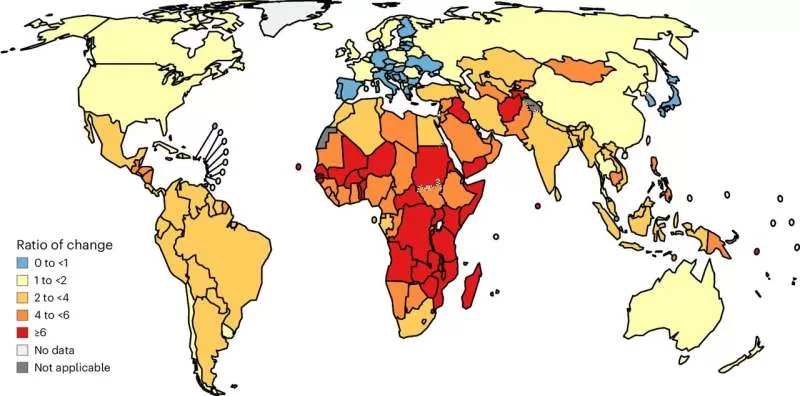
While sub-Saharan Africa currently has a relatively low incidence of gastric cancer, the study warns that its future burden could be at least six times higher than current estimates suggest. The authors emphasize the need for greater investment in prevention and surveillance, especially in regions with incomplete cancer registry dat.
“Gastric cancer ranks as the fifth-leading cause of cancer-related deaths worldwide, driven mainly by chronic infection with H. pylori, a cause that can be prevented through effective treatment,” the study notes.
:
This article summarizes findings from a scientific study and is intended for informational purposes only. The projections and recommendations discussed are based on statistical models and available data, which may have limitations, especially in regions with incomplete health records. Individuals should consult healthcare professionals for personal medical advice or concerns related to H. pylori and gastric cancer.