 0
0
 0
0
January 16, 2026
For many women navigating the physiological shifts of midlife, the bathroom scale can become a source of frustration. Hormonal fluctuations often trigger a stubborn redistribution of weight toward the midsection, increasing the risk for type 2 diabetes and cardiovascular disease. However, a new study offers a promising, “math-free” alternative to traditional calorie counting.
Research conducted at The Chinese University of Hong Kong (CUHK) suggests that combining Time-Restricted Eating (TRE) with moderate aerobic exercise can significantly reduce body fat and improve insulin sensitivity in middle-aged women. The findings, published recently in Nature Communications, highlight a flexible approach to metabolic health that prioritizes when you eat over exactly how much you eat.
The Power of the Eight-Hour Window
The randomized controlled trial, led by Professor Stephen Heung-sang Wong, enrolled 104 women aged 40 to 60. Participants were divided into four groups: a control group maintaining usual habits, a TRE-only group, an exercise-only group, and a combined “TRE plus exercise” group.
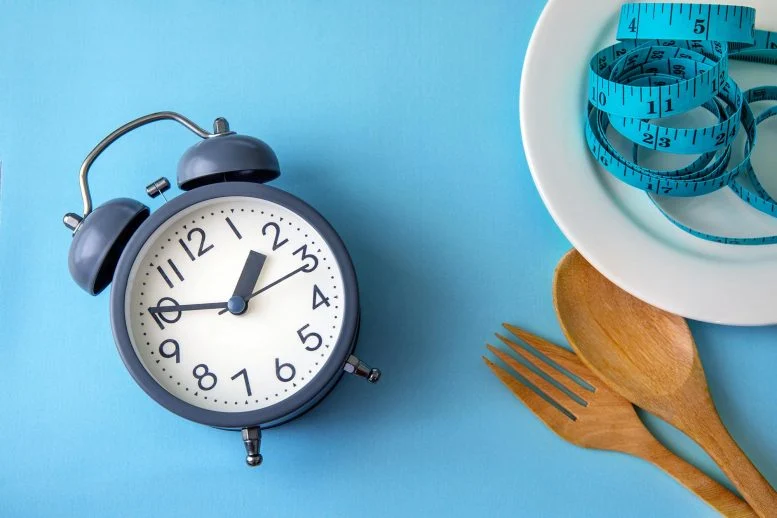
Unlike rigid diet plans, the TRE protocol was designed for real-world sustainability. Participants were required to consume all their daily calories within an eight-hour window (e.g., 10:00 AM to 6:00 PM). Crucially, the women were allowed to shift this window daily to accommodate social or work schedules, provided the eating occurred between 8:00 AM and 8:00 PM.
“To better simulate real-world conditions, they were allowed to adjust their eating window daily,” noted Prof. Wong. This flexibility likely contributed to the high adherence rates—between 83% and 87%—observed throughout the 12-week program.
Synergistic Success: Fat Loss and Smaller Waistlines
The most striking results emerged from the group that combined the eight-hour eating window with three weekly sessions of moderate aerobic exercise (40 minutes of brisk walking or jogging).
By the end of the study, the combined-approach group saw:
-
Average Fat Loss: 6.3 pounds (2.85 kg) more than the control group.
-
Waistline Reduction: An average loss of 3.0 inches (7.5 cm).
-
Improved Body Composition: Even when total weight loss did not reach the typical 5% clinical benchmark, the reduction in fat mass was significant.
“This is a critical distinction,” says Dr. Elena Rossi, an endocrinologist not involved in the study. “In midlife, we are less concerned with the number on the scale and more concerned with where that mass is coming from. Reducing visceral fat—the fat stored around internal organs—is a major win for long-term heart health.”
Moving the Needle on Insulin
The study also delved into metabolic markers, specifically how the body handles sugar. While fasting glucose levels remained relatively stable across all groups, the combined group showed a marked improvement in fasting insulin levels.
On average, fasting insulin dropped by approximately $3 \text{ mU/L}$ more in the combined group than in the single-intervention groups. Lower insulin levels suggest improved insulin sensitivity, meaning the body’s cells respond more efficiently to the hormone. This is particularly important for preventing the onset of type 2 diabetes, as chronic high insulin (hyperinsulinemia) is often a precursor to metabolic failure.
During exercise, muscles pull glucose from the bloodstream for energy with less reliance on insulin. When paired with a restricted eating window—which allows the body a longer period in a “low-insulin” state—the metabolic benefits appear to “stack,” providing a dual-lever effect on health.
Why Midlife Matters
The focus on women aged 40 to 60 is intentional. Perimenopause and menopause are “metabolically sensitive” stages where the decline of estrogen can lead to a decrease in basal metabolic rate (the calories burned at rest) and a decrease in muscle efficiency.
“The circadian rhythm—our internal biological clock—regulates everything from hunger hormones to glucose metabolism,” explains Prof. Wong. Aligning food intake with the daylight hours, even with a flexible window, may help the body process nutrients more effectively during this transition.
Safety and Practicality
A common concern with fasting and exercise is the potential for adverse effects like dizziness, fatigue, or extreme hunger. However, the CUHK study reported no serious adverse events. While six participants initially reported hunger that interfered with sleep and two reported minor muscle soreness, these symptoms typically resolved as the body adapted to the new routine.
For consumers looking to implement these findings, the study suggests a “gradual ramp-up” approach:
-
Start with the window: Choose an 8-hour block that fits your schedule.
-
Add movement: Aim for 150 minutes of moderate activity per week, as recommended by global health guidelines.
-
Listen to your body: Minor hunger is normal during the first week of adaptation.
Limitations and Future Research
While the results are encouraging, researchers urge caution in generalizing the findings to all populations. The study was limited to a specific demographic in Hong Kong and utilized bioelectrical impedance to measure body fat—a common but less precise tool than high-tech DEXA scans.
Furthermore, because the study was only 12 weeks long, it remains unclear if these benefits persist over several years. Future research will need to explore whether men, younger adults, or those with existing metabolic conditions like type 2 diabetes respond with the same degree of success.
The Bottom Line
For those tired of the “calorie math” involved in traditional dieting, the combination of a flexible eating window and moderate exercise offers a science-backed path to better health. By focusing on the timing of meals rather than strictly the content, women in midlife may find a sustainable way to protect their metabolic future.
References
Primary Study:
-
Wong, S. H., et al. (2025). “The effects of time-restricted eating and aerobic exercise on body composition and metabolic health in middle-aged women: A randomized controlled trial.” Nature Communications.
Medical Disclaimer: This article is for informational purposes only and should not be considered medical advice. Always consult with qualified healthcare professionals before making any health-related decisions or changes to your treatment plan. The information presented here is based on current research and expert opinions, which may evolve as new evidence emerges.