 0
0
 0
0
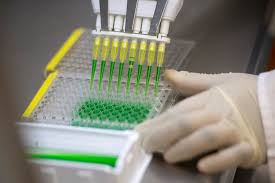
NEW DELHI — In a sterile laboratory at the Indian Institute of Technology (IIT) Delhi, a quiet revolution is taking place. There are no bubbling beakers or frantic scientists in white coats. Instead, a sophisticated artificial intelligence system is doing something once thought exclusively human: it is designing, executing, and learning from its own scientific experiments.
The development of this “AI Lab Assistant” marks a pivotal shift in how medical and chemical research is conducted. By automating the trial-and-error process that defines laboratory work, researchers at IIT Delhi have created a tool that could drastically shorten the timeline for drug discovery and the development of new medical treatments.
A New Member of the Research Team
The AI system, developed by a multidisciplinary team at IIT Delhi, is not merely a data processor; it is an autonomous decision-maker. Unlike traditional automation, which follows a rigid set of pre-programmed instructions, this AI uses machine learning to analyze the results of one experiment to inform the parameters of the next.
“What we have built is a bridge between computational intelligence and physical experimentation,” explains the lead project researcher. “The AI doesn’t just watch; it acts. It can select chemical precursors, adjust temperatures, and monitor reactions in real-time, functioning as an autonomous loop of discovery.”
For the healthcare sector, the implications are profound. Traditionally, bringing a new drug from the lab to the pharmacy shelf takes an average of 10 to 12 years and costs billions of dollars. Much of that time is spent in “pre-clinical” phases—years of manual testing to find the right molecular combinations. The AI Lab Assistant aims to condense those years into months.
Precision Medicine and Speed
The power of the IIT Delhi system lies in its ability to handle “multi-objective optimization.” In medicine, this means finding a drug compound that is highly effective against a disease but also has low toxicity for the human body.
Statistically, the success rate for drug candidates entering clinical trials is less than 10%. By using AI to “fail fast” and “fail early” in the simulated and autonomous lab environment, researchers can ensure that only the most promising compounds ever reach human testing.
Dr. Aristha Sen, a clinical pharmacologist not involved in the IIT project, notes the potential for personalized care. “If we can automate the synthesis of materials or biochemicals, we move closer to a world where treatments are tailored to individual genetic profiles. An autonomous lab can test thousands of variations of a treatment far more accurately than a human team ever could.”
Beyond the Bench: Public Health Impact
While the technology is currently housed within the engineering and chemistry departments, its eventual output will be felt in public health clinics. The AI’s first tasks involve the development of new functional materials and biochemical sensors—tools used to detect diseases like cancer or diabetes earlier than current methods allow.
Moreover, the AI assistant addresses a persistent problem in science: reproducibility. Human error, even in the most prestigious labs, can lead to inconsistent results. The IIT Delhi AI operates with mathematical precision, recording every micro-gram and millisecond of an experiment, creating a transparent and “audit-ready” trail for regulatory bodies like the Central Drugs Standard Control Organisation (CDSCO) or the FDA.
The Human Element: Coexistence, Not Replacement
A common concern with the rise of autonomous AI is the displacement of human experts. However, the architects of the IIT Delhi system argue that the AI is meant to liberate, not replace, the scientist.
“Science is 90% perspiration and 10% inspiration,” says Professor Nilanjan Das, a researcher in automated systems. “The AI takes over the ‘perspiration’—the repetitive pipetting, the constant monitoring, the data entry. This allows the human scientist to focus on the ‘inspiration’—asking the big questions and interpreting the broader impact of the findings.”
By removing the manual labor of the lab, the technology may also make scientific careers more accessible to individuals with physical disabilities, who might otherwise find traditional “wet lab” environments challenging to navigate.
Challenges and Ethical Guardrails
Despite the optimism, the road to AI-led medicine is paved with significant challenges. Experts warn of the “black box” problem—the difficulty of understanding exactly how an AI reaches a specific conclusion.
“We must ensure that as these systems become more autonomous, they remain explainable,” says Dr. Sen. “In medicine, we cannot simply take an AI’s word for it. We need to know why a certain compound was chosen to ensure patient safety.”
There are also ethical considerations regarding the speed of discovery. The ability to autonomously synthesize potent biochemicals requires rigorous “biosecurity” protocols to prevent the accidental or intentional creation of harmful substances. IIT Delhi has emphasized that their assistant operates within a “human-in-the-loop” framework, where senior researchers set the ethical boundaries and safety triggers for every autonomous run.
The Road Ahead
The IIT Delhi AI Lab Assistant is currently in its validation phase, proving its mettle on known chemical reactions before moving into uncharted territory. As the system gathers more data, its “intelligence” grows, potentially leading to breakthroughs in sustainable energy, biodegradable plastics, and life-saving pharmaceuticals.
For the average patient, this technology represents a beacon of hope for “orphan diseases”—rare conditions that are often ignored by big pharmaceutical companies because the cost of research is too high. If AI can lower the cost of discovery, it may finally become economically viable to develop treatments for the few as well as the many.
As this “Silicon Scientist” continues its work in Delhi, the message is clear: the future of medicine is no longer just in the hands of humans, but in the partnership between human curiosity and machine precision.
Medical Disclaimer
This article is for informational purposes only and should not be considered medical advice. Always consult with qualified healthcare professionals before making any health-related decisions or changes to your treatment plan. The information presented here is based on current research and expert opinions, which may evolve as new evidence emerges.
References
Primary Source:
-
IIT Delhi develops AI lab assistant that autonomously runs scientific experiments. (2024). New India Abroad. [https://www.newindiaabroad.com/english/india/iit-delhi-develops-ai-lab-assistant-that-autonomously-runs-scientific-experiments]