 0
0
 0
0
NEW DELHI – In a move that has energized the medical community, Prime Minister Narendra Modi used his final Mann Ki Baat address of 2025 to issue a stark warning against the “casual” use of antibiotics. Citing a looming public health crisis, the Prime Minister highlighted the rapid rise of Antimicrobial Resistance (AMR) in India—a phenomenon experts describe as a “silent pandemic” that threatens to turn routine infections into death sentences.
The Prime Minister’s intervention follows an alarming report from the Indian Council of Medical Research (ICMR), which reveals that common life-saving drugs are losing their potency against everyday illnesses like pneumonia and urinary tract infections (UTIs).
The “Superbug” Epicentre: Understanding the Threat
Antimicrobial Resistance occurs when bacteria, viruses, fungi, and parasites change over time and no longer respond to medicines. This makes infections harder to treat and increases the risk of disease spread, severe illness, and death.
“Antimicrobial resistance means that the bacteria causing infections like pneumonia, UTIs, or sepsis are now not reacting to the antibiotics we use to treat them,” explained Dr. Rajiv Bahl, Director General of the ICMR. “We once thought we could treat any infection because we had antibiotics, but the bacteria are evolving faster than our solutions.”
The statistics for India are particularly sobering. According to a recent study published in The Lancet eClinical Medicine, India is currently the global epicentre of a “superbug explosion.” The data suggests that more than 80% of Indian patients carry multidrug-resistant organisms (MDROs)—the highest rate recorded globally.
| Infection Type | Indian Resistance Rate (2023) | Global Average |
| Common Bacterial Infections | ~33% (1 in 3) | ~16% (1 in 6) |
| Multidrug-Resistant Organisms | >80% in clinical settings | Significantly Lower |
Why Is This Happening?
Medical experts point to a “perfect storm” of factors contributing to the crisis in India. Dr. Neeraj Nischal, Additional Professor in the Department of Medicine at AIIMS, Delhi, notes that AMR thrives on “bad habits” deeply ingrained in the healthcare ecosystem.
-
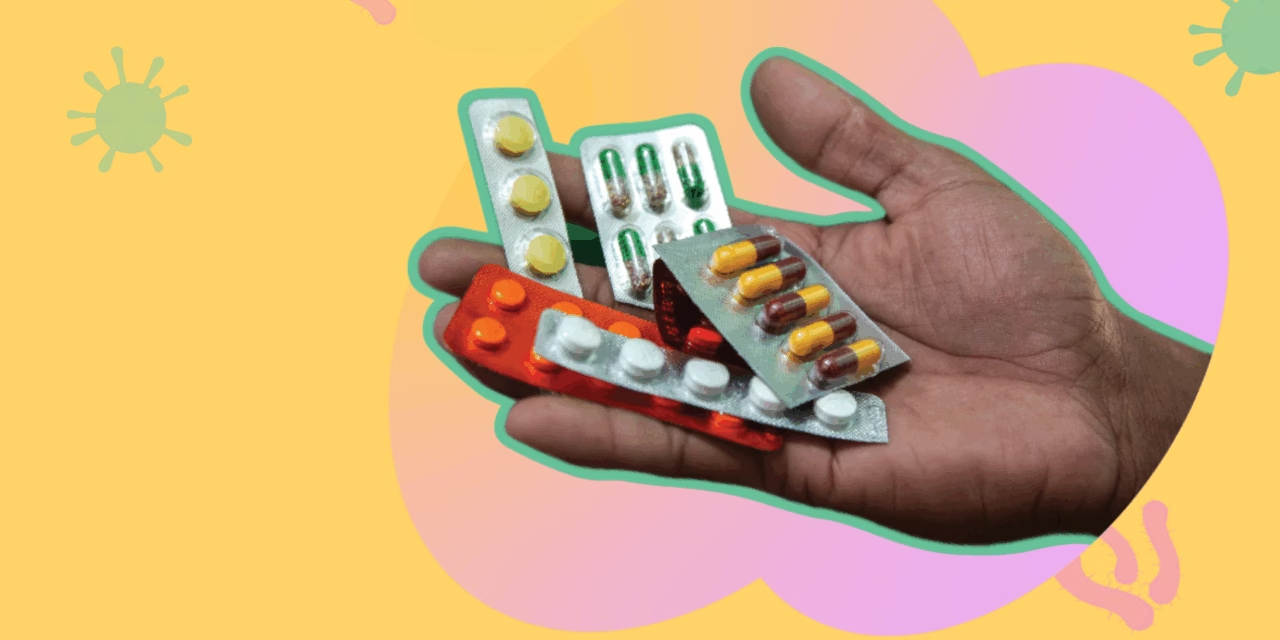
Self-Medication: Many Indians treat antibiotics like over-the-counter painkillers or fever reducers.
-
Viral Misuse: Antibiotics are designed to kill bacteria, yet they are frequently used to treat viral infections like the common cold or flu, against which they are entirely ineffective.
-
Incomplete Courses: Patients often stop taking medication as soon as they feel better, allowing the strongest bacteria to survive and develop resistance.
-
Agricultural Use: The use of antibiotics in livestock and poultry also contributes to resistant strains entering the human food chain.
“If we treat antibiotics as shortcuts, resistance becomes the long-term cost, paid in lives,” Dr. Nischal warned. “Every avoidable prescription writes a future where routine surgery, childbirth, and cancer care become far riskier.”
A Threat Beyond Symptoms
One of the greatest challenges in fighting AMR is its invisibility. Unlike a heart attack or a fracture, AMR does not have specific symptoms like pain or a cough. It is a secondary complication that only becomes apparent when a patient fails to recover from a standard treatment.
Dr. Rajeev Jayadevan, Ex-President of IMA Cochin, emphasized that the Prime Minister’s message is a vital step in public education. “It is a scary scenario where our ‘armamentarium’ of drugs is running dry, and no new antibiotics are being added. Most people are simply unaware of the threat because AMR itself is silent.”
The National AMR surveillance data has already identified troubling resistance patterns in major pathogens, including E. coli, Klebsiella pneumoniae, and Staphylococcus aureus. These are the very bacteria responsible for hospital-acquired infections and severe gut issues.
The Road Ahead: Collective Responsibility
The consensus among health authorities is that the government, medical professionals, and the public must act in unison to avert a “post-antibiotic era.”
For the Public:
-
Never self-medicate: Do not buy antibiotics without a valid prescription.
-
Complete the course: Even if you feel better, finish the entire dosage prescribed by your doctor to ensure all bacteria are eradicated.
-
Prevent infection: Handwashing, vaccinations, and safe food preparation reduce the need for antibiotics in the first place.
For Healthcare Providers and Regulators:
Dr. Nischal called for stricter enforcement of “prescription-only” sales, particularly targeting quick-commerce platforms that may facilitate rapid delivery of antibiotics with “hastily generated” digital prescriptions. “Doctors must practice evidence-based prescribing and stewardship,” he added.
The Limitations of Current Strategy
While public awareness is crucial, some experts argue that individual behavior is only part of the puzzle. Improving sanitation, ensuring clean water access, and regulating industrial waste from pharmaceutical manufacturing—which often leaks high concentrations of antibiotics into local water sources—remain massive structural hurdles for India.
Furthermore, because there is little financial incentive for pharmaceutical companies to develop new antibiotics (compared to chronic disease medications), the global pipeline for new drugs remains dangerously thin.
Conclusion
Prime Minister Modi’s call to action marks a significant shift in bringing a technical medical crisis into the national living room. As India continues to battle high rates of infectious diseases, the message is clear: the era of “easy” antibiotics is ending, and our survival may depend on our ability to use these “miracle drugs” with the respect and caution they deserve.
Medical Disclaimer: This article is for informational purposes only and should not be considered medical advice. Always consult with qualified healthcare professionals before making any health-related decisions or changes to your treatment plan. The information presented here is based on current research and expert opinions, which may evolve as new evidence emerges.
References
- https://tennews.in/pm-modis-message-on-misuse-of-antibiotics-timely-experts/