 0
0
 0
0
December 31, 2025
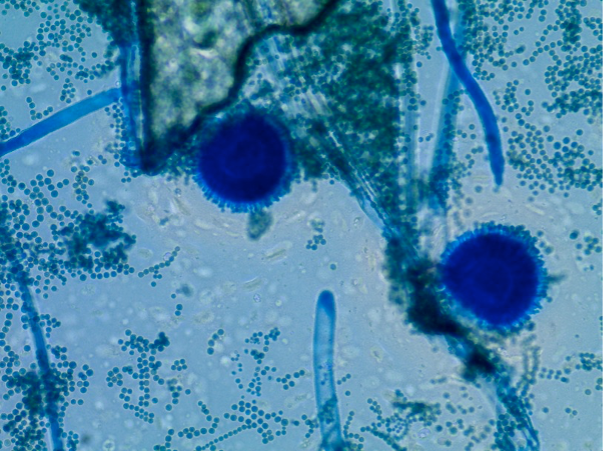
NEW DELHI — A formidable fungal pathogen, Candida auris, is rapidly evolving to become more lethal while expanding its global footprint, according to a landmark study led by researchers at the Vallabhbhai Patel Chest Institute in New Delhi. The international collaboration, which includes experts from the U.S. National Institutes of Health (NIH), warns that this “superbug” is not only resisting current medical treatments but is also mastering new biological strategies to evade the human immune system.
The study, published in the journal Microbiology and Molecular Biology Reviews, highlights a sobering reality: invasive fungal infections now affect approximately 6.5 million people annually. For those infected with C. auris, the stakes are devastatingly high, with mortality rates often exceeding 50 percent—even when patients receive antifungal therapy.
A “Wily” Survivor: How C. auris Adapts
What makes C. auris particularly dangerous is its “wily” cellular intelligence. Unlike many other fungi that remain localized or succumb easily to the body’s defenses, this pathogen utilizes a process called morphogenesis. This allows it to switch from simple yeast growth to “filament-driven spread,” essentially changing its shape to navigate and invade human tissue more effectively.
“The fungus has developed sophisticated strategies to survive,” the research team noted. “It can form multicellular aggregates—clusters of cells that are harder for the immune system to attack—and switch its genetic expression in real-time to respond to changing environments, such as the presence of antifungal drugs.”
The “Glue” Factor: Why It Sticks to Everything
One of the most concerning findings involves the fungus’s ability to colonize human skin. The study revealed that proteins in the fungal cell wall act like a biological glue, allowing it to adhere stubbornly to mammalian cells.
This “stickiness” extends to non-living surfaces, including:
-
Hospital bed rails
-
Medical catheters
-
Blood pressure cuffs
-
Electronic thermometers
Because the fungus can persist on these surfaces for weeks, it facilitates rapid transmission within healthcare facilities, turning hospitals into unwitting reservoirs for the pathogen.
The Diagnostic Dilemma
For clinicians, the primary hurdle is that C. auris is a master of disguise. Conventional laboratory tests frequently misidentify it as other, more common yeasts like Candida haemulonii.
“Misidentification is a critical failure point,” says Dr. Elena Rossi, an infectious disease specialist not involved in the study. “When a lab misidentifies the fungus, the patient is often prescribed standard antifungals that C. auris is already resistant to. This delay in correct treatment gives the infection a lethal head start.”
| Feature | Impact on Patient Care |
| Multidrug Resistance | Limits treatment options to expensive or toxic “last-resort” drugs. |
| Skin Colonization | Leads to “silent spreaders” who carry the fungus without symptoms. |
| Environmental Persistence | Requires specialized, aggressive disinfection protocols. |
Global Health Implications
The rise of C. auris is not an isolated incident but a symptom of a broader crisis in antimicrobial resistance (AMR). As global temperatures rise, some scientists hypothesize that fungi are adapting to warmer environments, potentially making them more capable of surviving the high internal temperature of the human body—our primary natural defense against fungal invaders.
The Indian-led study underscores that while the host (the human body) develops mechanisms to battle the fungus, the germ is simultaneously developing proactive ways to “blind” the immune response. This biological arms race has left many high-risk patients—particularly those in intensive care or those with compromised immune systems—extremely vulnerable.
Expert Commentary: A Call for Innovation
Independent experts emphasize that the current medical toolkit is insufficient. “This study is a wake-up call,” says Dr. Aris Katz, a researcher in medical mycology. “We are seeing a pathogen that has learned to thrive on the very surfaces meant to heal people. We cannot rely solely on the three existing classes of antifungal drugs; we need a fundamental shift in how we approach fungal pathogens.”
The research team from Delhi and the NIH concluded that the global community must prioritize three key areas:
-
Novel Antifungals: Developing new drugs with “broad-spectrum” activity.
-
Advanced Diagnostics: Creating rapid, low-cost tests that can accurately identify C. auris within hours, not days.
-
Vaccine Development: Exploring immune-based therapies and vaccines specifically for high-risk populations.
What This Means for You
While C. auris remains primarily a threat in healthcare settings (hospitals and nursing homes), the general public should stay informed. For most healthy individuals, the fungus does not pose an immediate risk of illness. However, for those with loved ones in long-term care or undergoing major surgery:
-
Hand Hygiene: Standard handwashing and the use of alcohol-based sanitizers remain vital.
-
Advocacy: Don’t be afraid to ask healthcare providers about their infection control protocols and whether they have screened for multidrug-resistant organisms.
-
Awareness: Recognizing that “fungal” doesn’t always mean “minor” is the first step in supporting public health initiatives.
As research proliferates to catch up to clinical needs, the message from the scientific community is clear: C. auris is no longer a localized curiosity; it is a global health priority that requires a unified, well-funded response.
References
- https://www.ndtv.com/health/indian-study-shows-drug-resistant-fungus-turning-more-deadly-spreading-globally-10094824
Medical Disclaimer: This article is for informational purposes only and should not be considered medical advice. Always consult with qualified healthcare professionals before making any health-related decisions or changes to your treatment plan. The information presented here is based on current research and expert opinions, which may evolve as new evidence emerges.