 0
0
 0
0
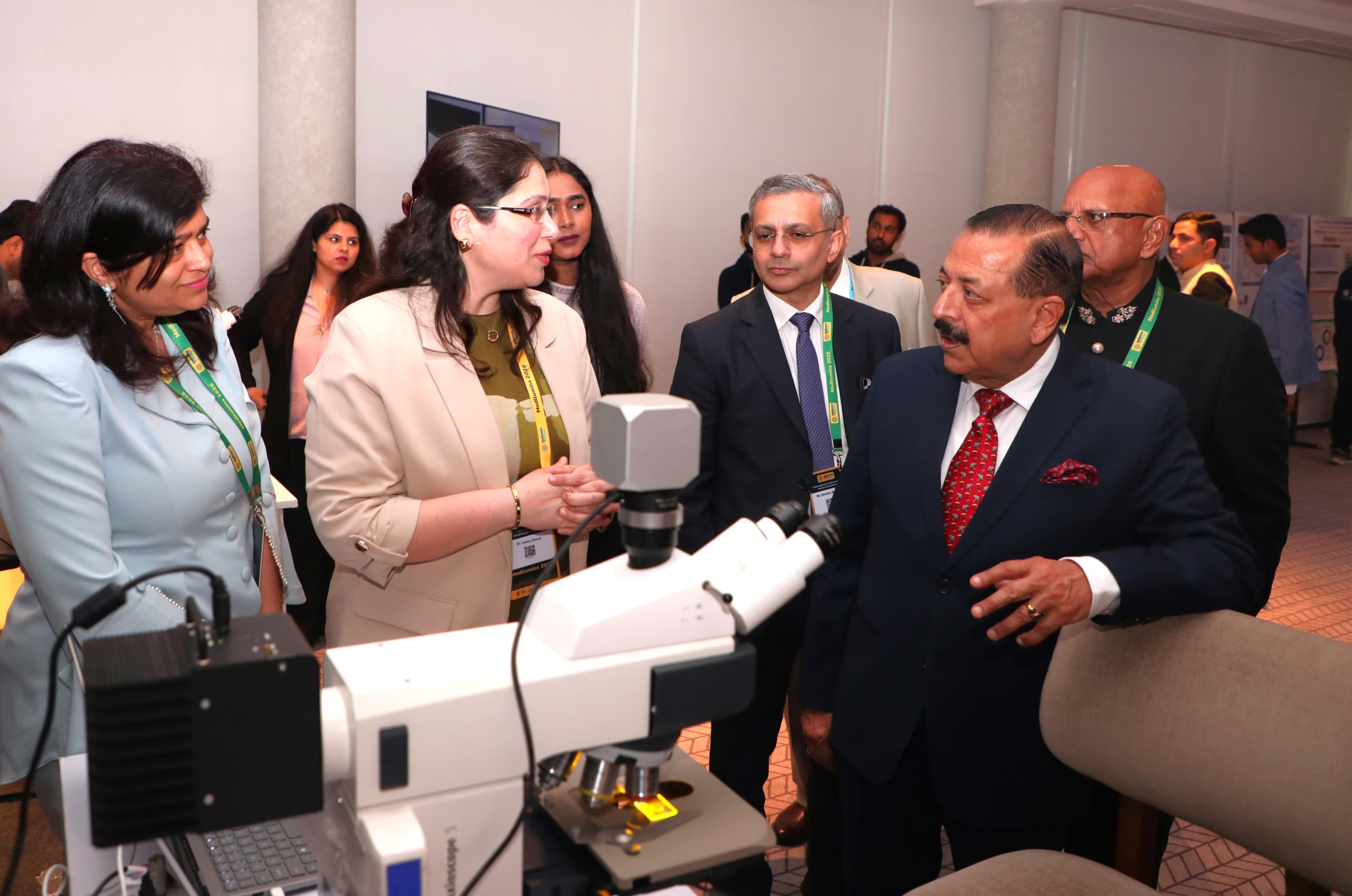
NEW DELHI — In a move signaling a tectonic shift in how healthcare is delivered in the world’s most populous nation, the Indian government has announced a massive push toward AI-driven diagnostics and large-scale genomic sequencing. Speaking at the Medllumina 2026 International Multi-Specialty Medical Conference on Saturday, Union Minister Dr. Jitendra Singh declared that the era of “one-size-fits-all” medicine is ending, replaced by a “precision revolution” designed to eliminate human error and subjectivity in clinical settings.
The announcement comes at a critical juncture for India, which is currently grappling with a dual burden: an aging population with rising life expectancy and a surge in early-onset lifestyle diseases among its youth.
Beyond the Naked Eye: AI as the New Pathologist
The cornerstone of this initiative is the integration of Artificial Intelligence (AI) into clinical workflows to remove what Dr. Singh termed “diagnostic subjectivity.” While traditional medicine relies heavily on the clinical judgment and visual interpretation of a physician or pathologist, AI-enabled systems provide a secondary, data-driven layer of scrutiny.
“A pathologist examining a biopsy slide with the naked eye may inadvertently miss a minute but crucial cluster of affected cells,” Dr. Singh noted during his inaugural address. “An AI-enabled system can guide them directly to the precise location, minimizing human error.”
This shift from “classical clinical learning” to “AI-enhanced judgment” marks a transition where software acts as a high-precision GPS for doctors. Beyond oncology, these tools are being deployed to analyze comprehensive patient data—ranging from heart rate variability to metabolic markers—flagging subtle abnormalities that might be overlooked during a standard 10-minute physical exam.
The Genome Project: Sequencing One Million Citizens
Parallel to the AI push, India is accelerating its foray into genomics. Under the Department of Biotechnology, the government has launched a large-scale initiative to sequence the genomes of one million individuals.
This repository of genetic data is intended to help researchers understand how specific diseases manifest in the Indian population, which has historically been underrepresented in global genomic studies.
Why Genomics Matters for You:
-
Targeted Therapies: Identifying genetic markers allows doctors to prescribe medications that are most likely to work for your specific biological makeup.
-
Rare Disease Breakthroughs: Dr. Singh highlighted recent successes in gene therapy for Haemophilia, conducted in collaboration with premier Indian medical institutions, as a blueprint for future treatments.
-
Indigenous Innovation: The Minister also cited the development of Nafithromycin, India’s first indigenous antibiotic, as a sign of the country’s growing self-reliance in the life sciences.
A Changing Disease Landscape
The urgency for advanced diagnostics is driven by a radical shift in India’s health geography. Conditions that were once regional—such as diabetes in the South or thyroid disorders in the Himalayan belt—are now prevalent nationwide.
“Lifestyle changes and the breakdown of the rural-urban divide have neutralized these geographic boundaries,” says Dr. Singh. Furthermore, with 70% of India’s population under the age of 40, the government views “preventive and precision medicine” not just as a healthcare goal, but as a national security priority for “Viksit Bharat” (Developed India).
Expert Perspective
Independent experts suggest that while the technology is promising, the rollout must be handled with care.
“The transition to AI-driven tools is inevitable and welcome,” says Dr. Arvinder Soin, Chairman of the Institute of Liver Transplantation and Regenerative Medicine (not involved in the government initiative). “However, the challenge lies in data privacy and ensuring these tools are trained on diverse datasets so they don’t carry algorithmic biases. Precision medicine is only as good as the data feeding it.”
Public-Private Collaboration in Nuclear Medicine
To accelerate these breakthroughs, the Indian government is opening sectors previously dominated by the state—such as nuclear medicine and space-related health research—to private participation. This collaboration is expected to fast-track “Advanced Oncology” treatments, using radioactive isotopes to target and destroy cancer cells with minimal damage to surrounding healthy tissue.
What This Means for Patients
For the average health-conscious consumer, these developments suggest a future where a trip to the doctor looks very different:
-
Personalized Prescriptions: Instead of trial-and-error with blood pressure or cholesterol medication, your genetic profile may dictate the exact dosage and brand from day one.
-
Early Detection: AI tools in mobile clinics may identify risks of chronic diseases years before symptoms appear.
-
Digital Bridges: AI-powered language tools are being integrated into telehealth platforms to break communication barriers between urban specialists and rural patients.
As India enters this “AI-accelerated era,” the focus remains on turning high-tech data into “high-touch” care—ensuring that while the tools are robotic, the outcomes remain profoundly human.
Statistical Context at a Glance
| Initiative | Target/Scale | Primary Goal |
| Genome Sequencing | 1,000,000 Individuals | Create a national genetic database for precision medicine. |
| Demographic Focus | 70% of population < 40 | Preventive care to ensure long-term workforce productivity. |
| Indigenous Drug R&D | Nafithromycin (Antibiotic) | Reducing dependence on imported life-saving drugs. |
Medical Disclaimer: This article is for informational purposes only and should not be considered medical advice. Always consult with qualified healthcare professionals before making any health-related decisions or changes to your treatment plan. The information presented here is based on current research and expert opinions, which may evolve as new evidence emerges.
References & Sources
-
Primary Source: Press Information Bureau (PIB) Delhi, “India Steps into AI-accelerated Genomics & Gene Therapy Era,” Posted 21 Feb 2026.