 0
0
 0
0
For decades, the standard etiquette in fitness centers has been one of grunts, clanging iron, and perhaps the occasional upbeat pop song. However, new research suggests that if you want to shatter your personal records or power through those final grueling seconds of a HIIT circuit, you might want to ditch the decorum.
Recent studies into the psychology and physiology of “taboo language” suggest that uttering a well-timed curse word isn’t just a sign of frustration—it is a legitimate performance-enhancing tool. From increased grip strength to a heightened tolerance for physical pain, the science of swearing is revealing that our “four-letter” vocabulary may be hardwired into our body’s survival and performance mechanisms.
The Science of “Strong” Language
The link between swearing and physical performance gained significant traction through the work of Dr. Richard Stephens, a senior lecturer in psychology at Keele University. In a series of experiments, researchers found that participants who swore while performing tasks—such as squeezing a handgrip or pedaling a stationary bike against high resistance—demonstrated significantly more power and strength than those who used neutral words.
In one specific study, participants saw a 5% increase in power during a short, intense bout of cycling and an 8% increase in grip strength after swearing. While these percentages may seem modest, in the world of competitive athletics or personal fitness milestones, they represent the difference between a failed lift and a new personal best.
“We are not telling people something they don’t already know, but we are verifying it in a systematic and objective way,” Dr. Stephens noted regarding his research. “Swearing appears to be a form of emotional coping that helps us deal with difficult situations.”
Why Does It Work? The Amygdala Connection
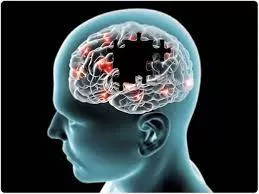
To understand why a “bad” word produces a “good” result, we have to look at the brain’s architecture. Most language is processed in the left hemisphere, specifically in areas like Broca’s and Wernicke’s areas. However, swearing is different. It is deeply tied to the limbic system, particularly the amygdala—the brain’s emotional center responsible for the “fight-or-flight” response.
When we swear in response to pain or exertion, it triggers a mild sympathetic nervous system activation. This response releases a small surge of adrenaline and increases the heart rate. This physiological shift leads to “stress-induced analgesia,” a state where the body becomes less sensitive to pain.
“When you use a taboo word, you are essentially signaling to your brain that this is a high-stakes moment,” says Dr. Elena Rossi, a clinical psychologist specializing in sports performance (who was not involved in the Keele studies). “The brain responds by dampening the pain signals coming from the muscles, allowing the individual to push past the ‘governor’—the internal mechanism that tries to protect the body from overexertion.”
Pain Tolerance and the “Ice Water” Test
The most famous evidence for the analgesic (pain-killing) effect of swearing comes from the “Cold Pressor Test.” In this experiment, participants submerged their hands in near-freezing water. Those who were allowed to repeat a swear word of their choice were able to keep their hands submerged for significantly longer periods—and reported feeling less pain—than those who repeated a neutral word like “table” or “wooden.”
This suggests that swearing doesn’t just make us feel “tougher”; it actually changes the way the brain interprets the intensity of the physical stimulus. For a runner hitting the “wall” at mile 20 or a weightlifter struggling with a heavy squat, swearing may act as a psychological bridge to cross the threshold of discomfort.
The “Novelty” Factor: Use with Caution
While the benefits are clear, researchers issue a significant caveat: the power of the swear word depends on its shock value.
Studies indicate that people who swear habitually in every sentence of their daily lives may see a diminished effect when using it for physical performance. This is known as habituation. If the brain is used to hearing taboo language in mundane settings (like watching TV or stuck in traffic), the words lose their ability to trigger the emotional arousal necessary for a performance boost.
To maximize the “potency” of profanity, experts suggest saving it for the most intense moments of a workout. It should be a tool used sparingly rather than a constant commentary.
Practical Implications for the Public
Should you start shouting obscenities in your local community center? Perhaps not. While the science supports the benefit, social context remains vital.
“There is a difference between internalizing a word or muttering it under your breath and creating a hostile environment for others,” says Mark Thompson, a certified strength and conditioning specialist. “We see this in high-level powerlifting and MMA all the time. It’s about channeling aggression and focus. For the average gym-goer, the takeaway is that you shouldn’t feel guilty if a word slips out during a hard set—it might actually be helping you.”
For those who prefer to keep it “PG,” research has also looked into “alternative” swear words (like “fudge” or “shoot”). Unfortunately, the data shows these do not provide the same physical boost. The emotional weight of the taboo is what drives the physiological response.
Conclusion
The study of swearing reminds us that the mind and body are inextricably linked. Our choice of words can bypass our conscious limitations and tap into ancient survival systems. As research continues, the “profanity effect” stands as a testament to the complex ways our emotions influence our physical capabilities.
So, the next time you’re facing a daunting hill or an intimidating set of dumbbells, don’t be afraid to let a colorful word fly—it might just be the edge you need to reach the finish line.
Medical Disclaimer: This article is for informational purposes only and should not be considered medical advice. Always consult with qualified healthcare professionals before making any health-related decisions or changes to your treatment plan. The information presented here is based on current research and expert opinions, which may evolve as new evidence emerges.
References
Peer-Reviewed Studies:
-
Stephens, R., & Robertson, O. (2020). “Effect of swearing on strength and power performance.” Journal of Psychology of Sports and Exercise. DOI: 10.1016/j.psychsport.2020.101851.
-
Stephens, R., Atkins, J., & Kingston, A. (2009). “Swearing as a response to pain.” NeuroReport, 20(12), 1056-1060. DOI: 10.1097/WNR.0b013e32832e64b1.