 0
0
 0
0
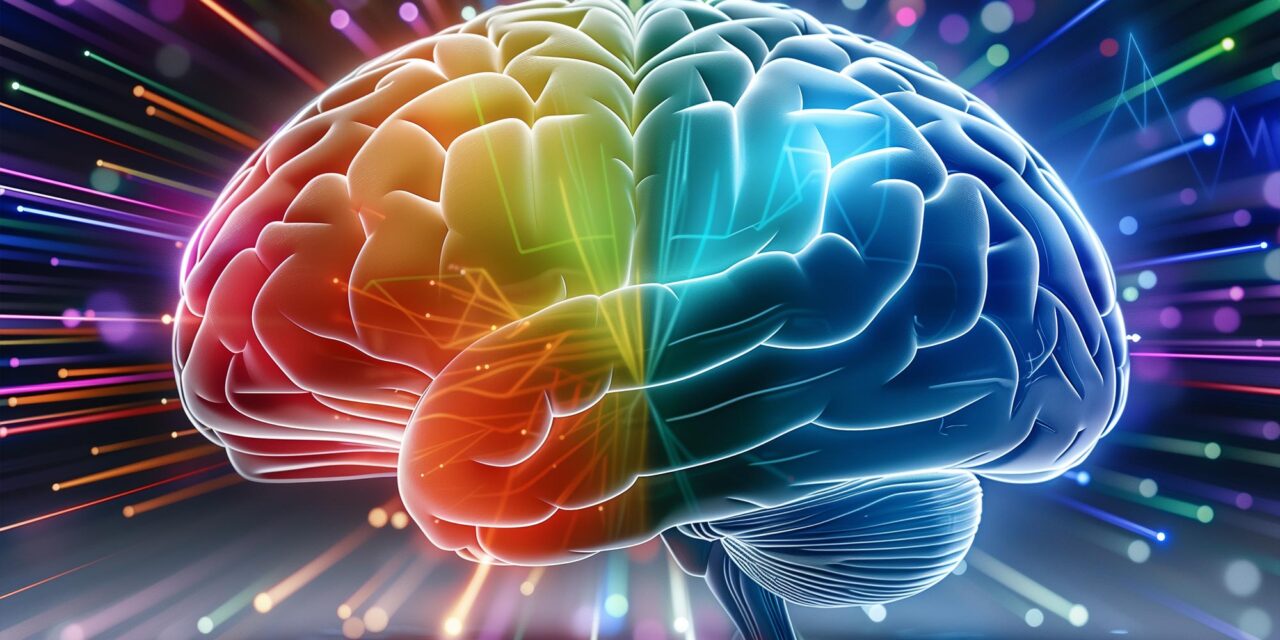
ST. LOUIS — Whether you are a “morning lark” who thrives at sunrise or a “night owl” who finds clarity in the quiet of midnight, your daily rhythm is governed by a biological masterpiece located deep within the brain. For decades, scientists have known that a tiny region called the suprachiasmatic nucleus (SCN) acts as our master clock. However, the precise “wiring diagram” that allows thousands of neurons to work in perfect harmony has remained a mystery—until now.
Researchers at Washington University in St. Louis have developed a groundbreaking computational tool to map the internal communications of the SCN. Their findings, published in the Proceedings of the National Academy of Sciences (PNAS), reveal that the body’s internal clock does not operate as a simple democracy. Instead, it is governed by a select group of “hub” cells that dictate the rhythm for the entire body.
The discovery offers more than just a peek into brain anatomy; it provides a potential roadmap for treating jet lag, seasonal affective disorder (SAD), and the chronic health disruptions faced by millions of shift workers.
Mapping the “Mighty” Network
The SCN is a cluster of approximately 20,000 neurons, but sheer numbers don’t explain how they stay synchronized. To understand this, a multidisciplinary team led by Erik Herzog, the Viktor Hamburger Distinguished Professor, and research scientist KL Nikhil, combined biology, electrical engineering, and chemistry.
The team developed a sophisticated technique called MITE (Mutual Information and Transfer Entropy). While traditional brain maps show where cells are physically located, MITE acts more like a high-speed traffic monitor. It captures functional communication, showing how signals actually flow between cells in living tissue.
“Think of these connections like airplane routes,” explained Nikhil. “We mapped the pathways to understand which SCN cells communicate with each other. We reasoned that major hubs direct traffic and represent points of vulnerability.”
By analyzing recordings of gene expression over several weeks, the team reconstructed more than 25 million connections across 17 subjects with over 95% accuracy.
Five Degrees of Communication
The research identified five distinct functional cell types within the clock’s network. While scientists previously categorized brain cells by the chemicals they produce, this study suggests that a cell’s “social network” is just as important.
-
Hub Cells: A small subset of neurons that act as the primary broadcasters. They generate and send out the signals that keep the rest of the clock in sync.
-
Bridge Cells: These act as relays, passing the timing signal from the hubs to further reaches of the SCN.
-
Sink Cells: These are the “receivers” that collect signals and likely transmit the final timing instructions to the rest of the body.
The study highlighted a specific group of neurons expressing Vasoactive Intestinal Peptide (VIP). While VIP was already known to be important for the circadian rhythm, the MITE tool revealed that a very specific, smaller group of these VIP cells serve as the highly connected hubs.
“Evolution appears to have optimized how different cell groups distribute roles to coordinate timekeeping,” Nikhil noted.
Why “Hubs” Matter for Public Health
To test the importance of these hub cells, the researchers used computational models to simulate what would happen if different parts of the network were disabled. When they removed the hub neurons, the entire system’s synchrony collapsed.
This finding has significant implications for how we understand and treat circadian rhythm disorders:
-
Shift Work and Jet Lag: When we travel across time zones or work through the night, our “hub” cells are forced to recalibrate. Understanding the wiring could lead to “neuroengineering” strategies that help these hubs adjust faster.
-
Seasonal Affective Disorder (SAD): The study suggests that the wiring of the SCN might change across seasons. By understanding how the network adapts to shorter days, clinicians may find new ways to mitigate the depressive symptoms associated with winter.
-
Personalized Rhythms: The research provides a framework to study why some people are naturally inclined to stay up late or wake up early, potentially leading to personalized “chronotherapy” for sleep disorders.
Expert Perspective: A New Dimension of Research
“This research moves us beyond a static ‘parts list’ of the brain,” says Dr. Sarah Jenkins, a neurobiologist not involved in the study. “By identifying that a specific architecture—not just a specific chemical—maintains our internal clock, it opens the door for targeted therapies. If we can ‘talk’ to the hub cells directly, we might be able to reset the clock without the side effects of traditional sleep medications.”
However, experts also urge caution. While the study achieved high accuracy in mice, the human SCN is more complex. “The computational tool is a massive leap forward,” adds Dr. Jenkins, “but we are still in the early stages of translating these ‘wiring maps’ into actual clinical treatments for humans.”
The Road Ahead
The Washington University team plans to investigate how these hub cells exert their influence and whether they can be “tuned” through external interventions.
“With this approach,” Nikhil said, “we can begin to understand how clock wiring differs between ‘morning’ and ‘evening’ individuals… and how it becomes disrupted by shift work.”
For the average person, this research reinforces the importance of “circadian hygiene”—maintaining regular light exposure and sleep schedules to support the hard-working hub cells that keep our biological systems in tune.
References
-
Study Citation: K. L. Nikhil, et al. “The inferred functional connectome underlying circadian synchronization in the mouse suprachiasmatic nucleus.” Proceedings of the National Academy of Sciences (PNAS), 2025. DOI: 10.1073/pnas.2520674122.
Medical Disclaimer: This article is for informational purposes only and should not be considered medical advice. Always consult with qualified healthcare professionals before making any health-related decisions or changes to your treatment plan. The information presented here is based on current research and expert opinions, which may evolve as new evidence emerges.