 0
0
 0
0
In the quiet weeks before lockdowns became a household word in 2020, and a decade earlier as a new strain of flu emerged in 2009, an invisible race was already being lost. While the public waited for official guidance, two distinct viruses—H1N1 and SARS-CoV-2—were utilizing the backbone of American infrastructure to embed themselves in hundreds of cities simultaneously.
A landmark study published in the Proceedings of the National Academy of Sciences (PNAS) has pulled back the curtain on these “silent windows.” By using advanced computer modeling to reconstruct the early days of both the 2009 H1N1 swine flu and the 2020 COVID-19 pandemic, researchers from the Columbia University Mailman School of Public Health found that by the time the first alerts reached the public, the battle to contain the viruses was largely over. The study reveals that respiratory pathogens don’t just “leak” across borders; they sprint through transit hubs, reaching nearly every major U.S. metropolitan area within weeks of arrival.
The Velocity of Viral Stealth
While the clinical outcomes of H1N1 and COVID-19 differed drastically, their initial patterns of movement were “strikingly similar,” according to the research team.
In 2009, the H1N1 virus resulted in approximately 60.8 million cases, 274,304 hospitalizations, and 12,469 deaths in the United States, according to CDC data. In contrast, COVID-19 has claimed more than 1.2 million lives in the U.S. to date. Despite these different mortality scales, the study found that both viruses achieved “widespread geographic establishment” long before testing became available or government interventions—such as travel restrictions or masking mandates—were implemented.
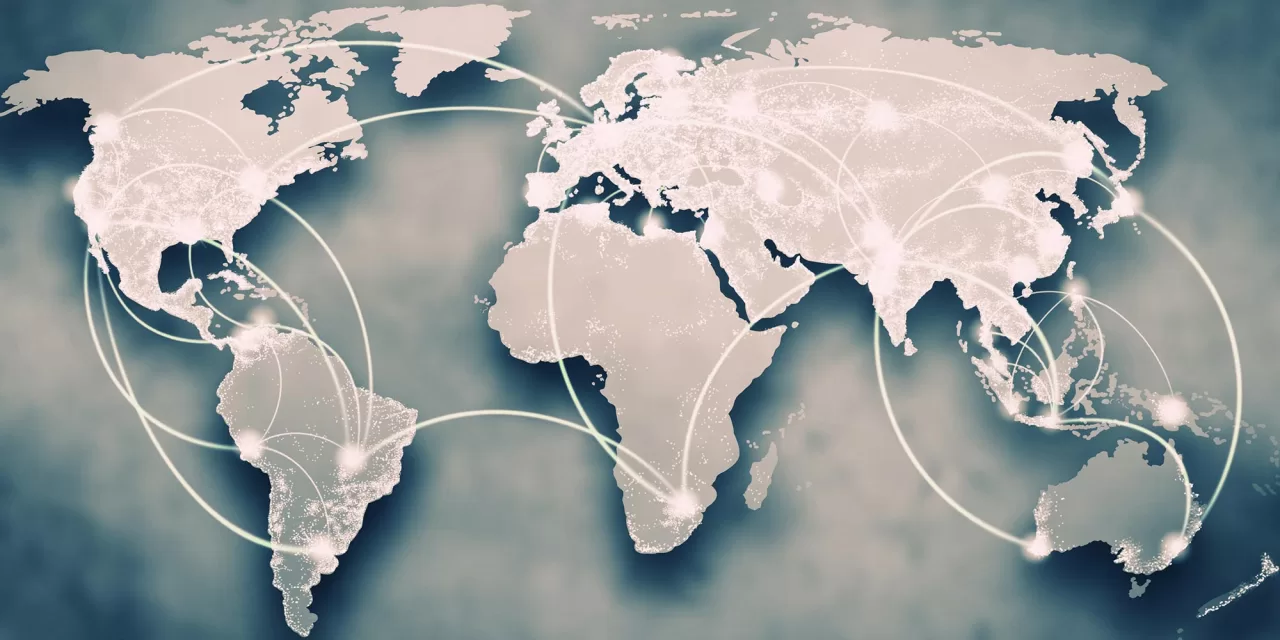
The researchers simulated the movement of these viruses across 300 U.S. metropolitan areas. They found that the “hidden spread” was facilitated not by local commuting, but by long-distance air travel.
“The speed was baked into the system,” says Dr. Elizabeth Carney, an infectious disease epidemiologist not involved in the study. “We often think of disease spreading like a slow-moving wave of water. This research shows it’s more like a lightning strike—once it hits a hub like Atlanta or New York, it’s everywhere at once.”
Launchpads and Transit Hubs: The Geography of Risk
The study identified specific “launchpad” cities that acted as primary catalysts for national spread. Regardless of the virus’s origin point, major transit connectors consistently accelerated the timeline of the pandemics:
-
New York City & Atlanta: Identified as “major connectors” that funneled infections into the interior of the country.
-
The Hub-and-Spoke Effect: Major airports allowed the virus to bypass neighboring states and land in distant cities, making traditional “containment” nearly impossible.
-
Randomness: While hubs are predictable, the study noted that “stochasticity” (random chance) played a significant role. A single infected traveler on a specific flight could trigger an outbreak in an otherwise low-risk area, making real-time prediction a significant challenge for health officials.
The Five-Week Window
The research highlights a critical vulnerability: the delay between the first infection and the first detected case. During the 2020 pandemic, the U.S. faced significant testing bottlenecks in February and early March. The model shows that while the country was debating the availability of test kits, the virus was already circulating in nearly every state.
“The rapid and uncertain spread of the 2009 H1N1 flu and 2020 COVID-19 pandemics underscores the challenges for timely detection and control,” said Dr. Sen Pei, assistant professor of environmental health sciences at the Columbia Mailman School and the study’s senior author.
The Solution: Watching the Waste
If traditional testing is too slow to catch a sprinting virus, what can be done? The study points to wastewater surveillance as a vital tool for the future.
Because viruses are shed in human waste often days before a person feels symptoms or seeks a test, sewage monitoring acts as a “smoke detector” for the community.
-
Early Detection: Wastewater can identify the presence of a pathogen in a city up to two weeks before clinical cases spike.
-
Passive Monitoring: It does not require individuals to have health insurance or the initiative to get tested.
-
Scalability: Dr. Pei suggests that expanding wastewater surveillance, combined with immediate, localized infection control, is our best chance at “slowing the initial spread” of the next “Pathogen X.”
Limitations and Practical Realities
While the study provides a robust framework for understanding outbreaks, it is not a crystal ball. The researchers acknowledge that factors like community demographics, school calendars, weather patterns, and holiday travel create a “noise” that can alter the speed of a virus in unpredictable ways.
Critics of aggressive early intervention also point out the economic and social costs of acting on early “signals” that might not lead to a full-scale pandemic. However, the journalistic consensus among health experts is shifting: the cost of silence in the first five weeks is far higher than the cost of early, data-driven caution.
What This Means for You
For the average citizen, this research reinforces that personal vigilance—such as staying home when feeling slightly “under the weather” and practicing respiratory hygiene—is most effective before a national emergency is declared.
“By the time you see it on the news, it’s already in your grocery store,” says Dr. Carney. “The takeaway isn’t to live in fear, but to realize that in a globalized world, our health is interconnected by every flight that lands at our local airport.”
Medical Disclaimer: This article is for informational purposes only and should not be considered medical advice. Always consult with qualified healthcare professionals before making any health-related decisions or changes to your treatment plan. The information presented here is based on current research and expert opinions, which may evolve as new evidence emerges.
References
- https://www.earth.com/news/how-two-pandemics-spread-across-the-u-s-in-a-matter-of-weeks/