 0
0
 0
0
February 6, 2026
NEW DELHI — A stark divergence in the economic trajectories of India and Pakistan is creating a profound divide in the physical and mental well-being of nearly two billion people. While India maintains its status as the world’s fastest-growing major economy, fostering significant gains in nutrition and extreme poverty reduction, Pakistan’s spiraling inflation and stagnant growth have pushed an additional 13 million people into poverty. For public health experts, these are not just fiscal figures; they are the primary determinants of life expectancy, maternal mortality, and childhood development across the subcontinent.
The Wealth-Health Connection: A Tale of Two Trajectories
The “health of an economy” is often a direct precursor to the health of its citizens. According to recent data and reports from Amu.TV and the World Bank, the post-pandemic recovery periods for these neighboring nations could not be more different.
In 2022, Pakistan showed signs of a rebound with 6% GDP growth, but structural instabilities saw that figure plummet to a near-stall of 0.5% by 2023. Conversely, India has remained a global “bright spot,” consistently tracking above 6% growth.
“Economic stability is the bedrock of public health infrastructure,” says Dr. Arishta Sen, a global health policy analyst (unaffiliated with the report). “When a nation’s fiscal situation is mishandled, as we see with Pakistan’s current lack of a formal growth plan, the first casualties are usually the most vulnerable: children requiring vaccinations, pregnant women needing prenatal care, and the elderly managing chronic conditions.”
Inflation: The Silent Pathogen
The most aggressive threat to Pakistani public health today is inflation, which peaked at a staggering 37.97% between 2022 and 2023—the highest in three decades. While India managed to stabilize retail inflation to approximately 5-6% by 2024, the average Pakistani consumer faces price increases five times higher than their Indian counterpart.
The Nutritional Crisis
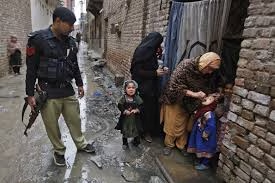
When the cost of living outstrips wages, the “food basket” is the first thing to be compromised. In Pakistan, where the poverty rate jumped from 21.9% to 25.3% in a single year, families are increasingly forced to choose between calorie-dense, nutrient-poor fillers or skipping meals entirely.
-
Stunting and Wasting: High food inflation correlates directly with increased rates of childhood stunting.
-
Micronutrient Deficiencies: The inability to afford milk, green vegetables, or protein leads to widespread anemia and weakened immune systems.
The Poverty Pivot: India’s “Extreme” Decline
In a landmark shift, World Bank estimates indicate that the proportion of people in India living on less than $4 a day—the international benchmark for extreme poverty—fell from 16% to just 2.3% by 2023.
This economic “lift” has massive implications for India’s healthcare landscape. As extreme poverty vanishes, the burden on the public health system shifts from infectious diseases (often linked to poor sanitation and malnutrition) to non-communicable diseases (NCDs) like diabetes and hypertension.
“India is witnessing a ‘health transition,'” explains Dr. Sen. “With more disposable income, there is better access to private care and preventative screenings. However, the challenge for India now is managing the lifestyle-related diseases that often accompany rising urban wealth.”
The Mental Health Toll of Economic Instability
While physical ailments are easier to quantify, the psychological impact of Pakistan’s economic crisis is a growing concern for regional mental health professionals.
High unemployment and the inability to afford basic goods create a “chronic stress environment.” Research consistently shows that economic volatility leads to:
-
Increased rates of clinical anxiety and depression among heads of households.
-
Psychosocial stress in children, affecting cognitive development and school performance.
-
A “Brain Drain” of medical professionals, as doctors and nurses migrate to more stable economies, further weakening the domestic healthcare net.
Limitations and Nuance
It is important to note that economic growth in India does not automatically translate to equitable health access. While the “extreme poverty” numbers have dwindled, the “middle-poor” still face significant out-of-pocket expenses that can lead to medical debt.
Furthermore, India’s inflation, though lower than Pakistan’s, was still driven by global oil and supply chain issues, affecting the rural poor’s ability to access distant medical facilities.
In Pakistan, the involvement of the Special Investment Facilitation Council (SIFC) suggests an internal recognition of these failures. Lt-Gen Sarfraz Ahmed’s blunt admission that the country had “no growth plan” highlights the urgent need for structural reform to prevent a total public health collapse.
Public Health Implications for the Future
The divergence between these two nations offers a clear lesson for global health: Macroeconomics is a health intervention.
-
For India: The focus must remain on strengthening the primary healthcare network to ensure that the 2.3% remaining in extreme poverty are not left behind, and that the rising middle class is educated on NCD prevention.
-
For Pakistan: Immediate social safety nets and food subsidies are required to prevent a “lost generation” of children affected by malnutrition and the trauma of extreme poverty.
References
- https://tennews.in/india-and-pakistan-economies-reflect-contrasting-pictures-of-growth-poverty/
Medical Disclaimer: This article is for informational purposes only and should not be considered medical advice. Always consult with qualified healthcare professionals before making any health-related decisions or changes to your treatment plan. The information presented here is based on current research and expert opinions, which may evolve as new evidence emerges.