 0
0
 0
0
May 2, 2025
As cannabis products continue to proliferate across Canadian shelves, consumers are faced with an ever-expanding menu promising tailored experiences-from relaxation and creativity to better sleep and sharper focus. Much of this marketing hinges on a concept known as the “entourage effect,” the idea that the hundreds of compounds in cannabis work together to produce unique effects beyond those of any single ingredient.
But how much do we really know about how cannabis works? And is the entourage effect grounded in science, or is it more marketing myth than medical fact?
What Is the Entourage Effect?
The term “entourage effect” was first coined in 1998 by scientists studying how certain compounds produced by the human body (endocannabinoids) interact with each other. The hypothesis was that some of these molecules, inactive on their own, could enhance or modulate the effects of others. This concept was later adopted by the cannabis industry to explain why products with similar levels of THC (the main psychoactive ingredient) and CBD (a non-intoxicating compound) can produce different experiences.
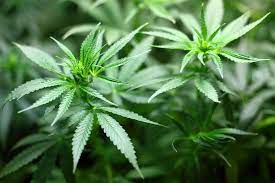
Today, the cannabis plant is known to produce over 500 potentially bioactive compounds, including cannabinoids, terpenes, and flavonoids. Enthusiasts and budtenders often tout the benefits of “full-spectrum” or “broad-spectrum” products, which contain a variety of these compounds, over single-compound isolates like pure THC or CBD.
The Evidence: Science or Speculation?
Despite its popularity, scientific support for the entourage effect in humans remains limited. Most research has focused on THC and CBD, and while some small studies and meta-analyses suggest that whole-plant extracts may outperform isolates for certain conditions (like chronic pain and pediatric epilepsy), these studies often use non-standardized products. This makes it difficult to pinpoint which chemical interactions are responsible for the observed effects.
Direct comparisons between full-spectrum and isolate products are rare, and much of the current enthusiasm is based on pre-clinical (non-human) studies or research on non-cannabis plant compounds. As a result, the entourage effect remains a promising hypothesis, but not a proven fact.
Navigating the Marketplace
For consumers, the allure of custom-tailored cannabis experiences is understandable. However, experts caution that product claims about the entourage effect should be taken with skepticism. The cannabis plant is indeed a complex source of bioactive molecules, and ongoing research will likely uncover new and interesting interactions. But for now, the science is far from settled.
The responsibility for advancing our understanding of cannabis lies with both industry and government. If companies continue to market products based on the entourage effect, they should support rigorous research to validate these claims. Regulators, meanwhile, must address the barriers that slow down scientific progress.
The Bottom Line
The entourage effect offers an elegant explanation for the diverse effects of cannabis, but it is not yet fully supported by scientific evidence. As the industry grows, consumers should be wary of hype and demand transparency and research-backed information.
Disclaimer:
This article is based on current scientific understanding and ongoing research as of May 2025. The concept of the “entourage effect” remains a hypothesis, and consumers should consult healthcare professionals and rely on evidence-based information when making decisions about cannabis use. This article is for informational purposes only and does not constitute medical advice. For more details, see the original article at Medical Xpress.