 0
0
 0
0
NEW DELHI — In a landmark shift for the nation’s criminal justice system, the Ministry of Home Affairs (MHA) has announced a massive scale-up of forensic infrastructure, signaling a move toward a “scientific-first” approach to investigation. From the expansion of the National Automated Fingerprint Identification System (NAFIS) to the launch of a dedicated National Forensic Data Centre, these developments aim to replace traditional, often subjective, policing methods with high-precision biological and digital evidence.
For the general public, this is more than just a bureaucratic upgrade; it represents a fundamental change in how crimes—particularly those involving physical trauma and sexual violence—are processed, potentially shortening the agonizing wait for justice that often impacts the mental and physical well-being of survivors.
The Precision of the Print: NAFIS Goes Local
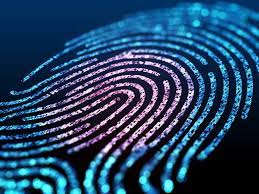
At the heart of this transformation is the National Automated Fingerprint Identification System (NAFIS). Since its inception in August 2022, the system has acted as a central nervous system for criminal records. According to the MHA, NAFIS has already traced 8,831 “chance prints”—fingerprints left unintentionally at crime scenes—linking them to suspects in old, unsolved, and interstate crimes.
The government is now funding the procurement of Fingerprint Enrollment Devices (FEDs) for local police stations. The goal is 100% adoption, allowing officers to enroll and match prints in real-time.
“Fingerprints are considered ‘infallible’ evidence in a court of law because the probability of two people sharing the same ridge pattern is infinitesimally small,” explains Dr. Arpan Ghosh, a forensic consultant not involved in the government project. “By moving this technology from specialized labs directly to the police station, we reduce the ‘chain of custody’ risks and speed up the identification of repeat offenders.”
With approximately 90,000 fingerprint records added monthly to a database that already exceeds 1.26 crores (12.6 million), the system is designed to ensure that a person’s criminal history follows them across state lines—a historical loophole in the Indian justice system.
Strengthening the Backbone: The Rise of CFSLs
To support the influx of physical evidence, the National Forensic Infrastructure Enhancement Scheme (NFIES) is doubling down on lab capacity. Currently, seven Central Forensic Science Laboratories (CFSLs) are operational in major hubs like Delhi, Hyderabad, and Kolkata. The government has now greenlit seven additional labs in states including Bihar, Rajasthan, and Tamil Nadu.
This expansion addresses a critical bottleneck: the forensic backlog. In many biological evidence cases, such as those requiring toxicology or DNA profiling, delays can span months or even years.
“From a public health perspective, the timely processing of forensic evidence is crucial,” says Sarah Williams, a victim advocacy specialist. “Justice delayed is not just a legal cliché; it is a source of prolonged trauma for victims. When a lab can return results in weeks rather than years, it facilitates a faster path to closure and psychological recovery.”
A Digital Fortress for Women’s Safety
Perhaps the most significant development for public health and safety is the establishment of the National Forensic Data Centre under the “Safety of Women” scheme. This facility will serve as a centralized repository for forensic data, including DNA samples collected from crime scenes nationwide.
Centralizing DNA data allows investigators to identify “serial patterns”—where the same perpetrator may be responsible for multiple assaults in different regions.
Key Benefits of a Centralized DNA Database:
-
Accuracy: Reduces the risk of human error in cross-referencing samples.
-
Cold Case Resolution: Allows new evidence to be matched against decades-old samples.
-
Exoneration: Provides a scientific basis to clear individuals who may have been wrongfully accused.
However, the move toward a massive DNA database also brings ethical considerations. Privacy advocates often raise concerns about data security and the potential for “genetic surveillance.” The MHA emphasizes that this system is strictly for “efficient evidence management,” but experts suggest that robust legislative frameworks will be necessary to ensure this biological data is never misused.
Education as an Intermediate Step: The CyTrain Initiative
Recognizing that hardware is only as good as the people operating it, the government has launched the ‘CyTrain’ portal. This Massive Open Online Course (MOOC) platform focuses on cybercrime investigation and digital forensics.
As of late January 2026, over 1.51 lakh (151,000) police and judicial officers have registered, with more than 1.42 lakh certificates issued. This suggests a push to bridge the “literacy gap” in technology within the judiciary, ensuring that when forensic evidence is presented in court, judges and lawyers fully understand its scientific weight.
The Reality Check: Limitations and Challenges
While the technological leap is impressive, forensic science is not a “magic bullet.” Several factors can influence the reliability of forensic evidence:
-
Contamination: If a crime scene is not secured immediately, biological samples can be degraded or contaminated, rendering DNA evidence useless.
-
Human Interpretation: While NAFIS matches patterns, a human expert often makes the final call. Subjectivity can still creep into “pattern-matching” sciences.
-
Resource Disparity: While the central government provides funding, the “100% adoption” of these tools depends on individual State and Union Territory governments executing the procurement and training effectively.
What This Means for You
For the average citizen, these advancements mean a more “scientific” environment. The shift toward NAFIS and DNA-based evidence reduces the reliance on eyewitness testimony, which psychological research has repeatedly shown to be fallible and prone to bias.
“If you are a victim of a crime, the message today is that the ‘silent witnesses’—your DNA, your fingerprints—are being given a louder voice,” says Dr. Ghosh. “It increases the cost of crime for the perpetrator and increases the accuracy of justice for the citizen.”
As India builds this forensic “superstructure,” the focus must remain on the balance between high-tech surveillance and the protection of civil liberties, ensuring that science remains a tool for truth rather than just a tool for conviction.
References
-
Statistical Source: Ministry of Home Affairs (MHA), Government of India. Press Information Bureau (PIB) Release, March 18, 2026.
Medical Disclaimer: This article is for informational purposes only and should not be considered medical advice. Always consult with qualified healthcare professionals before making any health-related decisions or changes to your treatment plan. The information presented here is based on current research and expert opinions, which may evolve as new evidence emerges.