 0
0
 0
0
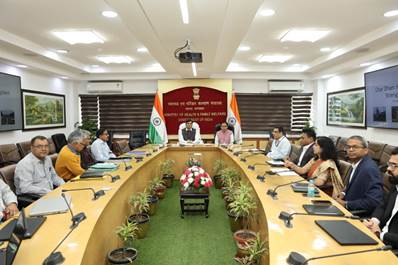
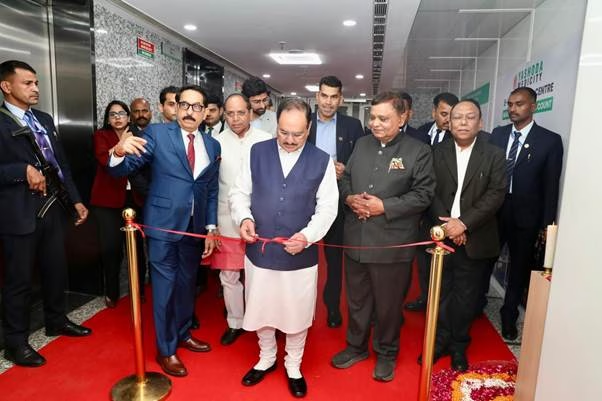
GHAZIABAD, INDIA — In a landmark development for the future of Indian emergency medicine, Union Health Minister Shri J.P. Nadda officially inaugurated a state-of-the-art AI-Enabled E-ICU Command Centre at Yashoda Medicity today. The facility marks a significant shift in the nation’s healthcare strategy, moving beyond traditional bedside monitoring toward a centralized, “command and control” model that leverages artificial intelligence to predict patient deterioration before it occurs.
The inauguration comes as the Indian government aggressively pursues a digital-first healthcare agenda. During the event, Minister Nadda emphasized that the integration of AI is no longer a luxury but a clinical necessity for improving diagnostic precision and ensuring timely intervention in life-or-death scenarios.
Bridging the Gap: How the E-ICU Works
The newly launched Command Centre at Yashoda Medicity acts as a digital “brain,” connecting the high-tech hub at the private facility to the intensive care unit at the MMG District Hospital. This public-private partnership allows specialists at the command center to monitor critically ill patients at the government hospital in real-time, 24/7.
Unlike standard monitoring, this AI-driven system utilizes complex algorithms to analyze a constant stream of data from bedside devices, including heart rate, oxygen saturation, and blood pressure.
“AI-supported ICUs provide early warnings in adverse clinical situations,” Shri Nadda stated during the ceremony. “This allows for better identification of high-risk cases and assists clinicians with data-driven insights for improved decision-making.”
The “Golden Hour” and AI Precision
In critical care, the “Golden Hour” refers to the period where medical intervention has the highest likelihood of preventing death. Traditional monitoring often relies on reactive alarms—sounding only after a patient’s vitals have already dropped. The AI-enabled E-ICU, however, uses predictive analytics to identify subtle patterns that precede a crash, potentially giving doctors a head start of several hours.
National Infrastructure: Ayushman Arogya Mandirs and Quality Standards
The E-ICU launch is part of a broader tapestry of healthcare reforms. Minister Nadda provided updates on the Ayushman Arogya Mandirs, the frontline of India’s primary healthcare system.
-
1.81 Lakh+ centres are now operational nationwide.
-
50,000+ centres have achieved National Quality Assurance Standards (NQAS) certification.
-
Target: 100% NQAS certification for all centres within the next two years.
This push for certification is intended to standardize care. Whether a patient enters a clinic in a remote village or an urban center, the government aims to ensure a uniform baseline of medical quality.
Telemedicine and Maternal Health
The scale of India’s digital health footprint is staggering. The eSanjeevani telemedicine platform has facilitated over 45.2 crore (452 million) teleconsultations, bridging the geographic gap between rural patients and city-based specialists. Furthermore, the U-WIN digital platform has registered 11.47 crore pregnant women, ensuring they receive the 27 required vaccine doses to protect against 12 preventable diseases.
Ethics and Validation: The SAHI and BODH Initiatives
As AI becomes more prevalent in clinical settings, concerns regarding data privacy and algorithmic bias have surfaced globally. To address this, the government highlighted the launch of the SAHI (Strategy for Artificial Intelligence in Healthcare for India) portal and the BODH (Benchmarking Open Data Platform for Health AI) initiative.
These platforms are designed to:
-
Validate AI tools before they reach the bedside.
-
Ensure ethical use of patient data.
-
Benchmark AI performance against diverse Indian demographics to ensure accuracy across different ethnicities and regions.
“We are committed to the responsible and ethical use of AI,” Nadda remarked, noting that these initiatives will provide a framework for testing AI-based health solutions in a controlled, transparent environment.
Impact on Cancer and Chronic Disease
Perhaps the most compelling evidence of India’s healthcare shift comes from recent data published in The Lancet. According to the study cited by the Minister, the Ayushman Bharat Yojana—the world’s largest publicly funded health insurance scheme—has significantly reduced delays in oncology.
The study found that the scheme facilitates the initiation of cancer treatment within 90 days of detection. By providing health coverage of ₹5 lakh per family per year to 62 crore (620 million) beneficiaries, including all citizens over the age of 70, the financial barriers that previously caused patients to delay or skip treatment are being dismantled.
Furthermore, the Minister noted that AI-enabled handheld X-ray devices have contributed to a 17% decline in TB incidence in India, far outstripping the global average decline of 7%.
Expert Perspective and Limitations
While the E-ICU model offers immense promise, independent medical experts urge a balanced view.
“Digital oversight is a force multiplier, especially in areas where we have a shortage of senior intensivists,” says Dr. Arvinder Soin (not involved in the project). “However, technology cannot replace the physical presence of skilled nursing staff and junior doctors on the ground. The AI suggests the intervention, but the human must still execute it perfectly.”
Potential Limitations Include:
-
Connectivity Issues: In rural areas, the success of an E-ICU depends entirely on stable, high-speed internet.
-
Alarm Fatigue: If AI systems are too sensitive, they may overwhelm staff with non-critical alerts.
-
Implementation Costs: While cost-effective in the long run, the initial setup for AI-integrated beds remains high for smaller district hospitals.
What This Means for You
For the average citizen, the rise of the E-ICU and AI-driven healthcare means a shift toward proactive medicine.
-
If you are a patient in a district hospital: You may now have “virtual access” to some of the country’s top specialists who monitor your recovery via the Command Centre.
-
If you are a caregiver: Digital tracking (like U-WIN or Ayushman Bharat) ensures that your family’s medical records and insurance eligibility are accessible instantly, reducing the bureaucratic burden during emergencies.
As India marches toward its goal of a “Viksit Bharat” (Developed India) by 2047, the integration of AI into the very pulse of its healthcare system suggests that the future of medicine will be as much about data and algorithms as it is about stethoscopes and surgery.
References
-
Government Data: Press Information Bureau (PIB) Delhi. “Union Health Minister Inaugurates AI-Enabled E-ICU Command Centre.” Posted 24 Feb 2026.
Medical Disclaimer: This article is for informational purposes only and should not be considered medical advice. Always consult with qualified healthcare professionals before making any health-related decisions or changes to your treatment plan. The information presented here is based on current research and expert opinions, which may evolve as new evidence emerges.