 0
0
 0
0
In a hearing on January 5, 2026, a bench led by Chief Justice of India Surya Kant called the Commission for Air Quality Management (CAQM) “unserious” in its handling of the worsening air pollution crisis in Delhi and the surrounding National Capital Region (NCR). The bench criticised the statutory body for being in “no hurry” to identify the main pollution sources or to propose long-term, data-driven solutions despite years of emergency measures and court monitoring.
The Court directed CAQM to convene a meeting of shortlisted domain experts within two weeks to pinpoint the major contributors to Delhi-NCR’s poor Air Quality Index (AQI) and to place those findings in the public domain. It also made clear that it would continue to monitor the issue closely and would not grant long adjournments, signalling impatience with incremental or ad hoc responses.
Why this matters for health
Delhi’s toxic air is not just an environmental issue; it is a major driver of disease and premature death across India. Long-term exposure to fine particulate matter (PM2.5)—tiny particles that can penetrate deep into the lungs and bloodstream—has been linked to around 1.5 million deaths per year in India when compared with a scenario where WHO air quality guidelines are met. Recent global estimates suggest that air pollution contributed to around 2 million deaths in India in 2023, most from non-communicable diseases such as heart disease, stroke, lung cancer, chronic obstructive pulmonary disease (COPD), and even dementia.
A five-year scientific assessment of Delhi from 2019 to 2023 found that PM10 and PM2.5 levels exceeded both Indian national standards and WHO guidelines on most days, with peak values of up to about 750 micrograms per cubic metre for PM2.5—dozens of times above recommended limits. The study showed that the actual dose of particles deposited in the lungs during daily commutes could be 10–40 times higher than what would occur at guideline-compliant pollution levels, raising the risk of asthma, COPD, ischemic heart disease and lower respiratory infections.
What is polluting Delhi’s air?
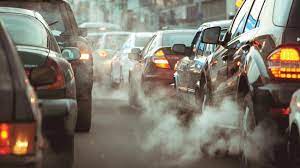
One key concern flagged by the Supreme Court is that different expert institutions, including IITs, have produced widely varying estimates of how much each source—vehicles, industry, construction dust, biomass burning, power plants—contributes to Delhi’s pollution. Past research from Indian megacities indicates that vehicle exhaust, industrial emissions, waste burning and construction activities account for a large share of particulate pollution, especially PM2.5. Seasonal events such as post-monsoon crop-residue burning in Punjab and Haryana, Diwali fireworks, and winter temperature inversions further trap these pollutants close to the ground, worsening smog episodes.
The Supreme Court has previously questioned CAQM’s effectiveness in curbing stubble burning and enforcing its own mandate under the CAQM Act. By insisting that the Commission “first find the reasons, then solutions,” the Court is pushing for a unified, transparent source-apportionment exercise that can guide targeted, long-term interventions instead of repeated blanket bans.
Expert views on health risks
Public health and environmental experts who are not parties to the case say the Court’s latest order underscores a long-standing gap between evidence and action. Dr Joel Schwartz, an environmental epidemiologist involved in a recent Lancet Planetary Health analysis of air pollution in India, reported that every 10 microgram per cubic metre increase in PM2.5 levels was associated with an 8.6 percent rise in overall mortality, with even stronger effects at concentrations currently allowed under India’s own standards. He noted that virtually the entire Indian population lives in areas where PM2.5 exceeds WHO guidelines, meaning chronic exposure is unavoidable without structural policy changes.
Indian researchers studying Delhi’s air say the health risks are particularly acute for vulnerable groups including children, older adults, pregnant women, and those with pre-existing conditions like asthma, heart disease and diabetes. Because fine particles can reach the deepest parts of the lungs and even enter the bloodstream, long-term exposure increases the likelihood of hospitalisations, reduced lung function in children, and complications such as heart attacks and strokes.
Implications for residents’ daily lives
For people living and working in Delhi-NCR, the Supreme Court’s intervention will not clean the air overnight, but it may lead to more predictable, evidence-based policies. A clear, publicly available breakdown of pollution sources could help authorities design targeted measures—for example, stricter emissions norms and inspection for vehicles and industry, cleaner fuels, better public transport, and year-round dust control—rather than relying mainly on seasonal school closures or construction bans.
Until structural changes take effect, health authorities and clinicians typically advise residents to take practical exposure-reduction steps on high-pollution days: limiting prolonged outdoor exertion, especially for children and older adults; using certified air purifiers indoors where feasible; keeping windows closed during peak traffic hours; and using well-fitted masks that can filter fine particles when outdoor travel is unavoidable. People with chronic respiratory or heart conditions are often advised to keep regular medications updated, monitor symptoms closely during smog episodes, and seek prompt medical care if breathing worsens, chest pain occurs or usual activities become more difficult.
Policy gaps, limitations and contested issues
Despite multiple rounds of judicial scrutiny and emergency plans, experts point to three recurring challenges: fragmented governance, incomplete data, and inconsistent enforcement. The Court itself has highlighted how even “reputed” technical institutions disagree on source contributions, creating uncertainty over which measures will yield the biggest health gains per rupee spent. Moreover, some studies focus on ambient air concentration rather than the actual dose deposited in people’s lungs, which may underestimate real health risks for high-exposure groups such as traffic police, street vendors and daily commuters.
There are also debates over the relative roles of local versus regional contributors. While stubble burning spikes pollution during a few weeks in October–November, year-round sources such as transport, power plants, industry, and household solid fuel use drive sustained exposure and chronic disease risk. Public health advocates warn that focusing solely on seasonal “visibility crises” misses the silent, year-round burden of heart and lung disease linked to chronically elevated PM2.5.
What readers should take away
For health-conscious readers and clinicians, three messages stand out from the Supreme Court’s latest rebuke and the growing body of research:
-
Air pollution is a major modifiable risk factor for premature death and chronic disease in India, including heart disease, stroke, COPD, lung cancer and possibly dementia.
-
Delhi’s air frequently exceeds both Indian and WHO standards, with fine particle levels that can deliver lung doses many times above what global agencies consider acceptable.
-
Structural, multi-sector policy action—grounded in transparent source-identification—is crucial; personal precautions help but cannot substitute for systemic change.
For now, individuals can work with their healthcare providers to understand their personal risk, especially if they have underlying heart or lung disease, are pregnant, or care for young children or older adults. Community-level actions—such as supporting clean-energy transitions, demanding better public transport, and participating in local air-quality monitoring—can also create pressure for sustained policy change, complementing the Supreme Court’s push for an accountable, science-based response.
Medical Disclaimer: This article is for informational purposes only and should not be considered medical advice. Always consult with qualified healthcare professionals before making any health-related decisions or changes to your treatment plan. The information presented here is based on current research and expert opinions, which may evolve as new evidence emerges.
References