 0
0
 0
0
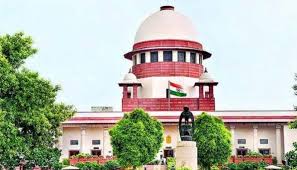
New Delhi — In a move that could fundamentally alter the medico-legal landscape in India, the Supreme Court is set to hear a Public Interest Litigation (PIL) seeking a definitive statutory framework for prosecuting criminal medical negligence. The petition, scheduled for a hearing today before a bench of Justices Vikram Nath and Sandeep Mehta, challenges the two-decade-long legislative silence following the landmark Jacob Mathew judgment of 2005.
At the heart of the plea is a call to dismantle the current system where medical negligence allegations are often vetted by committees composed solely of doctors—a practice the petitioner argues amounts to “doctors judging doctors,” resulting in bias and a denial of justice to grieving families.
The Vacuum: 20 Years Since Jacob Mathew
The filing, spearheaded by Advocate Devansh Srivastava, highlights a critical gap in India’s healthcare regulations. In 2005, the Supreme Court’s ruling in Jacob Mathew v. State of Punjab laid down interim guidelines to protect doctors from frivolous criminal prosecution. The court mandated that police must obtain an independent medical opinion, preferably from a government doctor, before registering a case of criminal negligence against a medical professional.
However, the Court also directed the central and state governments to frame statutory rules to govern this process permanently. The PIL contends that even after 20 years, these rules remain unwritten.
“The nation has been waiting for more than 20 years,” the petition states, terming the delay “disheartening.” It relies on a Right to Information (RTI) reply from the National Medical Commission (NMC), which reportedly admitted that “no such guidelines have been framed” and the matter remains “under process.”
The ‘Bias’ Factor: Doctors Judging Doctors
A central tenet of the new petition is the inherent conflict of interest in the current inquiry mechanism. Presently, when a patient alleges negligence leading to death, the police typically refer the matter to a medical board. The PIL argues that these boards, dominated by medical professionals, often exhibit leniency toward their peers.
To support this claim, the petition cites the 73rd Parliamentary Standing Committee Report (2013), which noted that medical professionals are often “unwilling to testify another doctor as negligent.”
The petitioner seeks the establishment of multi-stakeholder inquiry panels. Instead of an all-doctor committee, these panels would include:
-
Retired judges
-
Civil society members
-
Representatives from patient rights groups
-
Nominees from the National Human Rights Commission (NHRC)
-
Independent medical experts
The Data Discrepancy
The article underscores a startling mismatch in statistics. According to the National Crime Records Bureau (NCRB), only 1,019 deaths due to medical negligence were recorded over a recent six-year period. The petition argues this figure is “astonishing and unbelievable” for a nation of 1.4 billion people, suggesting that the vast majority of negligence cases are never registered or are dismissed at the preliminary inquiry stage due to the “fraternity protection” within medical boards.
Independent estimates paint a different picture. Some health studies suggest that adverse events and medical errors may impact millions of patients annually, though not all qualify as criminal negligence.
The New Legal Context: BNS vs. IPC
The hearing comes at a time when India’s criminal laws have undergone a major overhaul. The recently implemented Bharatiya Nyaya Sanhita (BNS), which replaced the Indian Penal Code (IPC), continues to criminalize medical negligence under Section 106(1).
While the BNS imposes a general punishment of up to five years for causing death by negligence, it carves out a specific exception for Registered Medical Practitioners (RMPs), capping their sentence at two years along with a fine.
Dr. R.V. Asokan, speaking for the Indian Medical Association (IMA) in earlier discussions on the BNS, has maintained that the medical community seeks complete exemption from criminal prosecution for negligence, arguing that “criminal intent” (mens rea) is absent in medical treatment. The IMA has long warned that the fear of imprisonment forces doctors into “defensive medicine”—prescribing unnecessary tests and avoiding high-risk, life-saving procedures to escape liability.
Expert Perspectives
Legal Viewpoint:
“The Jacob Mathew guidelines were meant to be a shield against harassment, not a blanket immunity,” explains a senior Supreme Court advocate specializing in medical law. “However, without statutory rules defining ‘gross negligence’ versus ‘error of judgment,’ the interpretation is left entirely to local medical boards. A statutory framework is essential to standardize this across India.”
Medical Viewpoint:
“We must be careful not to criminalize errors of judgment,” says Dr. S. K. Gupta, a senior consultant in critical care. “Medicine is not an exact science. If a doctor faces a jail term for every complication, critical care will collapse. We need accountability, yes, but through civil compensation and license revocation, not handcuffs, unless there is recklessness.”
Implications for Public Health
If the Supreme Court grants the prayers in the PIL, the implications would be far-reaching:
-
Accountability: It could lead to a spike in registered negligence cases if the “doctor-only” vetting shield is removed.
-
Transparency: Multi-stakeholder panels would likely increase public trust in the investigation process.
-
Clinical Practice: There is a risk that heightened fear of prosecution could exacerbate the cost of healthcare, as doctors may increase insurance coverage and defensive practices.
As the bench takes up the matter, the core question remains: How does the law balance the sanctity of a patient’s life with the necessary autonomy of a doctor to save it?
Medical Disclaimer:
This article is for informational purposes only and should not be considered medical advice. Always consult with qualified healthcare professionals before making any health-related decisions or changes to your treatment plan. The information presented here is based on current research and expert opinions, which may evolve as new evidence emerges.
References
-
Primary Source: PIL in SC seeks statutory framework to prosecute medical negligence, Ten News Network, Nov 30, 2025.
-
Legal Precedent: Jacob Mathew v. State of Punjab, (2005) 6 SCC 1.
-
Legislation: Bharatiya Nyaya Sanhita (BNS), 2023, Section 106(1).
-
Reports: 73rd Report of the Parliamentary Standing Committee on Health and Family Welfare (2013).
-
Statistics: National Crime Records Bureau (NCRB) data on Accidental Deaths & Suicides in India.
Medical Negligence and BNS Law Analysis
The selected video provides a legal analysis of how medical negligence is treated under the new Bharatiya Nyaya Sanhita (BNS) compared to the old IPC, offering readers essential context on the current legal changes mentioned in the article.