 0
0
 0
0
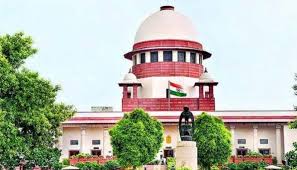
The Supreme Court of India has strongly cautioned against the misuse of reservation quotas in NEET PG admissions, after uncovering what it called a “new kind of fraud” involving alleged abuse of the Buddhist minority quota at a private medical college in Uttar Pradesh. In a recent hearing in New Delhi, a bench headed by Chief Justice of India (CJI) Surya Kant and Justice Joymalya Bagchi dismissed the plea of two postgraduate medical aspirants from Haryana who tried to claim Buddhist minority status after having appeared for NEET PG 2025 as general category candidates.
What Triggered the Supreme Court’s Warning
The case arose when two candidates from the Punia community in Haryana approached the Supreme Court seeking admission to postgraduate medical courses at Subharti Medical College, Meerut, under the Buddhist minority quota.
They sought:
-
50% reservation of seats at Subharti Medical College for the Buddhist minority community, citing an interim Supreme Court order dated October 20, 2022 in SLP (C) No. 17003/2022.
-
Admission to NEET PG courses under the Buddhist minority quota at this institution, which had been granted minority status by the National Commission for Minority Educational Institutions in 2018.
To support their claim, the petitioners produced minority certificates issued by a Sub-Divisional Officer (SDO) in Haryana, declaring them as members of the Buddhist minority community following their reported conversion to Buddhism.
However, during the hearing, the bench noted that both candidates had:
-
Originally been born into the Punia community, identified during arguments as Jats, a socially and economically well-off group considered part of the general category.
-
Appeared in NEET PG 2025 as general category candidates.
-
Explicitly declared that they did not belong to the Economically Weaker Sections (EWS).
These facts led the court to question the genuineness and timing of the claimed religious conversion and minority certificates.
Strong Words From the Bench
The Supreme Court expressed deep concern that the NEET PG quota framework, meant to promote equity and access for historically disadvantaged or minority communities, could be undermined by opportunistic misuse.
CJI Surya Kant described the plea as “another way of fraud,” warning that such practices effectively “snatch the rights of some genuine bona fide minority” candidates.
Key observations from the bench included:
-
On the social position of the petitioners: The court noted that they belonged to “one of the richest, best located, upper caste communities… holding agricultural lands and having facilities,” and stressed that they “should be proud” of their merit instead of trying to take seats meant for deprived groups.
-
On conversion for quota gain: When told that “anybody can convert to Buddhism,” the bench pushed back, cautioning that such a pattern, if normalized, would prompt “upper castes” to adopt minority identities purely to access reserved seats.
-
On the nature of the attempt: The court repeatedly called the move “another kind of fraud,” clearly signaling that tactical conversions solely to claim educational benefits would not pass legal or ethical scrutiny.
The bench outrightly dismissed the petition, refusing to allow the candidates to avail the Buddhist minority quota in NEET PG admissions.
Focus on Administrative Accountability
Beyond individual misconduct, the Supreme Court directed attention to the administrative process that enabled the issuance of these minority certificates.
The bench questioned:
-
How the SDO in Hisar, Haryana, issued Buddhist minority certificates to candidates who had:
-
Competed as general category candidates in NEET PG 2025.
-
Declared themselves as non-EWS.
-
-
Whether existing state guidelines permit upper-caste, non-EWS candidates, who had already identified as general category at the time of the exam, to subsequently obtain minority status certificates for admission benefits.
In its order, the court:
-
Asked the Chief Secretary of Haryana to submit the official guidelines for issuing minority certificates.
-
Directed a “deeper probe” by higher authorities into the issuance of these certificates by the SDO.
-
This move shifts part of the accountability from individual applicants to the state machinery responsible for verifying and certifying minority status.
Why This Matters for NEET PG Admissions
Reservation in NEET PG is a key component of India’s efforts to balance merit with social justice and ensure representation of historically marginalized communities and minorities in specialist medical education.
Under the 50% All India Quota (AIQ) for NEET PG seats in government medical colleges, reservation currently includes:
-
27% for Other Backward Classes (OBC, non-creamy layer).
-
15% for Scheduled Castes (SC).
-
7.5% for Scheduled Tribes (ST).
-
10% for Economically Weaker Sections (EWS).
-
5% horizontal reservation for Persons with Disabilities (PwD).
In addition, private and deemed universities, including minority institutions, often have institutional or minority quotas that are regulated by a mix of central, state, and judicial directives.
When individuals without genuine eligibility attempt to enter through minority or reserved quotas:
-
Seats intended for students from genuinely marginalized or minority backgrounds may be diverted.
-
Public trust in the fairness of the reservation system and entrance exams like NEET PG is further eroded.
-
Legal disputes and prolonged litigation can delay admissions and create uncertainty for thousands of candidates.
By calling this case a “new kind of fraud,” the Supreme Court is signaling that misuse of identity-based quotas—whether through questionable conversion or certificate manipulation—will be treated as a systemic threat, not a minor procedural lapse.
Implications for Medical Aspirants and Institutions
For NEET PG aspirants, the message is clear:
-
Declared categories and socio-economic status at the time of application must reflect reality and remain consistent.
-
Any attempt to retroactively alter identity or category purely for admission benefits is likely to be scrutinized and may be struck down.
For medical colleges and state authorities:
-
Verification of minority and reserved category certificates will need to be tighter and more transparent.
-
Institutions designated as minority colleges, such as Subharti Medical College in this case, may face closer monitoring of their admission practices and use of minority quotas.
-
State-level officers, including SDOs, may face inquiry if certificate issuance appears inconsistent with official guidelines.
Health policy experts have long noted that India has expanded postgraduate medical seats significantly—rising from around 31,000 PG seats in 2013–14 to over 70,000 seats by 2023–24—but equitable distribution and fair access remain critical challenges. If quota misuse is not contained, it risks undermining the intended benefits of this expansion for underserved communities and regions.
Expert Perspectives on Ethical and Policy Dimensions
While the current case centers on legal and procedural issues, it also raises ethical questions about identity, privilege, and access in medical education.
Health policy and medical education experts who were not involved in the case emphasize several points in ongoing public discourse:
-
Genuine minority and reserved category candidates often face multiple layers of disadvantage—educational, economic, geographic—that quotas seek to offset.
-
When socially and economically privileged candidates adopt minority labels solely for competitive advantage, it can widen existing inequities rather than narrowing them.
-
Robust verification systems, clear eligibility criteria, and regular audits are crucial to preserving the integrity of quotas.
At the same time, experts caution that:
-
Not all religious conversions for educational or social reasons are fraudulent; motives can be complex and personal.
-
Policy responses should distinguish between genuine changes in faith and calculated, last-minute identity shifts tied directly to high-stakes admissions.
The Supreme Court’s directive for a deeper probe into certificate issuance, rather than only punishing the candidates, reflects this need to address both individual and systemic failures.
What This Means for Readers and the Public
For medical aspirants and families:
-
Ensure that any claim to reserved or minority status is backed by long-standing, verifiable documentation, and that it aligns with your declared category across exams and official records.
-
Be cautious of any advice or services that suggest “quick fixes” through last-minute category or religion changes to secure admission; such strategies may invite legal consequences and disqualification.
For the wider public and patients:
-
Fair and transparent medical admissions are essential for building a diverse, competent healthcare workforce that reflects India’s social realities.
-
Misuse of quotas can erode confidence in merit-based selection and in the broader healthcare system meant to serve all sections of society.
For policymakers and regulators:
-
The case underscores the urgency of strengthening oversight of minority and reserved category certification, particularly when it influences entry into critical professions like medicine.
-
Better coordination between exam bodies, state governments, minority commissions, and medical regulators can help detect inconsistencies in category claims early in the process.
As debates around reservation, minority rights, and merit continue, this episode is likely to be cited as a key precedent in discussions on how to protect genuine beneficiaries while closing loopholes that enable strate
Medical Disclaimer: This article is for informational purposes only and should not be considered medical advice. Always consult with qualified healthcare professionals before making any health-related decisions or changes to your treatment plan. The information presented here is based on current research and expert opinions, which may evolve as new evidence emerges.
References
-
Medical Dialogues. Supreme court warns against quota misuse in NEET PG admissions. Accessed January 30, 2026.