 0
0
 0
0
What the Supreme Court Has Said
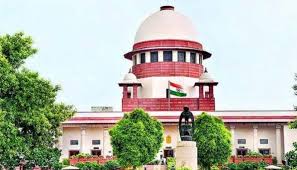
The Supreme Court of India has urged state governments to create a mechanism that allows highly meritorious postgraduate (PG) doctors to defer their compulsory bond service so they can immediately join super-speciality courses at reputed institutions. In a recent order concerning a Himachal Pradesh doctor, the Court allowed postponement of his two-year bond, directing the state to release his original certificates so he could join a DM/MCh super-speciality seat, while insisting on strict safeguards to ensure he returns to complete his mandatory service.
What Happened in This Case?
The case involved a doctor from Himachal Pradesh who had completed his PG medical degree and signed a two-year compulsory service bond, mainly in rural areas, in return for subsidised education and stipend support. Before he could start this bond service, he secured All India Rank 9 in the national DM/MCh super-speciality entrance examination and was allotted a seat at Sree Chitra Tirunal Institute for Medical Sciences & Technology, Thiruvananthapuram, a premier super-speciality centre.
The state wanted him to first complete his two-year bond and only then apply for super-speciality, in line with its existing bond rules. The doctor approached the Supreme Court arguing that if he delayed and completed the full bond period first, he might lose eligibility for the super-speciality course despite his high merit. A Division Bench of Justices J B Pardiwala and R Mahadevan granted him relief, using its powers under Article 142 of the Constitution to do “complete justice” in the individual case.
Key Directions and Safeguards
In its order, the Supreme Court did not strike down bond policies but asked states to “introspect” and explore mechanisms to defer service bonds in exceptional, merit-based cases. The judges noted that doctors who have furnished bonds may also legitimately aspire to higher qualifications and that rigid enforcement could, in some situations, effectively shut the door on super-speciality training for deserving candidates.
In this particular case, the Court laid down clear safeguards:
-
The Himachal Pradesh government must immediately return the doctor’s original certificates so he can join the super-speciality course by the specified date.
-
The doctor must file a written undertaking that, after completing the three-year super-speciality program, he will return to serve the full two-year bond period in the state.
-
An undated cheque of Rs 40 lakh deposited with the state will be retained as a financial deterrent and returned only after he completes the bond service.
-
Any breach of the undertaking could invite contempt proceedings by the Supreme Court.
The Bench observed that if states adopt similar mechanisms for rare, highly meritorious candidates admitted to reputed super-speciality institutions, the public system could ultimately benefit from their advanced skills.
Why Bonded Rural Service Exists
States such as Himachal Pradesh require PG medical students in government institutions to sign service bonds in return for subsidised tuition and monthly stipends. In court, Kerala’s Advocate General articulated the broader policy rationale: the bond ensures that rural and underserved areas benefit from the services of trained specialists for a fixed period after their postgraduate training.
In many states, these bonds typically:
-
Run for one to three years, often with a focus on rural or difficult postings.
-
Include penalties (sometimes in the range of several lakh rupees) if doctors do not serve or break the bond.
-
Aim to address chronic shortages of specialists in public sector and rural health facilities.
While policies vary by state, the underlying public health objective is to balance the government’s investment in specialist training with community service obligations, particularly for vulnerable populations with limited access to advanced care.
Potential Benefits for Public Health
Allowing limited, well-regulated deferment of bond service for exceptional candidates could help strengthen tertiary and quaternary care in the long term. Doctors who complete super-speciality training in fields such as cardiology, neurosurgery, oncology, or critical care may later serve as referral anchors, trainers, and leaders in state health systems.
Public health experts often highlight several potential advantages of such flexibility:
-
Higher skill density in government hospitals: When super-specialists return to bond service, they bring advanced expertise that can upgrade care quality, support complex procedures, and improve outcomes.
-
Capacity-building and training: Super-specialists can mentor junior doctors, nurses, and allied staff, indirectly benefiting a larger patient base.
-
Reduced out-of-pocket burden: If more super-speciality services become available in public institutions, patients may rely less on costly private sector care for complex conditions.
At the same time, experts caution that such mechanisms must be tightly controlled to avoid a situation where bond obligations are indefinitely delayed or effectively bypassed. The Supreme Court’s emphasis on written undertakings and strong financial deterrents reflects this concern.
Concerns and Limitations
The Court’s guidance is advisory in nature; it has suggested that states “consider” evolving mechanisms, leaving actual policy design and implementation to state governments. This means the impact on bond rules across India will depend on how individual states interpret and adopt the suggestion.
Key concerns that policymakers will need to navigate include:
-
Risk of weakening rural service: If exemptions or deferments become too common, remote areas may face longer or deeper specialist shortages.
-
Fairness and transparency: Any “exceptional merit” criteria must be clearly defined to avoid perceptions of favoritism or unequal treatment among PG doctors.
-
Administrative tracking: States will need robust systems to track doctors who defer service, monitor compliance with undertakings, and enforce penalties if obligations are not met.
The Supreme Court, while granting relief in this case, made it clear that breach of the undertaking could lead to legal consequences, signalling that flexibility comes with accountability.
What This Means for Medical Students and Doctors
For current and future PG medical students, this development signals that there may be room for structured flexibility if they secure top ranks in national super-speciality exams at reputed institutes. However, this is not an automatic relaxation of bonds; it is a case-based relief with strong conditions and a broader suggestion to states.
Prospective PG and super-speciality candidates should:
-
Carefully review state-specific bond conditions before joining PG courses.
-
Seek written clarification from authorities on whether any deferment mechanisms exist or may be introduced.
-
Understand that even if deferment is allowed, the obligation to eventually serve the bond remains, often backed by financial and legal consequences.
Medical education experts note that transparent, predictable policies can help students plan careers better, while still ensuring that public health needs—especially in rural India—are not compromised.
Implications for Patients and the Public
For patients and the broader public, the ruling reflects an attempt to balance immediate service needs with long-term capacity-building in the health system. In the short term, strict bond enforcement can improve availability of PG-trained doctors in district and rural hospitals; in the long term, enabling more super-specialists to return to government service could enhance access to higher-level care without catastrophic costs.
Public health advocates stress that any new mechanism should:
-
Preserve the core purpose of rural bonds: to ensure that communities who subsidise medical education through taxes benefit from trained doctors.
-
Prioritise deployment of returning super-specialists to high-need government facilities, including teaching hospitals and large district hospitals.
-
Include regular public reporting on bond compliance and impact on rural service coverage.
The Supreme Court’s “thought” for states to consider is therefore more than an education issue; it is a health-system design question that will affect how and where specialists serve in the coming years.
Practical Takeaways for Readers
While this order deals with doctors and medical education, it indirectly touches everyone who depends on the public health system.
-
If you live in a rural or semi-urban area, bond policies can influence whether your nearest government hospital has specialists on staff.
-
Over time, if states successfully bring back super-specialists into public service, access to advanced care such as complex surgeries or specialised clinics could improve in government facilities.
-
As a patient, you can continue to ask which services are available locally in public hospitals, and when needed, seek referral to higher centres, whether state-run or central institutes.
For medical aspirants and families, this case underlines the importance of understanding not just exam ranks and seat allotments, but also the service obligations that accompany subsidised training in government institutions.
Medical Disclaimer: This article is for informational purposes only and should not be considered medical advice. Always consult with qualified healthcare professionals before making any health-related decisions or changes to your treatment plan. The information presented here is based on current research and expert opinions, which may evolve as new evidence emerges.
References
-
Supreme Court suggestion on deferment of bond service for meritorious PG doctors and relief to Himachal Pradesh doctor (Allow meritorious PG doctors to defer bond service for super-speciality training: Supreme Court tells states). Medical Dialogues. Accessed February 2026.