 0
0
 0
0
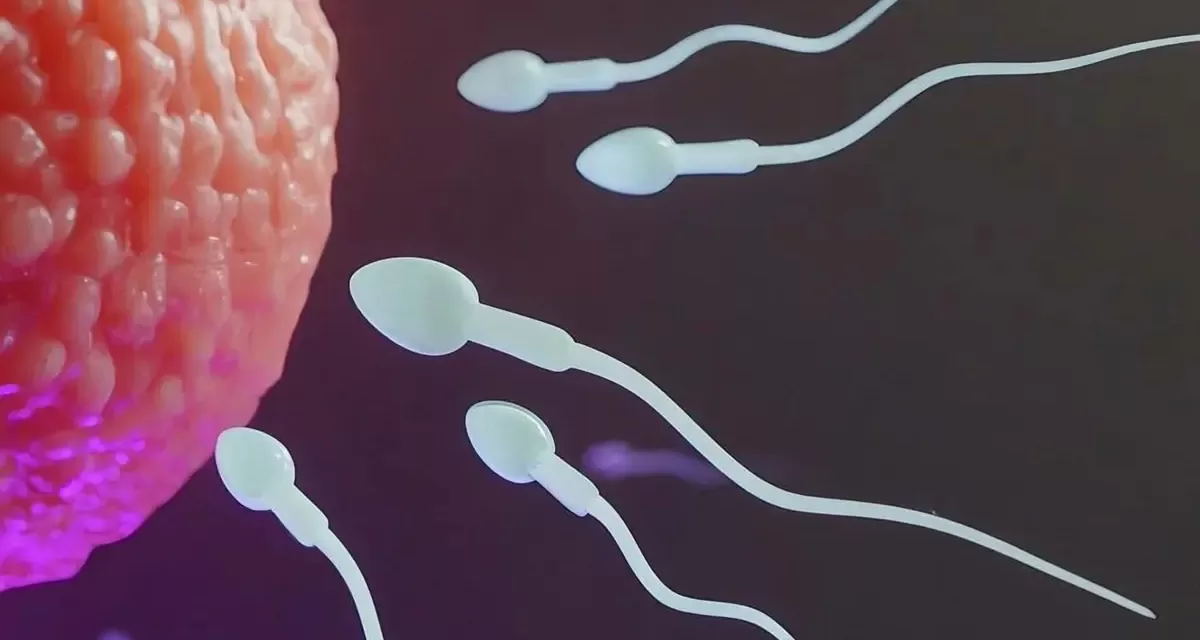
A new scientific breakthrough from Kyoto University has shed light on how human sperm—those famously determined swimmers—power through environments scientists predicted should halt them in their tracks. This research not only answers a decades-long biological mystery but could also pave the way for soft robotics and new medical technologies.
For years, scientists have struggled to explain how sperm, only about 50 microns long, manage to swim so efficiently through thick cervical mucus or lab-made gels. Under traditional Newtonian physics—which states every action has an equal and opposite reaction—tiny flagella should stall almost immediately in such viscous conditions. Yet, sperm persistently move forward.
Kyoto University’s Kenta Ishimoto and colleagues have now cracked this puzzle. Their findings reveal that sperm tails use a property called odd elasticity, measured by a novel “odd elastic modulus,” to break free from Newton’s third law. Unlike typical elastic materials that store and return energy like a spring, sperm tails constantly inject energy into their system using molecular motors, disrupting the expected forces.
The researchers used high-speed video footage to analyze the motion of both human sperm and the green alga Chlamydomonas, mapping the tail movements in what they call “shape space.” They created a mathematical model showing that, rather than passively recoiling, the sperm’s tail mechanics generate non-reciprocal forces—meaning the forces do not balance out, but rather propel the next wave forward.
As a result, sperm swim using traveling waves along their tails, without creating an equal push in the opposite direction. The study found that the more pronounced this odd elastic property, the greater the sperm’s propulsion velocity and swimming efficiency—even when beat patterns varied due to environmental noise.
Surprisingly, this mechanism is not unique to sperm. The team’s model also described other cells, like algae, using asymmetric strokes. This hints at a shared swimming strategy across various life forms—one with huge potential for designing small, flexible robots that could travel through bodily fluids or other challenging materials.
This work doesn’t overturn Newton’s laws but demonstrates that in biological systems far from equilibrium—like those constantly using energy—force symmetry can be broken. Instead, these systems rely on internal motor-driven elasticity for motion.
While this research answers longstanding questions, it also opens new ones—such as how sperm adjust their stiffness in response to chemical signals during fertility journeys, or how they cope with the thickest parts of the female reproductive tract.
Nature, the researchers note, doesn’t break the rules of physics outright—but it is remarkably adept at finding creative loopholes.
Disclaimer: This article reports on recently published scientific research. For medical advice or fertility concerns, consult a qualified healthcare professional.
Reference: “Swimming sperm appear to break Newtonian laws of physics with their tails,” Earth.com