 0
0
 0
0
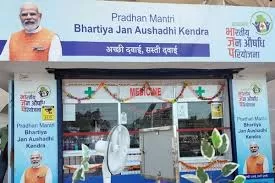
MANGALURU — In a significant shift for India’s healthcare landscape, the southern states of Karnataka, Kerala, and Tamil Nadu have emerged as the primary engines driving the growth of the Pradhan Mantri Bhartiya Janaushadhi Pariyojana (PMBJP). New data reveals that these three states are not only outpacing the rest of the country in the adoption of generic medicines but are effectively anchoring the national scheme, accounting for nearly one-third of its total business volume.
This “southern surge” highlights a growing divide in India’s health economy, where higher health literacy and robust distribution networks are enabling millions of consumers to access essential medications at a fraction of the cost of branded alternatives.
The Power of the South: By the Numbers
According to the latest data from the Ministry of Chemicals and Fertilizers, the five southern states collectively host 5,196 of the country’s 17,610 Jan Aushadhi Kendras (JAKs)—approximately 30% of the national total. However, it is the sales volume that tells the true story of adoption.
-
Kerala’s Rapid Rise: The state has shown one of the sharpest growth trajectories, with business volume more than doubling from ₹107.49 crore in 2020-21 to ₹264.37 crore in 2024-25.
-
Karnataka’s Stronghold: With 1,543 Kendras, Karnataka saw its sales climb from ₹148.56 crore to ₹222.85 crore in the same period.
-
Tamil Nadu’s Steady Gains: Sales in the state surged more than threefold, jumping from ₹51.48 crore to ₹180.35 crore.
In stark contrast, larger states like Madhya Pradesh and Bihar have struggled to translate their population size into utilization. Madhya Pradesh, despite its vast geography, saw sales dip to just ₹2.64 crore in 2024-25, while Bihar’s nearly 1,000 Kendras generated a modest ₹6.06 crore.
Bridging the Cost Gap: What This Means for Patients
For the average consumer, the success of these Kendras translates directly to financial relief. Jan Aushadhi medicines are priced 50% to 90% lower than their branded counterparts.
“The economic impact on a family managing chronic conditions is massive,” explains Dr. Rajeshwari Nair, a public health researcher specializing in health economics. “Take Atorvastatin, a common cholesterol medication. A branded strip might cost upwards of ₹147, while the Jan Aushadhi generic version costs around ₹12. When you multiply that savings across monthly prescriptions for diabetes, hypertension, and cardiac care, you are effectively putting thousands of rupees back into a household’s pocket every year.”
This price disparity is the scheme’s strongest selling point. By eliminating marketing costs and regulating profit margins, the government aims to reduce out-of-pocket healthcare expenditure, which pushes millions of Indians into poverty annually.
Why Is the South Succeeding?
Experts attribute the uneven success of the scheme to differences in health literacy and infrastructure.
“The acceptance of generic medicines requires a level of consumer confidence,” notes Dr. Nair. “In states with higher literacy rates like Kerala and Tamil Nadu, patients are more likely to understand that a generic drug is bio-equivalent to a branded one—meaning it has the same active ingredient, strength, and efficacy. In other regions, the misconception that ‘cheaper means lower quality’ remains a significant barrier.”
Furthermore, the southern states have historically had stronger public health infrastructure, which may facilitate better logistics and supply chain management for these Kendras.
Challenges: Quality Perception and Supply Chains
Despite the success, the scheme is not without its hurdles. Reports from the ground indicate that supply chain disruptions remain a critical challenge. Pharmacists in high-demand areas often report stockouts of essential medicines, forcing patients to return to expensive private pharmacies.
There is also the lingering issue of trust. While the Pharmaceuticals and Medical Devices Bureau of India (PMBI) mandates that all drugs be tested in NABL-accredited laboratories and sourced from WHO-GMP compliant plants, skepticism persists among some medical practitioners.
“We still see doctors who are hesitant to prescribe generics, often citing quality concerns,” says a senior pharmacist from a Kendra in Bengaluru. “However, the government’s rigorous testing protocols are slowly changing that narrative. The sheer volume of repeat customers we see in the South proves that the medicines are working.”
The Road Ahead
The central government has set an ambitious target to expand the network to 25,000 Kendras by March 2027. To fuel this growth, incentives for Kendra owners have been structured to ensure viability, including a 10% margin on monthly purchases and special grants of up to ₹2 lakh for outlets in specific regions.
For now, Karnataka, Kerala, and Tamil Nadu serve as the model for how affordable healthcare can be delivered at scale. Their success suggests that when accessibility meets awareness, the public is ready to embrace the generic revolution.
Medical Disclaimer:
This article is for informational purposes only and should not be considered medical advice. Always consult with qualified healthcare professionals before making any health-related decisions or changes to your treatment plan. The information presented here is based on current research and expert opinions, which may evolve as new evidence emerges.
References
-
Primary News Source:
-
“Karnataka, Kerala, TN power up Janaushadhi Kendras.” EdexLive, 08 Dec 2024. Available at: https://www.edexlive.com/news/karnataka-kerala-tn-power-up-janaushadhi-kendras
-