 0
0
 0
0
December 7, 2025
DEHRADUN — A stark paradox has emerged in the picturesque valleys of Uttarakhand. While the state is often celebrated for its natural beauty and developmental strides, a quiet crisis is unfolding in its nurseries and anganwadis. A sweeping new analysis of nearly half a million children has declared a “nutrition emergency” in the state, identifying the district of Almora as the worst-hit region, with malnutrition rates crossing critical World Health Organization (WHO) thresholds.
The report, released this week by researchers including Dr. Kirti Kumari, Scientist at Krishi Vigyan Kendra, Tehri Garhwal, paints a troubling picture of public health in the hill state. Despite national improvements in hunger indices, data covering 4.83 lakh children aged 0-5 reveals that the “Devbhoomi” is grappling with severe nutritional insecurity that threatens to stunt not just its children, but its economic future.
The Data: A Warning from the Hills
The findings are based on data collected from 15,514 Anganwadi centers across all 13 districts of Uttarakhand. The numbers from Almora, a cultural heartland of the Kumaon region, are particularly alarming.
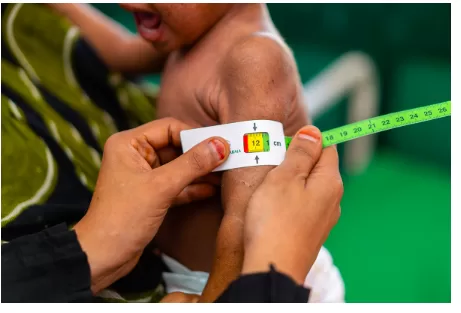
The district registered a wasting rate of 5.34%, affecting nearly 1,000 screened children. Wasting, or low weight-for-height, is a sign of acute, short-term malnutrition that carries a high risk of mortality if untreated. Even more concerning is the prevalence of Severe Acute Malnutrition (SAM) in the district, which stands at 1.94%—nearly double the state average of 0.72%.
“The district administration must declare a nutrition emergency immediately,” stated Dr. Kirti Kumari in the report. “Almora and Uttarkashi have crossed critical WHO thresholds.”
While Almora faces acute crises, the district of Tehri Garhwal is battling chronic undernutrition. The study found that 25.55% of children in Tehri are stunted (low height-for-age), a condition that results from prolonged nutritional deprivation and is often irreversible after the age of two.
Displacement and Diet: The Root Causes
Health experts and sociologists have long warned that infrastructure development in the Himalayas often comes with hidden human costs. The new report draws a direct line between large-scale displacement and nutritional decline, specifically citing the impact of the Tehri Dam.
For generations, families in these valleys relied on fertile, river-fed land to grow a diverse basket of crops—millets, vegetables, and dairy from their own livestock. Displacement has forced many into resettlement colonies on rocky, low-yield terrain.
“Tehri Garhwal’s children bear the unseen burden of the Tehri Dam,” Dr. Kumari explained.
The shift has forced a transition from a self-sustaining agrarian diet to a market-dependent one. Kamla Bisht, an elderly resident of a resettlement colony interviewed for the report, highlighted this stark transition: “Before the dam, we had milk from our cows, vegetables from our fields… Now we buy everything at double the price on rocky land that grows nothing. Three grandchildren are malnourished. Is this the price of development?”
Medical Context: Why “The First 1,000 Days” Matter
From a medical perspective, these statistics represent more than just hunger; they represent a potential lost generation.
“Malnutrition in the first 1,000 days of life—from conception to age two—has profound neurodevelopmental consequences,” explains Dr. Rajesh Gupta, a senior pediatrician not involved in the study. “Stunting is not just about being short. It is a proxy for impaired brain development. A child who is stunted is less likely to finish school, more likely to suffer from chronic diseases as an adult, and will earn significantly less over their lifetime.”
Severe Acute Malnutrition (SAM), seen rising in Almora, is a medical emergency. It compromises the immune system, making common childhood illnesses like diarrhea and pneumonia potentially fatal.
The Economic Toll
The report introduces a staggering economic dimension to the crisis. It estimates that child malnutrition currently costs Uttarakhand approximately ₹7,000 crore annually—roughly 2.5% of the state’s Gross State Domestic Product (GSDP).1
To put this in perspective, the estimated loss excee2ds the state’s entire annual health budget of ₹4,500 crore. “Every day of delay costs the state ₹19 crore,” Dr. Kumari noted. “This money is simply lost, not invested anywhere.”
The Path Forward
While the central government’s Poshan Abhiyaan (National Nutrition Mission) has made strides in monitoring and data collection through tools like the Poshan Tracker, the Uttarakhand report suggests that “last-mile” delivery remains a challenge in the difficult hilly terrain.
Public health experts argue that solutions must go beyond supplementary nutrition packets. They advocate for:
-
Reviving Traditional Agriculture: Encouraging the cultivation of local, nutrient-dense crops like Mandua (finger millet) and Jhangora (barnyard millet).
-
Economic Rehabilitation: Ensuring that displaced families have viable livelihoods to afford diverse diets.
-
Targeted Clinical Intervention: Establishing Nutrition Rehabilitation Centers (NRCs) specifically in the identified hotspots of Almora and Uttarkashi.
As Uttarakhand continues to push for infrastructure growth, this report serves as a critical check. It suggests that without addressing the fundamental biological needs of its youngest citizens, the state’s development story will remain incomplete.
Medical Disclaimer
Medical Disclaimer: This article is for informational purposes only and should not be considered medical advice. Always consult with qualified healthcare professionals before making any health-related decisions or changes to your treatment plan. The information presented here is based on current research and expert opinions, which may evolve as new evidence emerges.
References
-
Primary Report: Kumari, K. et al. (2025). Analysis of Nutritional Status of Children in Uttarakhand (0-5 Years). Krishi Vigyan Kendra, Tehri Garhwal. (Reported via The New Indian Express / EdexLive, Dec 6, 2025)