 0
0
 0
0
NEW DELHI — In a decision hailed as a “true Diwali” for women’s health, the Supreme Court of India issued a historic ruling on Friday, declaring that access to menstrual hygiene and health is a Fundamental Right under the Indian Constitution.
The landmark judgment, delivered by a bench of Justices JB Pardiwala and R Mahadevan, mandates that every school in India—regardless of whether it is public or private, urban or rural—must provide free biodegradable sanitary napkins and separate, functional toilets for female students. The court integrated this right into the Right to Life (Article 21) and the Right to Free and Compulsory Education (Article 21A), signaling a tectonic shift in how the nation addresses adolescent health and educational equity.
From Silence to State Mandate: The Ruling’s Impact
For decades, menstrual hygiene was treated as a private, often stigmatized matter. The Supreme Court’s intervention elevates it to a matter of constitutional duty.
“This pronouncement is not just for stakeholders of the legal system,” Justice Pardiwala observed. “It is also meant for classrooms where girls hesitate to ask for help… Progress is measured by how we protect the vulnerable.”
The ruling requires authorities to:
-
Distribute Free Pads: Schools must provide biodegradable sanitary napkins of the highest safety standards.
-
Infrastructure Reform: Establish Menstrual Hygiene Management (MHM) facilities, including separate toilets and disposal mechanisms.
-
National Uniformity: Apply these standards across all educational institutions nationwide to prevent the “period poverty” that leads to high dropout rates among adolescent girls.
“A True Diwali”: Muruganantham Celebrates a 25-Year Fight
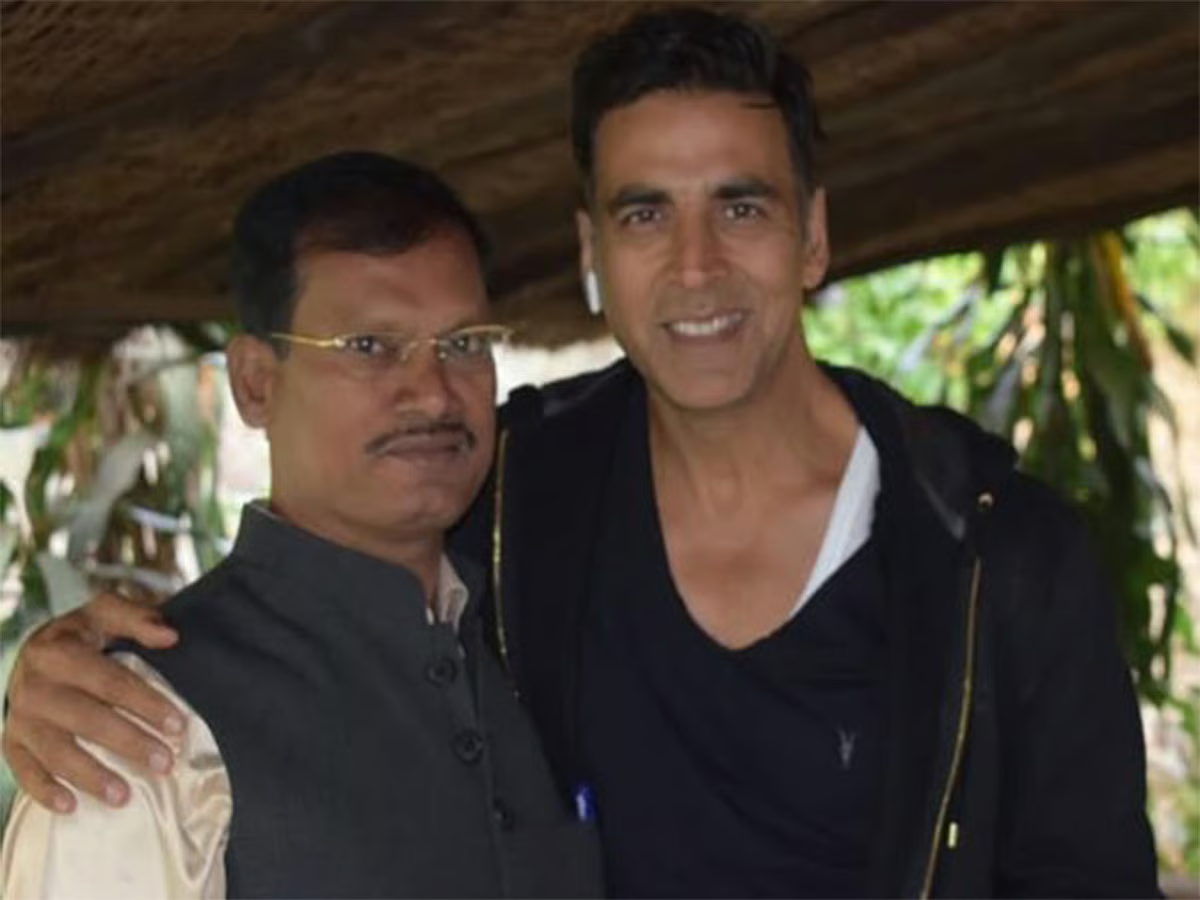
Arunachalam Muruganantham, the social activist whose life inspired the film PadMan, described the verdict as the culmination of a quarter-century of grassroots struggle. Muruganantham, who revolutionized rural health by inventing low-cost sanitary pad-making machines, expressed profound emotion following the announcement.
“Today feels like a true Diwali for us and for millions of girls and women across India,” Muruganantham stated from Coimbatore. “After 25 years of working on menstrual hygiene awareness, seeing it recognized as a Fundamental Right is an emotional and historic moment. India is not just changing—we are setting an example for the world.”
He extended gratitude to the judiciary, the Prime Minister’s Office, and the creative team behind PadMan, including actor Akshay Kumar, for bringing a “taboo” topic into the mainstream consciousness.
The Public Health Context: Why This Matters
The medical and social implications of this ruling are backed by stark data. Menstrual hygiene is not merely a matter of comfort; it is a critical determinant of reproductive health and educational attainment.
1. Health Risks of Poor Hygiene
When safe menstrual products are unavailable, many girls resort to using old rags, husks, or ash. According to the National Family Health Survey (NFHS-5), while menstrual hygiene adoption has improved, a significant portion of the rural population still lacks access to sterilized products.
-
Infection Risk: Improper hygiene is a leading cause of Urogenital Tract Infections (UTIs) and Bacterial Vaginosis (BV).
-
Long-term Complications: Chronic infections can lead to Pelvic Inflammatory Disease (PID), which is linked to future infertility and increased susceptibility to Cervical Cancer.
2. The Educational “Drop-out” Crisis
Research by NGO Dasra and other health advocates has historically shown that nearly 23 million girls in India drop out of school annually after reaching puberty due to a lack of menstrual management facilities.
-
The “Gap” Effect: Girls who remain in school often miss 2 to 5 days of classes every month during their period, leading to a significant cumulative educational disadvantage.
Expert Commentary: Moving Beyond Infrastructure
While the medical community has welcomed the verdict, experts emphasize that “pads and toilets” are only the first step.
“The mandate for biodegradable pads is a masterstroke,” says Dr. Anjali Rai, a public health consultant (not involved in the litigation). “It addresses the looming environmental crisis of non-biodegradable plastic waste from traditional napkins. However, the real challenge lies in Menstrual Literacy. We need to ensure that teachers and students understand the biological process to dismantle the stigma that leads to girls feeling ‘impure’.”
Potential Challenges and Implementation
Despite the celebratory atmosphere, logistical hurdles remain. The Supreme Court’s detailed judgment (awaiting official upload) reportedly includes specific directions on the disposal of sanitary waste—a critical component, as millions of used pads could overwhelm rural waste management systems if not handled via incinerators or composting.
Potential Limitations:
-
Supply Chain: Ensuring a consistent supply of “highest safety standard” pads to remote Himalayan or tribal regions.
-
Maintenance: Building toilets is different from maintaining them. Many schools currently have toilets that lack running water, rendering them unusable for menstrual hygiene.
-
Privacy: The court’s emphasis on “separate toilets” is vital, as a lack of privacy is a primary reason girls stay home during their cycles.
What This Means for You
For parents and educators, this ruling provides a legal tool to demand better facilities. If a school fails to provide these basic necessities, they are now in violation of a student’s Fundamental Rights.
Practical Steps for Families:
-
Inquire: Ask your local school administration about their plan to implement the SC-mandated MHM facilities.
-
Education: Use this news to start a conversation with children of all genders about menstruation as a normal biological process.
-
Advocacy: Support local initiatives that focus on biodegradable options to ensure health benefits don’t come at an environmental cost.
As Muruganantham aptly noted, this victory belongs to the “silent warriors.” By codifying dignity into law, India has moved closer to a future where a biological cycle no longer dictates a girl’s destiny.
Medical Disclaimer
This article is for informational purposes only and should not be considered medical advice. Always consult with qualified healthcare professionals before making any health-related decisions or changes to your treatment plan. The information presented here is based on current research and expert opinions, which may evolve as new evidence emerges.
References
-
https://www.edexlive.com/news/true-diwali-for-women-s-health-padman-s-arunachalam-muruganantham-hails-sc-verdict-on-menstrual-health