 0
0
 0
0
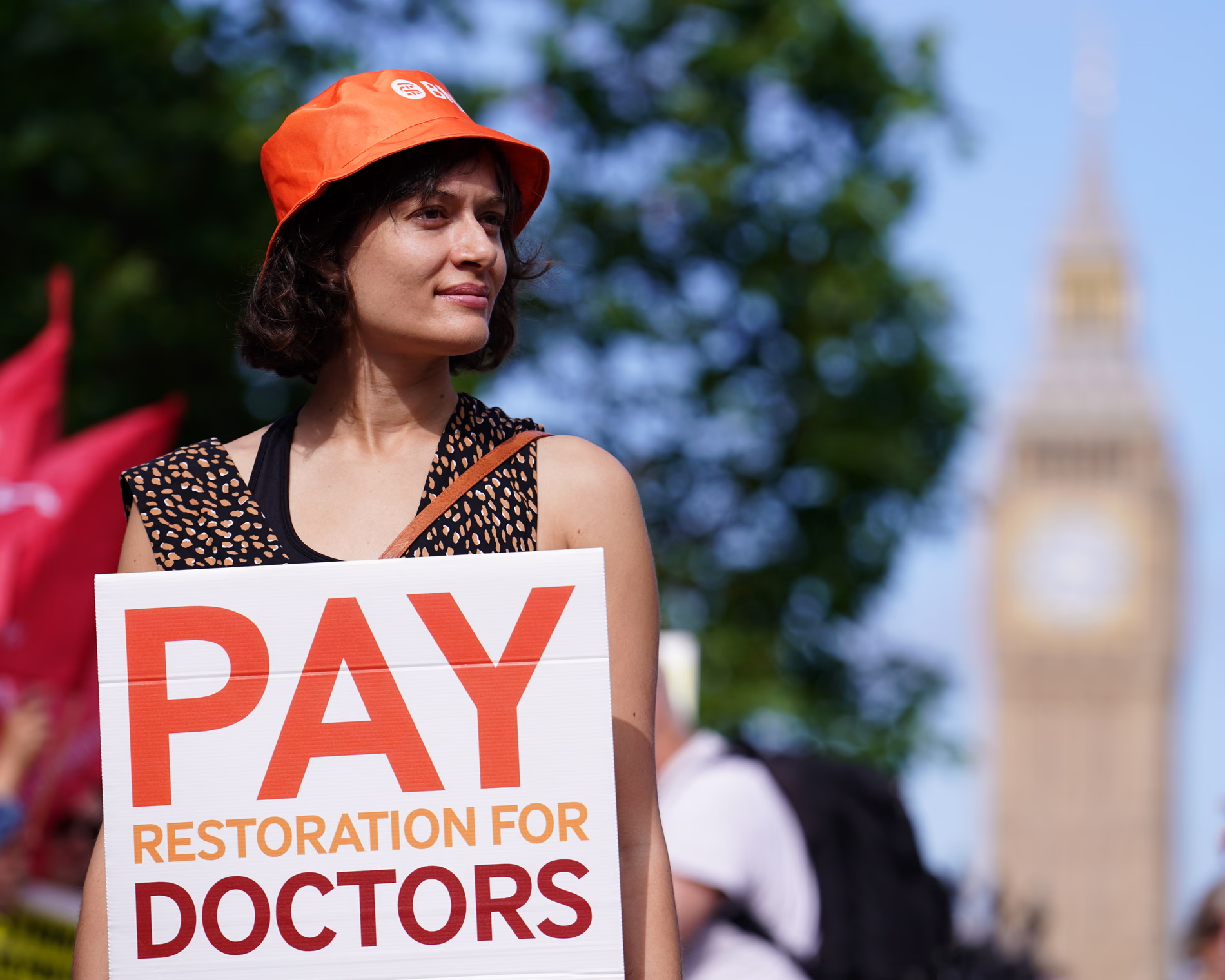
London, July 23, 2025 — Resident doctors across England have confirmed a five-day strike beginning this Friday after last-ditch talks with the UK government failed to resolve the ongoing dispute over pay and working conditions. Health Secretary Wes Streeting’s latest offer did not meet the demands of the British Medical Association (BMA), leading to what medical leaders have called a “completely unprecedented” situation for the National Health Service (NHS).
Core Points of Dispute
-
Pay Erosion: The BMA is seeking a 29% pay increase, arguing that real-terms pay has fallen by more than a fifth since 2008. The government’s latest offer of a 5.4% raise was deemed “insufficient” by BMA leaders.
-
Training and Debt: Additional concerns include high student debt and the cost of medical training, with some doctors carrying over £100,000 in loans after five years of university. The government, however, has not agreed to debt relief or other immediate financial support for trainees.
-
Working Conditions: Discussions considered issues such as greater control over job placements, examination fees, and improved scheduling, but these non-pay measures were judged inadequate by union representatives.
Voices From Both Sides
British Medical Association
Dr. Melissa Ryan and Dr. Ross Nieuwoudt, co-chairs of the BMA’s resident doctors committee, stated:
“We have been in talks with Wes Streeting and with his officials… We came to talks in good faith, keen to explore real solutions to the problems facing resident doctors today. Unfortunately, we did not receive an offer that would meet the scale of those challenges… The simplest and most direct means of restoring the more than a fifth of our pay that has eroded since 2008 is to raise our pay”.
They emphasized that while non-pay solutions are valued, the fundamental issue remains pay restoration.
Government Response
Health Secretary Wes Streeting expressed disappointment, accusing the BMA of being “reckless and needless” in opting for such extensive industrial action. He warned the strike would:
-
Cause unnecessary disruption to patients.
-
Put additional strain on NHS services and staff.
-
Hinder ongoing efforts to recover the NHS after the pandemic emergency.
Streeting maintained that while reforms to working conditions are possible, the government cannot afford a salary offer as high as the union demands.
Impact on the NHS
-
Hospital Services: NHS England has warned of “inevitable disruption,” including canceled operations and delayed care, as trust leaders are forced to reallocate staff to emergency and essential services.
-
Patient Safety: NHS leaders are working to minimize risks, particularly for cancer, transplant, and maternity care which cannot be delayed.
-
Staff Sentiment: More than 26,000 resident doctors voted for strike action, reflecting widespread frustration among early-career medics.
Timeline
| Date | Event |
|---|---|
| July 22, 2025 | Final talks between BMA and government fail |
| July 25, 2025 | Strike begins at 7am |
| July 30, 2025 | Strike ends at 7am |
Mixed Public and Professional Reactions
While some view the strike as a necessary stand for fair pay, others including NHS executives and patient representatives, warn it risks further undermining public trust and harming the very system doctors aim to protect.
Disclaimer
This report is based on information from multiple reliable news and official union sources as of July 23, 2025. Developments around negotiations and the strike may evolve rapidly. Readers are advised to consult official NHS and BMA communications for the most up-to-date status.