 0
0
 0
0
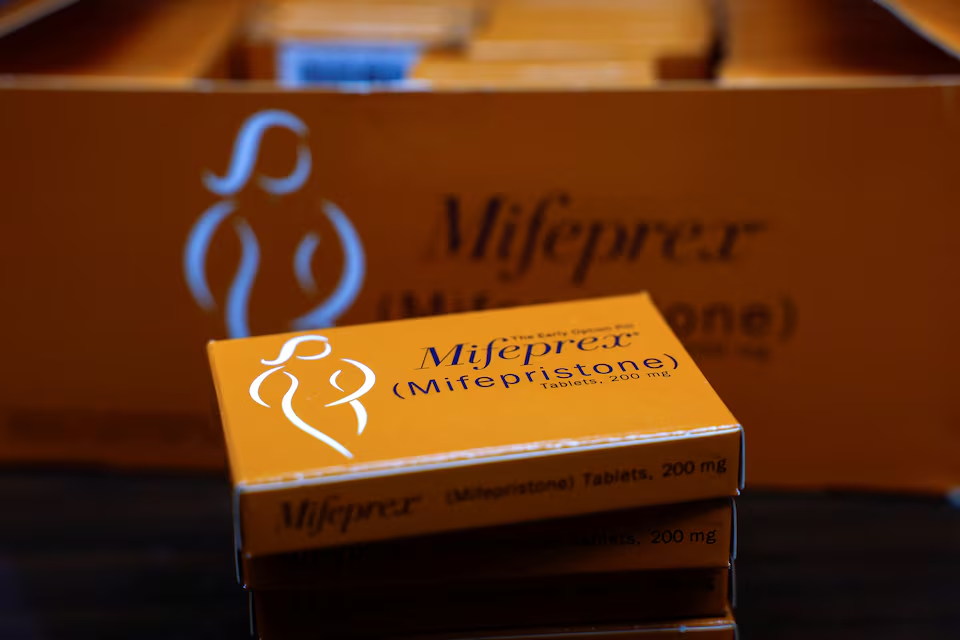
On November 20, 2025, three Republican-led states—Missouri, Kansas, and Idaho—expanded a lawsuit to block the U.S. Food and Drug Administration’s (FDA) recent approval of a new generic version of the abortion medication mifepristone. The move intensifies an ongoing battle over access to medication abortion in the United States, highlighting the complex intersection of science, law, and political debate.
Key Developments:
The FDA approved the generic mifepristone produced by Evita Solutions on September 30, 2025, marking the second generic version of the drug to be authorized. Mifepristone, when used with misoprostol, is the primary medication regimen for abortions within the first 10 weeks of pregnancy and accounts for over 60% of abortions in the U.S.
Missouri’s Attorney General Catherine Hanaway, joined by Kansas and Idaho, contested this FDA decision, arguing that the agency “needs to halt the automatic approval of new mail-order generic versions,” citing concerns over safety and regulatory oversight. Their lawsuit aims to halt access to this generic medication, intensifying efforts by Republican-led states to restrict abortion access following the 2024 Supreme Court rulings on abortion rights. The case is currently under the jurisdiction of U.S. District Judge Chris Stevens in St. Louis.
Expert Perspectives:
The controversy stems partly from political pressures on the FDA regarding mifepristone’s safety profile. Health experts emphasize that mifepristone is one of the most thoroughly studied and widely used medications in reproductive health.
Dr. Kiki Freedman, CEO of Hey Jane, a leading telemedicine abortion provider, stated, “Mifepristone is among the most well-researched medications in the country, and unwarranted reviews or legal challenges threaten to undermine access to safe abortion care.” The American Medical Association (AMA) also supports the drug’s safety, labeling medication abortion as “exceedingly safe and effective” and warning that restrictions could jeopardize public health.
By contrast, some political leaders and anti-abortion advocates argue that the FDA’s expedited approval process for new generic versions circumvents necessary safety reviews. Senator Josh Hawley (R-Mo.) alleged loss of confidence in FDA leadership following the approval, invoking concerns about the administration’s regulatory integrity.
Context and Background:
Mifepristone was originally approved by the FDA in 2000. Its safety and efficacy have been validated through decades of studies and real-world use. The FDA generally approves generic drugs based on evidence of bioequivalence—meaning the generic produces the same clinical effect as the branded version without conducting extensive new trials.
However, the approval of new generic forms has become politically charged, particularly under the Trump administration, amid attempts by Republican states to curb abortion access. The FDA’s approval of Evita Solutions’ generic came amid a proposed comprehensive agency review ordered by Health and Human Services Secretary Robert F. Kennedy Jr. and FDA Commissioner Marty Makary, intended to examine reported safety concerns raised by some conservative groups.
The legal challenge by Republican-led states follows previous lawsuits that were dismissed or transferred, illustrating the ongoing judicial scrutiny over abortion pill regulation.
Public Health Implications:
The availability of generic mifepristone plays a crucial role in increasing affordability and access to medication abortion, especially in rural or underserved areas. Restrictions on the drug could reverse gains in reproductive health equity, limiting options for people seeking early pregnancy termination.
Experts warn that limiting access could lead to increased barriers to safe abortion services and potentially more unsafe abortion practices. Furthermore, restrictions on telemedicine prescribing and mail delivery of mifepristone—practices expanded during the COVID-19 pandemic—may disproportionately impact individuals in need of privacy or those with limited access to in-person care.
Limitations and Counterarguments:
While the FDA maintains that mifepristone’s risk evaluation and mitigation strategy (REMS) program ensures patient safety, critics argue that recent safety data warrant reevaluation. A controversial, non-peer-reviewed report from a conservative think tank cited higher rates of adverse events than clinical trials have shown, though these claims are disputed by reproductive health experts who emphasize the rigorous safety record established in peer-reviewed studies.
Disagreements on data interpretation highlight the challenges in regulatory decisions heavily influenced by political considerations, reinforcing the need for transparent, evidence-based assessments.
Summary:
The FDA’s approval of a second generic form of mifepristone represents both a regulatory milestone and a flashpoint in the ongoing debate over abortion access in America. The legal challenges from Republican-led states reflect a broader national contention surrounding reproductive rights, drug safety, and healthcare access.
As the case proceeds in court, stakeholders from medical, legal, and advocacy fields closely watch its implications for public health and reproductive justice.
Medical Disclaimer:
This article is for informational purposes only and should not be considered medical advice. Always consult with qualified healthcare professionals before making any health-related decisions or changes to your treatment plan. The information presented here is based on current research and expert opinions, which may evolve as new evidence emerges.
References: