 0
0
 0
0
March 9, 2026
JAIPUR — In a landmark achievement for public healthcare in India, surgeons at the Rajasthan University of Health Sciences (RUHS) in Jaipur have successfully performed the state’s first AI-powered cochlear implant surgery. The recipient, a three-year-old girl suffering from congenital hearing loss, is expected to begin perceiving sound and developing speech within 21 days. This procedure marks a significant leap in integrating “smart” medical technology into government-funded healthcare, offering a high-tech solution to a pervasive public health challenge.
A New Frontier in Sound
The patient, whose identity remains protected, was born with progressive congenital sensorineural hearing loss. While she could initially sense some environmental sounds, her hearing deteriorated rapidly after the age of two, a critical window for language acquisition. Without intervention, she faced a lifetime of profound silence and significant speech impediments.
The three-hour surgery was led by Dr. Mohnish Grover, a senior professor of ENT at RUHS with over a decade of specialization in cochlear technology. The team utilized a next-generation “smart” implant featuring a high-speed AI processing chip designed to mimic the natural complexities of human hearing.
“This is the first such advanced cochlear implant procedure performed at a government hospital in the state,” Dr. Grover stated following the successful surgery. “It opens new possibilities in the treatment of hearing-impaired children by providing a level of sound clarity previously unavailable in public settings.”
The Science Behind the “Smart” Implant
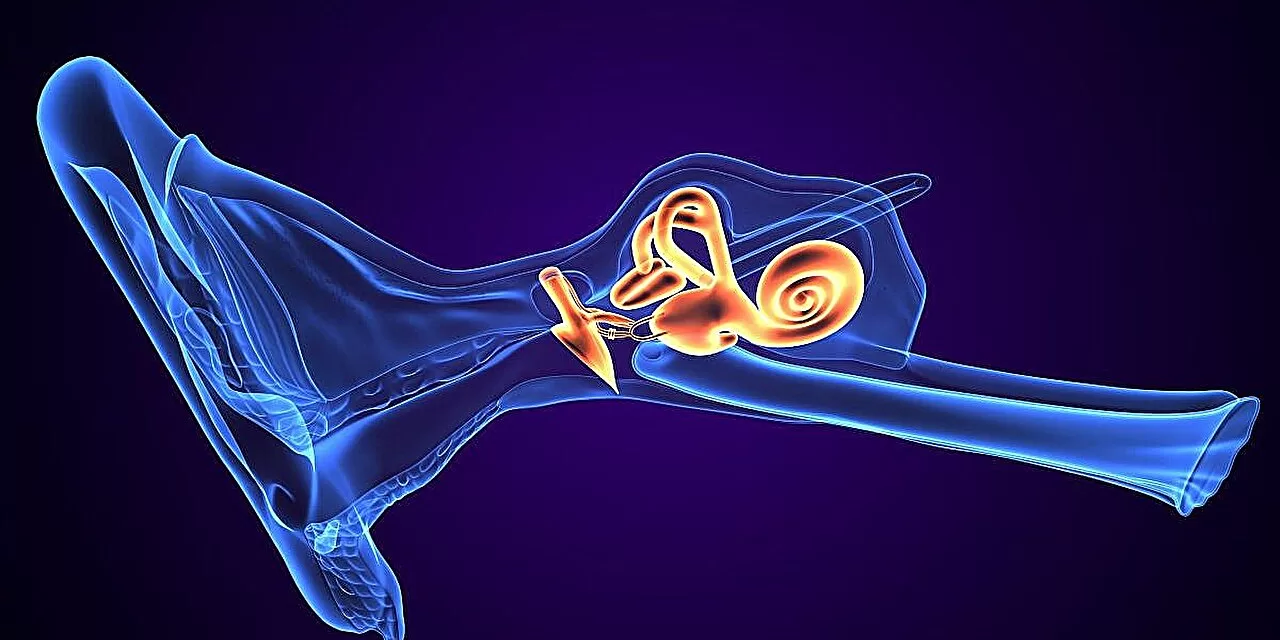
Traditional cochlear implants function by bypassing damaged portions of the inner ear (the cochlea) and using electrical pulses to stimulate the auditory nerve directly. However, the AI-enhanced model used in Jaipur introduces several technological breakthroughs:
-
Real-Time Sound Processing: The AI chip utilizes machine learning algorithms to filter out background noise while prioritizing human speech, a task that traditional processors often struggle with in crowded environments.
-
Smart Nerve Technology: This allows for more precise electrode placement, ensuring that the electrical stimulation matches the patient’s unique neural landscape.
-
Upgradable Firmware: Much like a smartphone, the external processor features internal memory that allows for software updates. This ensures the device can benefit from future AI advancements without requiring additional surgery.
-
Longevity: The internal component is engineered for a 30-year lifespan, providing a long-term solution for pediatric patients.
Addressing the Burden of Hearing Loss in India
The success of this surgery comes at a critical time. According to the National Medical Journal of India (NMJI), hearing loss affects approximately 63 million people across the country. In rural areas, such as parts of Rajasthan, prevalence rates can reach as high as 32.8%, often due to delayed diagnosis and limited access to specialized care.
Public health experts emphasize that the “golden period” for cochlear implantation is before the age of three. Early intervention significantly improves the likelihood of a child successfully integrating into mainstream schools. Data from state-sponsored insurance schemes, such as those in Tamil Nadu, show that nearly 90% of children who receive implants before age three achieve high scores in auditory performance and speech intelligibility.
Naresh Kumar Goyal, Rajasthan’s Medical Education Commissioner, hailed the Jaipur surgery as a major step toward modernizing the state’s healthcare infrastructure. By performing these advanced procedures in government hospitals, the technology becomes accessible to socioeconomically disadvantaged families who would otherwise be unable to afford the high costs of private treatment.
Expert Perspectives: A “Predict-to-Prescribe” Future
While not involved in the RUHS surgery, veteran ENT surgeon Dr. Anil Kumar Monga of Sir Ganga Ram Hospital, Delhi, noted that AI is fundamentally changing the landscape of otolaryngology.
“AI advancements like precise nerve targeting and upgradable firmware will revolutionize outcomes,” Dr. Monga observed. “These tools make implants far more effective for children, particularly in resource-limited settings where specialized post-operative therapy might be harder to access.”
Globally, researchers are using AI to predict language outcomes with over 90% accuracy by analyzing pre-operative MRIs. Dr. Nancy M. Young of Lurie Children’s Hospital has highlighted that such “predict-to-prescribe” models allow clinicians to tailor rehabilitation programs to a child’s specific needs even before the device is turned on.
Limitations and Clinical Considerations
Despite the excitement surrounding AI integration, medical professionals urge a balanced perspective. A cochlear implant is not a “plug-and-play” solution.
-
Rehabilitation is Key: The surgery is only the first step. The child must undergo months, or even years, of intensive auditory-verbal therapy to learn how to interpret the new signals the brain is receiving.
-
Surgical Risks: As with any major procedure, risks include infection or vestibular issues. Furthermore, children with cochlear implants have a statistically higher risk of meningitis, making pre-operative vaccinations essential.
-
Varied Outcomes: Not every child achieves full speech fluency. Success rates are highly dependent on the age of implantation, the presence of other developmental conditions, and the level of family support.
Looking Ahead
The milestone at RUHS Jaipur signals a shift toward the “democratization” of advanced medical technology. As AI continues to evolve, the prospect of fully implantable devices—eliminating the need for an external “ear” piece—is becoming a research priority.
For families in Rajasthan and across India, this successful procedure serves as a powerful reminder of the importance of newborn hearing screenings. With AI-driven tools now entering the public sector, the goal of “hearing for all” moves one step closer to reality.
References
Medical Disclaimer: This article is for informational purposes only and should not be considered medical advice. Always consult with qualified healthcare professionals before making any health-related decisions or changes to your treatment plan. The information presented here is based on current research and expert opinions, which may evolve as new evidence emerges.