 0
0
 0
0
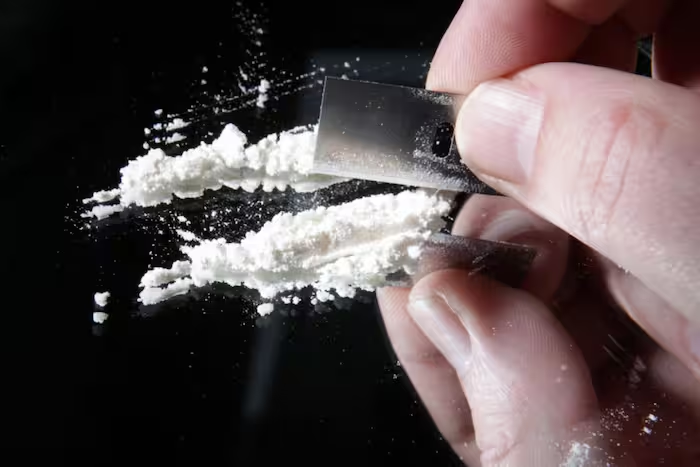
NEW DELHI — Punjab’s long-standing battle with substance use disorders has reached a staggering milestone. According to new data released by the Union Ministry of Home Affairs, authorities in the state have seized nearly 21.7 lakh kilograms (approximately 2,170 metric tonnes) of illicit drugs over the past five years. The figures, presented in the Lok Sabha on Tuesday, underscore a persistent public health emergency that continues to strain the state’s healthcare infrastructure and devastate communities.
The report reveals a sophisticated and evolving illicit market. While traditional substances like opium and poppy husk account for a significant portion of the weight, the seizure of high-potency synthetic drugs—including heroin and pharmaceutical opioids—has sounded alarms among medical professionals and policy experts. This massive influx of narcotics represents not just a law enforcement challenge, but a burgeoning clinical crisis for a state already grappling with high rates of injection drug use (IDU) and associated blood-borne infections.
The Scale of the Crisis
Between 2019 and 2023, the scale of recovery has been relentless. The data highlights that the “Golden Crescent” border remains a primary conduit for narcotics, but the transition toward synthetic “chitta” (a low-grade heroin derivative) and diverted prescription medications has changed the face of addiction in the region.
“These numbers are a sobering reminder that the supply chain remains incredibly robust despite intensive interdiction efforts,” says Dr. Arpit Sharma, a public health researcher specializing in addiction medicine (not involved in the government report). “From a health perspective, the volume of seizures suggests that the ‘street availability’ is high enough to keep prices low, which is a primary driver for initial use among vulnerable youth and the prevention of recovery for those currently in the cycle of addiction.”
According to the Ministry’s report, the seizures included approximately 2,500 kg of heroin and over 15 lakh kg of poppy husk. However, health experts argue that the focus on weight can be misleading; the rise in synthetic stimulants and pharmaceutical cocktails often poses a higher risk of fatal overdose than traditional plant-based narcotics.
Beyond the Numbers: The Impact on Public Health
The sheer volume of drugs entering the state has direct correlations with the rising morbidity rates in Punjab’s hospitals. Medical professionals note that the nature of substance use in the state has shifted toward more dangerous methods of delivery.
“We are seeing a shift from oral consumption to intravenous (IV) use,” explains Dr. Meenakshi Mahajan, a consultant psychiatrist at a leading de-addiction center in Amritsar. “This brings a secondary epidemic of Hepatitis C and HIV. When you have 21 lakh kilograms of illicit substances circulating, the health system isn’t just treating addiction; it’s treating the systemic collapse of the patient’s immune system, endocarditis, and chronic renal failure.”
Current statistics from the National Drug Dependence Treatment Centre (NDDTC) at AIIMS suggest that Punjab has one of the highest prevalence rates of opioid use in India, significantly higher than the national average. The social cost is equally high, with thousands of families reporting “multi-generational addiction,” where both parents and children are trapped in the cycle of dependency.
The Challenge of Synthetic Opioids
While poppy husk (bhue) makes up the bulk of the weight in the Ministry’s report, the “hidden” danger lies in synthetic opioids and “ice” (methamphetamine). These substances are often “cut” or adulterated with unknown chemicals, making the clinical management of an overdose significantly more complex.
Unlike traditional opium, synthetic drugs can cause rapid respiratory failure. In many rural districts of Punjab, the time between a “hit” and a fatal overdose is narrowing, often occurring before emergency services can reach the individual. This has led to calls for wider distribution of Naloxone—an opioid antagonist that can reverse overdoses—among first responders and even family members of users.
Critics Point to Gaps in Rehabilitation
Despite the massive seizures, some experts argue that the focus remains too heavily on supply reduction (seizures) rather than demand reduction (treatment).
“Seizing drugs is like mopping a floor while the tap is still running,” says Rajesh Kumar, a social worker with a Punjab-based NGO. “The government reports the kilograms seized, but we need to report the number of people successfully integrated back into the workforce. Our rehabilitation centers are often overcrowded, understaffed, and rely on outdated detoxification models rather than long-term psychosocial support.”
Furthermore, there is a growing concern regarding the “medicalization” of the crisis. Some critics argue that the over-reliance on Buprenorphine-Naloxone (Substitution Therapy) without adequate counseling creates a secondary market where treatment medications are themselves diverted for illicit use.
Looking Ahead: A Path to Recovery
The Union Government has emphasized a “Zero Tolerance” policy toward drug trafficking, pointing to the increased seizures as evidence of proactive policing. However, public health advocates suggest a three-pronged approach is necessary to move the needle:
-
Harm Reduction: Expanding needle-exchange programs and providing widespread access to overdose-reversal medications.
-
Mental Health Integration: Treating addiction not as a moral failing or a simple criminal act, but as a chronic relapsing brain disease that requires long-term psychiatric care.
-
Economic Rejuvenation: Addressing the underlying socio-economic factors—such as high unemployment among rural youth—that make the drug trade an attractive, albeit deadly, alternative.
As Punjab continues to navigate this crisis, the 21.7 lakh kg of seized drugs serves as both a testament to the vigilance of the authorities and a haunting reminder of the appetite of an epidemic that shows no signs of waning.
Medical Disclaimer: This article is for informational purposes only and should not be considered medical advice. Always consult with qualified healthcare professionals before making any health-related decisions or changes to your treatment plan. The information presented here is based on current research and expert opinions, which may evolve as new evidence emerges.
References
-
Primary Source: Union Ministry of Home Affairs (MHA) Data, presented in Lok Sabha, Dec 17, 2024. Reported via Lokmat Times.