 0
0
 0
0
SYDNEY — Health authorities in New South Wales (NSW) have issued an urgent public health warning following the confirmation of a new measles case in Western Sydney with no identifiable source of infection. This development, announced on March 3, 2026, suggests the highly contagious virus is actively circulating within the community. As of early March, NSW has already recorded 23 confirmed cases this year—starkly outpacing the 37 total cases reported throughout the entirety of 2025.
With the virus moving through the state’s most populous regions, medical experts are urging residents to verify their immunization status, warning that “immunity gaps” created during the post-pandemic period have left the door open for a significant resurgence.
Tracking the Spread: Exposure Sites and Risks
The latest alert focuses on Western Sydney, where an infectious individual visited several high-traffic locations, including healthcare facilities, in late February. Because measles is an airborne pathogen, it can linger in the air for up to two hours after an infected person has left a room.
Dr. Conrad Moreira, a Public Health Physician at the Western Sydney Local Health District, highlighted the gravity of the “unknown source” in this latest case. “With the source of the infection unknown, it is likely measles is currently circulating within the community, and other people may have been unknowingly exposed,” Dr. Moreira stated.
One of the most infectious diseases known to science, measles has a basic reproduction number ($R_0$) of 12 to 18. This means a single infected person in a non-immune population will, on average, infect between 12 and 18 other people.
Immediate Actions for Exposed Residents
NSW Health has listed specific exposure sites on its official website. Residents who were at these locations during the specified times are advised to:
-
Monitor for symptoms for up to 18 days (the maximum incubation period).
-
Isolate immediately if symptoms such as fever, cough, or a red rash appear.
-
Call ahead before visiting a GP or Emergency Department to prevent infecting others in the waiting room.
Vulnerable groups—including pregnant women, infants under 12 months, and those with weakened immune systems—who were exposed within the last six days are urged to contact their physician immediately. In some cases, post-exposure prophylaxis (vaccination or immunoglobulin) can prevent the disease if administered quickly.
A Rapid Rise: The 2026 Surge in Context
The 23 cases confirmed in the first nine weeks of 2026 represent a worrying trend. Since February 21 alone, four separate alerts have been issued across the Sydney metropolitan area, including the inner west, CBD, and south-western suburbs.
This local uptick mirrors a broader national and global trend. In 2025, Australia reported 181 cases nationwide, a significant jump from the record lows seen during COVID-19 travel restrictions. According to the World Health Organization (WHO), global measles cases surged throughout 2024 and 2025, particularly in the Eastern Mediterranean and South-East Asia. As international travel has returned to pre-pandemic levels, the virus is frequently “imported” into Australia by unvaccinated travelers.
Understanding the Disease: More Than “Just a Rash”
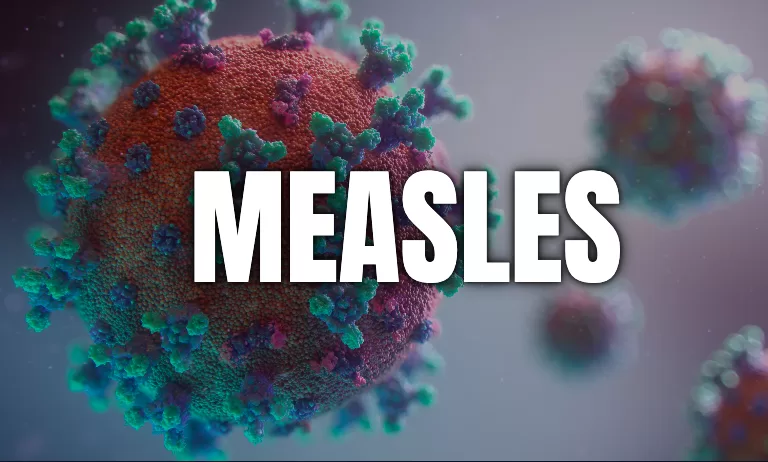
Measles is caused by a paramyxovirus. While often dismissed as a childhood rite of passage in previous generations, medical professionals emphasize that it is a serious systemic illness.
Clinical Progression
-
Incubation: 7 to 18 days with no symptoms.
-
Prodromal Phase: High fever (often exceeding 40°C or 104°F), cough, runny nose (coryza), and red, watery eyes (conjunctivitis).
-
Koplik’s Spots: Small white spots may appear inside the cheeks.
-
Exanthem Phase: A maculopapular (blotchy) red rash begins on the face and spreads down the body to the hands and feet.
Complications and Mortality
The clinical stakes are high. Approximately 1 in 5 people with measles will experience complications.
-
Pneumonia: Affects 1 in 20 cases and is the most common cause of measles-related death in children.
-
Encephalitis: Swelling of the brain occurs in 1 in 1,000 cases, often leading to permanent neurological damage.
-
Mortality: Globally, 1 to 3 children out of every 1,000 who contract measles will die from respiratory or neurological complications.
The “95% Threshold” and Vaccination Gaps
The primary driver of the current surge is a decline in herd immunity. For a population to be protected against measles, 95% of the community must be vaccinated with two doses of the Measles-Mumps-Rubella (MMR) vaccine.
Recent data from the Australian Department of Health shows that coverage for one-year-olds has slipped to 91.54%, down from the pre-pandemic 95% gold standard. In specific “hotspots” like Bankstown in Sydney, rates have plummeted to roughly 84.8%.
Professor Frank Beard of the National Centre for Immunisation Research and Surveillance (NCIRS) warned that these pockets of low coverage are “tinderboxes” for outbreaks. “Any decline in childhood coverage is a concern… immunity gaps are much greater in some parts of Australia,” Beard noted.
Epidemiologist Professor Catherine Bennett adds that post-COVID vaccine hesitancy and delayed routine appointments have contributed to a situation where 1 in 3 children now receive their first MMR dose later than the recommended 12-month mark.
Expert Perspectives: A Call to Action
Independent experts who are not directly involved in the NSW Health response have expressed growing concern over the data.
Dr. Tim Jones, Chair of the Royal Australian College of General Practitioners (RACGP) Specific Interests in Child and Young Person’s Health, described the rise as “increasingly concerning.” He emphasized that the MMR vaccine is exceptionally effective, providing 93% protection after the first dose and 97% after the second.
Professor Margie Danchin, a leading immunization expert, noted the fragility of Australia’s “elimination status,” which was officially granted by the WHO in 2014. “We’re down to under 91%… we need 95% for herd immunity,” she cautioned, stressing that the current trajectory threatens to undo decades of public health progress.
Public Health Implications and Practical Advice
The economic and logistical strain of a measles outbreak is significant. A single confirmed case often requires public health units to track hundreds of potential contacts and can lead to the temporary closure of hospital wards or childcare centers.
What You Should Do
-
Check Records: Access your “My Health Record” or contact your GP to ensure you have documented evidence of two MMR doses.
-
Free Catch-up: In NSW, the MMR vaccine is free for anyone born during or after 1966 who hasn’t received two doses.
-
Travel Precautions: The Australian Technical Advisory Group on Immunisation (ATAGI) recently updated advice suggesting infants as young as six months may receive an early dose if traveling to high-risk international regions.
While Australia’s surveillance systems remain some of the best in the world, the 2026 surge serves as a potent reminder that “eliminated” does not mean “extinct.” As long as global cases remain high and local vaccination rates sit below 95%, the risk of community transmission in hubs like Western Sydney remains a persistent threat.
References
-
NSW Health. (2026). Infectious diseases alerts and updates. https://www.health.nsw.gov.au/Infectious/alerts/Pages/default.aspx
- Medical Disclaimer: This article is for informational purposes only and should not be considered medical advice. Always consult with qualified healthcare professionals before making any health-related decisions or changes to your treatment plan. The information presented here is based on current research and expert opinions, which may evolve as new evidence emerges.