 0
0
 0
0
Read Time:4 Minute, 12 Second
Introduction
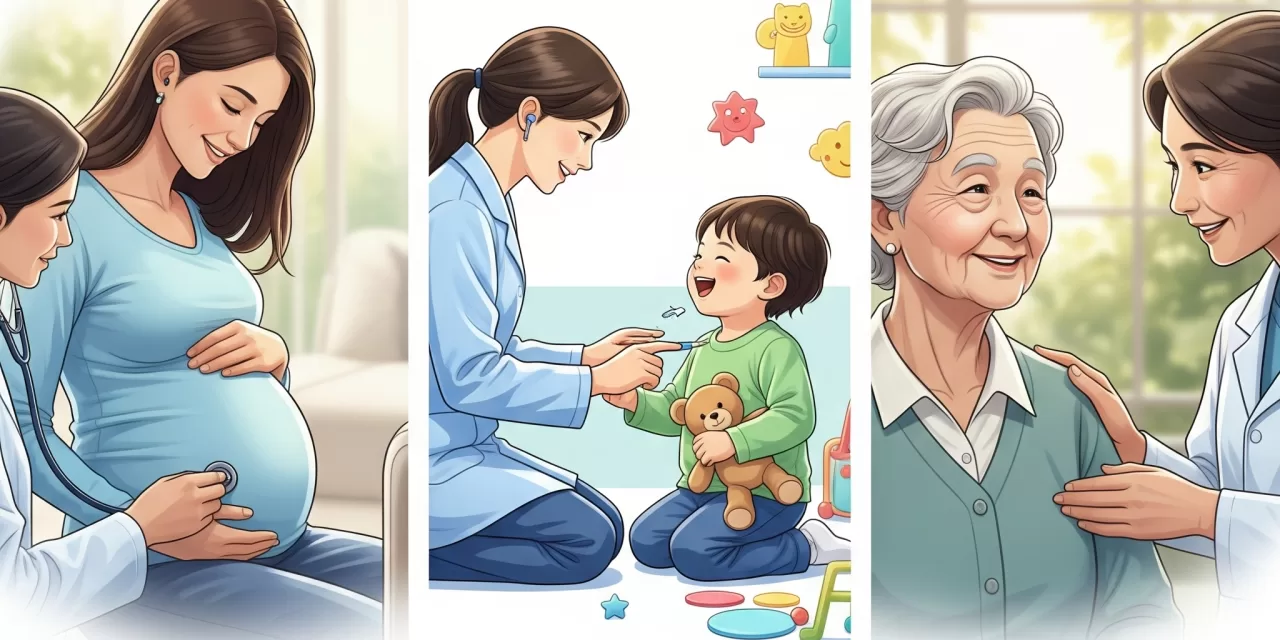
Preventive medicine focuses on the health of individuals, communities, and defined populations. It aims to protect, promote, and maintain health and well-being and to prevent disease, disability, and death. In clinical medicine, its application across the lifecycle—in obstetrics, pediatrics, and geriatrics—represents a core public health concern.
I. Preventive Medicine in Obstetrics
Objectives
● Promote maternal and fetal health.
● Prevent maternal morbidity and mortality.
● Improve birth outcomes.
Levels of Prevention
1. Primordial Prevention
○ Addressing socio-cultural determinants: early marriage, low education, poor nutrition.
○ IEC on adolescent reproductive health and family planning.
2. Primary Prevention
○ Antenatal Care (ANC):
■ Early registration (preferably before 12 weeks).
■ Minimum 4 ANC visits: 1 in 1st trimester, 1 in 2nd, and 2 in 3rd.
■ Iron-folic acid supplementation: 60 mg elemental iron + 500 μg folic acid daily for at least 180 days.
■ Tetanus and adult diphtheria (Td) immunization.
■ Birth preparedness: awareness of danger signs and institutional delivery.
○ Maternal Nutrition:
■ Caloric intake: additional 350 kcal/day.
■ Micronutrients: calcium, iron, iodine.
○ Health education on smoking cessation, hygiene, and rest.
3. Secondary Prevention
○ Early diagnosis and treatment of complications:
■ Anemia, hypertensive disorders, gestational diabetes.
■ Screening for HIV, syphilis, Hepatitis B (now part of RCH guidelines).
4. Tertiary Prevention
○ Emergency obstetric care: availability of C-section, blood transfusion.
○ Postpartum care: physical and mental health screening.
National Initiatives
● Reproductive and Child Health (RCH) Programme – Phase II.
● Pradhan Mantri Surakshit Matritva Abhiyan (PMSMA): Fixed-day ANC services.
● Janani Suraksha Yojana (JSY): Promotes institutional delivery.
● LaQshya: Labour room quality improvement initiative.
II. Preventive Medicine in Pediatrics
Objectives
● Reduce infant and child morbidity and mortality.
● Ensure optimal growth and development.
● Prevent disabilities.
Components
1. Primordial Prevention
○ Promotion of exclusive breastfeeding for first 6 months.
○ Introduction of complementary feeding at 6 months.
○ Education on handwashing, nutrition, injury prevention.
2. Primary Prevention
○ Universal Immunization Programme (UIP):
■ Birth dose: BCG, OPV, Hepatitis B.
■ First-year vaccines: Pentavalent (DPT + Hib + Hep B), IPV, Rotavirus, PCV.
■ Updates (28th ed.): Introduction of new vaccines like JE in endemic areas.
○ Growth Monitoring:
■ WHO growth charts.
■ Weight-for-age: key indicator at primary level.
○ Vitamin A Supplementation:
■ First dose at 9 months with measles; then every 6 months up to 5 years (total 9 doses).
○ School Health Services: Mid-day meal, deworming, health checkups.
○ Prevention of Accidents: Safety education, home safety measures.
3. Secondary Prevention
○ Early detection of developmental delays.
○ Screening for congenital anomalies (RBSK initiative).
○ Neonatal screening for hypothyroidism, hearing defects, etc.
4. Tertiary Prevention
○ Rehabilitation for children with special needs.
○ Nutritional rehabilitation centers for SAM children.
Child Health Programs
● Integrated Management of Neonatal and Childhood Illness (IMNCI):
○ Combines preventive and curative aspects.
○ Community and facility-based components.
● Rashtriya Bal Swasthya Karyakram (RBSK):
○ Screening for 4 Ds: Defects at birth, Diseases, Deficiencies, Developmental delays including disabilities.
III. Preventive Medicine in Geriatrics
Objectives
● Promote healthy and active aging.
● Prevent and manage non-communicable diseases.
● Support functional independence.
Key Challenges
● Increased burden of NCDs: hypertension, diabetes, cancers.
● Mental health issues: depression, dementia.
● Social isolation, elder abuse.
● Sensory impairments and falls.
Levels of Prevention
1. Primordial Prevention
○ Promoting lifelong healthy behaviors: physical activity, non-smoking, healthy diet.
○ IEC campaigns on healthy aging.
2. Primary Prevention
○ Vaccination:
■ Influenza, pneumococcal, tetanus boosters.
○ Lifestyle modification:
■ Nutrition, exercise, avoidance of polypharmacy.
○ Sensory aids: Provision of spectacles, hearing aids.
3. Secondary Prevention
○ Regular screening:
■ Hypertension, diabetes, cancers (breast, cervical, prostate).
■ Depression (using GDS scale), cognitive decline (MMSE).
○ Falls risk assessment.
4. Tertiary Prevention
○ Rehabilitation services: physical therapy, assistive devices.
○ Geriatric day-care and home-based care.
○ Multidisciplinary geriatric clinics.
National Programs
● National Programme for Health Care of the Elderly (NPHCE):
○ Geriatric outpatient services at PHCs and CHCs.
○ 10-bed geriatric wards at district hospitals.
○ Regional Geriatric Centres (RGCs).
● Ayushman Bharat:
○ Health and Wellness Centres providing elder care.
○ Community-based assessments under CBAC tool.
Integrating Life-course Approach
Preventive strategies should be applied across the life span with a continuum of care—from adolescence, pregnancy, childbirth, infancy, childhood, adulthood, and old age. This ensures no stage is left vulnerable.
Continuum Includes:
● Adolescent care: Nutritional counseling, anemia control.
● Maternal-child linkage: ANC → Safe delivery → Neonatal care → Immunization → Child growth → School health.
● Geriatric linkage: Chronic disease management → Fall prevention → Social support.
Role of Epidemiology and Research
Preventive strategies must be evidence-based:
● Gordis (6th Ed.) emphasizes using epidemiologic methods to evaluate public health programs and screening interventions.
● Abramson (6th Ed.) describes evaluative research crucial for program effectiveness in maternal-child and geriatric care.
Conclusion
Preventive medicine in obstetrics, pediatrics, and geriatrics is a cornerstone of public health and clinical practice. MBBS students must understand this holistic approach—not only for exams but for delivering comprehensive care. By applying appropriate levels of prevention, supported by national programs and life-course epidemiology, we can achieve the vision of “Health for All” across generations.
Suggested Questions for Student Review
● Discuss the preventive strategies under RCH II for maternal health.
● Describe components and application of IMNCI strategy.
● What are the services offered under the NPHCE?
● Explain levels of prevention with examples in geriatric care.
● Outline the immunization schedule under UIP for children.


Happy
0 %

Sad
0 %

Excited
0 %

Sleepy
0 %

Angry
0 %

Surprise
0 %