 0
0
 0
0
NEW DELHI – In a landmark move to combat one of the leading causes of preventable blindness, the Government of India has officially launched its first Artificial Intelligence (AI)-driven community screening program for diabetic retinopathy (DR). The initiative, a high-stakes collaboration between the Armed Forces Medical Services (AFMS), the Dr. Rajendra Prasad Centre for Ophthalmic Sciences at AIIMS, and the Ministry of Health’s eHealth AI Unit, aims to bring life-saving diagnostic technology to the doorsteps of millions living with diabetes.
The program was formally inaugurated on December 16, 2025, by Surgeon Vice Admiral Arti Sarin, Director General of the AFMS, alongside Professor Radhika Tandon, Chief of the Dr. Rajendra Prasad Centre. Designed to bridge the massive gap in specialist eye care, the initiative leverages a web-based AI tool called MadhuNetrAI to identify early signs of retinal damage before irreversible vision loss occurs.
A Growing Vision Crisis
India is often referred to as the “diabetes capital of the world,” with an estimated 101 million people living with the condition and millions more undiagnosed. According to the National Blindness and Visual Impairment Survey, approximately 17% of Indian adults with diabetes suffer from diabetic retinopathy—a complication where high blood sugar damages the blood vessels in the retina.
The tragedy of the condition lies in its silence; early stages are often asymptomatic, yet by the time a patient notices blurred vision, the damage is frequently advanced. Historically, only about 10% of diabetic patients in India have ever undergone a professional retinal examination, largely due to a shortage of ophthalmologists and the concentration of specialist clinics in urban centers.
“Early detection is the only shield we have against diabetic blindness,” says Dr. Radhika Tandon. “By the time a patient feels their vision is failing, the window for simple, effective intervention has often closed. This AI initiative changes the paradigm from reactive to proactive care.”
How the Technology Works
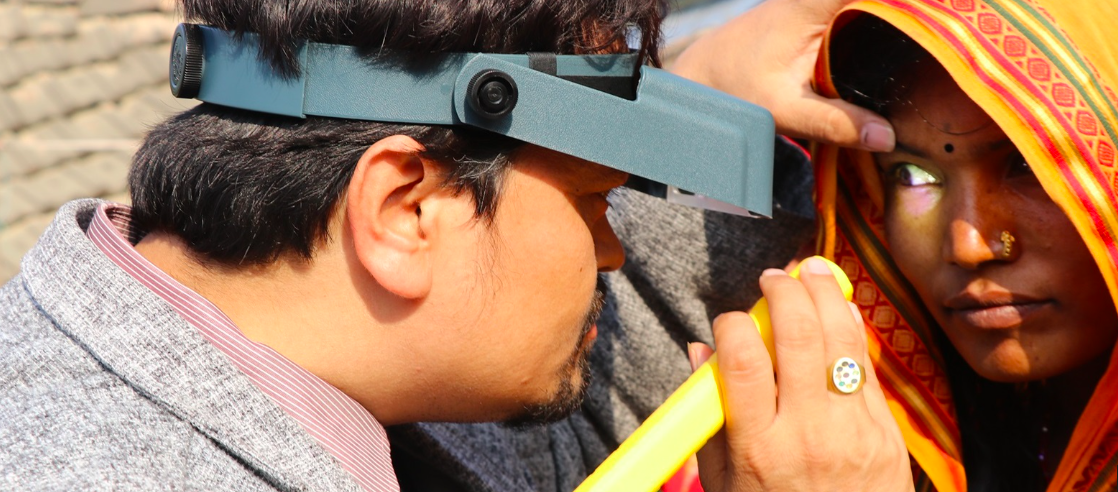
The heart of this national framework is MadhuNetrAI, an AI system that automates the screening, grading, and triaging of retinal images. During the screening process, healthcare workers—including nursing staff and medical officers—use handheld fundus cameras to capture high-resolution images of a patient’s retina.
These images are instantly analyzed by the AI, which can detect microaneurysms, hemorrhages, and exudates within seconds. The system then categorizes cases:
-
Normal: Routine monitoring recommended.
-
Referral Required: Signs of DR detected; patient directed to an endocrinologist for better blood sugar management.
-
Vision-Threatening DR (VTDR): Immediate referral to a vitreoretinal specialist for potential laser or surgical intervention.
By empowering non-specialists to conduct the primary screening, the program effectively extends the reach of a single ophthalmologist to thousands of patients across remote regions.
From Metros to Mountains: The Pilot Phase
The program is currently being rolled out in a strategic pilot phase across seven diverse locations to test its efficacy in different environments:
-
Pune & Mumbai: High-density urban settings.
-
Bengaluru: Tech-centric metropolitan hub.
-
Dharamshala: High-altitude, hilly terrain.
-
Gaya: Rural heartland.
-
Jorhat: Remote Northeast tea-growing regions.
-
Kochi: Coastal belt.
This “real-time national health intelligence framework” does more than just screen individual patients; it generates a live map of disease prevalence across India. This data allows health authorities to allocate resources—such as laser equipment and specialist surgeons—to the districts where they are most needed.
Expert Perspectives and Public Health Impact
Independent experts believe the integration of AI is the only scalable way to manage India’s NCD (Non-Communicable Disease) crisis.
“The sheer volume of diabetic patients makes manual screening by specialists an impossibility,” says Dr. Arvind Sahay, a public health consultant not involved in the AIIMS project. “This model, if successfully scaled, sets a global precedent for how middle-income countries can use ‘frugal innovation’ to provide elite-level diagnostics at a fraction of the cost.”
However, experts also point to the “referral gap” as a potential hurdle. Research published in BMJ Open and The Lancet has highlighted that even when AI correctly identifies a problem, patient follow-up can be low due to travel costs or a lack of immediate symptoms. To address this, the new initiative integrates with the existing National Program for Prevention and Control of Non-Communicable Diseases (NPCDCS), ensuring that every high-risk patient identified by the AI is tracked through the district hospital referral system.
What This Means for You
For the average citizen, this launch signals a shift toward “doorstep diagnostics.” If you or a family member has diabetes, the availability of community-based screening means you no longer need to travel to a major city hospital for a baseline eye check.
Who should be screened?
Health authorities recommend annual retinal screening for:
-
Anyone with a known diagnosis of Type 1 or Type 2 diabetes.
-
Individuals with a random blood sugar (RBS) of 200 mg/dl or higher.
-
Women with gestational diabetes.
Limitations and The Road Ahead
While the AI boasts high accuracy—often matching or exceeding that of human graders—it is not a replacement for a surgeon. The technology acts as a filter, ensuring that specialists spend their time treating the most critical cases rather than performing routine checks on healthy eyes.
The success of the program will ultimately depend on community trust and the robustness of the internet infrastructure required to run the web-based MadhuNetrAI platform in remote areas like Jorhat or Dharamshala.
As India moves toward its goal of eliminating preventable blindness by 2030, the marriage of military discipline and AI technology may well be the “silver bullet” needed to save the sight of millions.
Medical Disclaimer: This article is for informational purposes only and should not be considered medical advice. Always consult with qualified healthcare professionals before making any health-related decisions or changes to your treatment plan. The information presented here is based on current research and expert opinions, which may evolve as new evidence emerges.
References
-
Ministry of Defence / Press Information Bureau (PIB): Official release on AFMS-AIIMS collaboration (Dec 16, 2025).