 0
0
 0
0
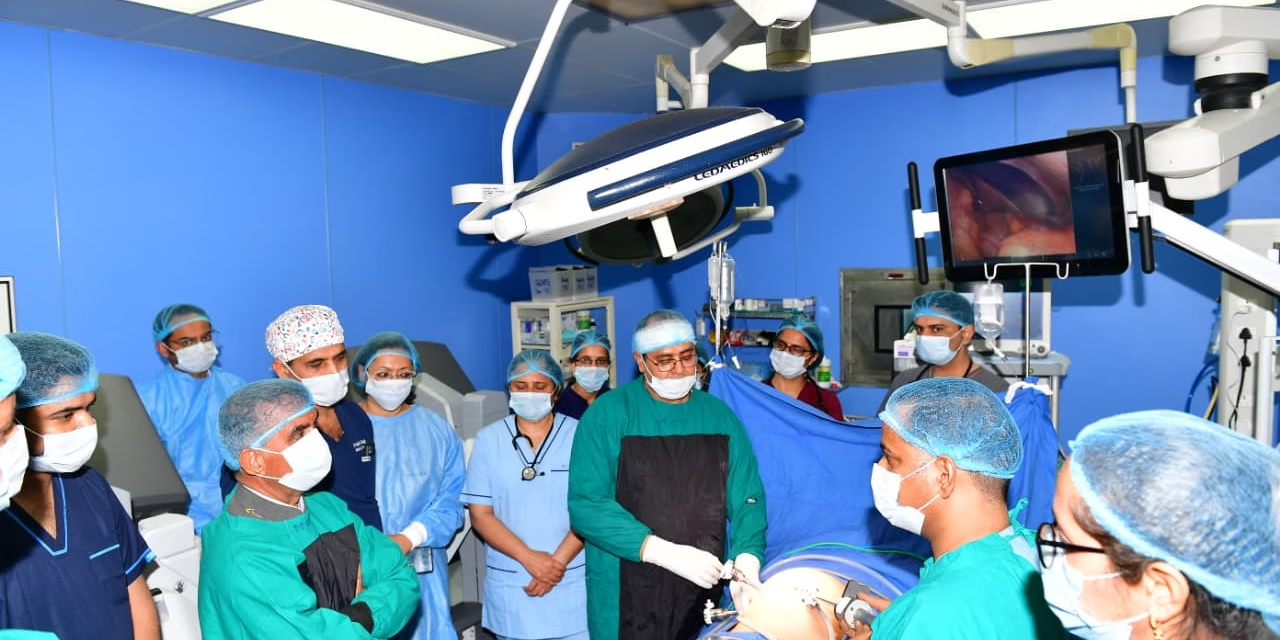
NERCHOWK, MANDI — In a landmark move for public healthcare in the Himalayas, Himachal Pradesh Chief Minister Sukhvinder Singh Sukhu officially inaugurated a state-of-the-art robotic surgery facility at the Shri Lal Bahadur Shastri Government Medical College (SLBSGMC) in Nerchowk on March 6, 2026. The ₹28.44 crore investment introduces high-precision, minimally invasive surgical technology to the Mandi district, marking the state’s third such installation. By bringing “metropolitan-grade” technology to a regional public hospital, the initiative aims to reduce the burden of patient referrals to distant urban centers and elevate rural healthcare to international standards.
The inauguration featured a live demonstration of the first successful robotic procedure conducted at the facility, signaling a new era for specialized medical care in the region.
A Technological Leap for Public Health
The newly installed robotic system is designed to assist surgeons across multiple disciplines, including urology, gynecology, and general surgery. Unlike traditional “open” surgery, which requires large incisions, robotic-assisted surgery (RAS) allows surgeons to operate through tiny openings using miniaturized instruments.
The surgeon sits at a specialized console, viewing a high-definition 3D image of the surgical site. Using hand and foot controls, the surgeon directs robotic arms that possess a range of motion exceeding that of the human wrist. This “enhanced dexterity” allows for extreme precision in tight anatomical spaces, such as during prostatectomies or complex hernia repairs.
“This facility positions Himachal at par with premier institutes like AIIMS, bringing world-class care to remote areas,” noted Dr. Brij Sharma, Principal of Chamiyana Medical College, which houses one of the state’s other robotic units.
The expansion is part of a broader ₹3,000 crore vision to modernize state medical infrastructure. CM Sukhu also announced that robotic services are slated for rollout at Indira Gandhi Medical College (IGMC) Shimla and Hamirpur Medical College in the near future, despite current fiscal challenges.
The Patient Perspective: Faster Recovery and Less Pain
For the average patient, the shift from traditional surgery to robotics is not just about the “cool factor” of technology; it is about clinical outcomes. According to data from established medical institutions like the Cleveland Clinic, the benefits of robotic-assisted procedures include:
-
Reduced Blood Loss: Smaller incisions and precise cauterization significantly lower the need for blood transfusions.
-
Shorter Hospital Stays: Many patients are discharged days earlier than those undergoing traditional surgery, allowing them to return to work and family sooner.
-
Lower Infection Risk: Minimal exposure of internal tissues reduces the likelihood of post-operative complications.
-
Precision and Nerve Sparing: In delicate procedures like oncology (cancer) surgery, the 3D visualization helps surgeons avoid damaging tiny nerves and blood vessels, which is critical for maintaining quality of life.
In India, the demand for these benefits is surging. Nationally, over 60,000 robotic-assisted surgeries are now performed annually. Himachal Pradesh has already seen success with this model, recording 151 surgeries at the Chamiyana center and 92 at Tanda, with promising recovery rates.
Bridging the Rural-Urban Healthcare Divide
The geographical terrain of Himachal Pradesh often presents a barrier to emergency and specialized care. Residents in hilly districts like Mandi have historically traveled to Chandigarh or Delhi for advanced surgical interventions—a journey that is both physically taxing and financially draining.
By decentralizing this technology, the state government is addressing healthcare equity. Dr. Sonal Kumar Jha, a Consultant General Surgeon, emphasizes that such techniques are “essential for India’s diverse patient needs,” particularly in reducing the “travel burden” for those in regional areas.
Furthermore, the state has sanctioned ₹75 crore for “smart labs” capable of processing 100 tests per blood sample, complementing the surgical upgrades. This holistic approach aims to transform state medical colleges into comprehensive hubs that mirror the capabilities of AIIMS Delhi.
Challenges and Considerations
While the “robot” brings undeniable advantages, experts urge a balanced view of the technology. Robotic surgery is a tool, not an autonomous surgeon.
The Learning Curve
“Surgeon skill remains key,” says Dr. Vivek Bindal, Chairman of India’s Clinical Robotic Surgery Association. There is a “steep training curve” associated with these systems. To mitigate this, the Himachal government has mandated that doctors from new centers undergo exposure visits to established robotic hubs to master the interface.
Costs and Sustainability
With an upfront cost of nearly ₹29 crore per unit, the financial sustainability of these programs in the public sector is a point of discussion. While the Insurance Regulatory and Development Authority of India (IRDAI) mandated coverage for robotic surgery in 2019, making it more affordable for those with insurance, the public sector relies on government subsidies to keep costs low for the uninsured.
Technical Limitations
Robotic systems lack “haptic feedback”—the physical sensation of touch that a surgeon feels during traditional surgery. There are also rare risks of mechanical failure or system latency. Additionally, some conditions, such as severe obesity or emergency trauma cases where immediate access is required, may still be better suited for traditional open surgery.
What This Means for You
For residents of Himachal Pradesh and surrounding regions, the launch at Nerchowk means that a diagnosis requiring surgery no longer automatically requires a trip to a metro city.
If you or a loved one are facing a surgical procedure, consider the following:
-
Ask about Eligibility: Not every surgery needs a robot. Discuss with your doctor whether your specific condition (e.g., gallbladder, hernia, or kidney issues) qualifies for a robotic-assisted approach.
-
Evaluate Surgeon Experience: Inquire about the number of robotic procedures your surgical team has performed. Volume often correlates with better outcomes.
-
Check Insurance: Ensure your policy covers robotic-assisted procedures, as these can sometimes carry higher consumable costs than standard laparoscopy.
As Himachal Pradesh continues its ambitious rollout, the success of the Nerchowk facility will be measured not just by the number of robots installed, but by the lives improved through faster healing and accessible, high-tech care.
Medical Disclaimer: This article is for informational purposes only and should not be considered medical advice. Always consult with qualified healthcare professionals before making any health-related decisions or changes to your treatment plan. The information presented here is based on current research and expert opinions, which may evolve as new evidence emerges.
References
-
ANI News. (2026). Himachal expands advanced healthcare as CM inaugurates robotic surgery at Nerchowk.