 0
0
 0
0
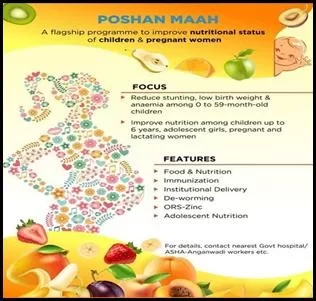
In September 2025, India marked the launch of the 8th Rashtriya Poshan Maah, a month-long national nutrition campaign that has helped lower childhood malnutrition rates, promoted innovative community-led health interventions, and advanced public awareness around dietary choices. Launched under the government’s flagship Poshan Abhiyaan program, the initiative brings together multiple ministries, health authorities, and grassroots organizations to target stunting, underweight, and related health issues affecting millions across the country.
Key Findings and Developments
Recent data from the National Family Health Survey (NFHS-5, 2019-21) reveals marked progress: stunting among children under five has dropped from 38.4% to 35.5%, while underweight prevalence decreased from 35.8% to 32.1% nationally. Additionally, wasting (a sign of acute malnutrition) declined from 21.0% to 19.3%. In the last quarter alone, over 154 million children and adolescents received Iron and Folic Acid supplements as part of targeted interventions.
Central to Poshan Maah’s success is its focus on the “first 1,000 days”—from conception to age two—a critical window for breaking the intergenerational cycle of malnutrition exacerbated by poverty, early marriage, and gender disparities. The initiative’s approach is data-driven, leveraging the Poshan Tracker mobile app launched in 2021; over 1.4 million Anganwadi centers and more than 91 million eligible beneficiaries are now registered in this real-time monitoring system.
Annual events like nutrition workshops, rallies, and nutri-garden (Poshan Vatika) drives have mobilized millions, reinforcing the message that balanced, locally sourced diets are key to sustainable health. As PM Narendra Modi emphasized this year, “Obesity is becoming a big problem… We must save ourselves from obesity. Therefore, I suggest using 10% less oil in cooking”.
Expert Commentary and Perspectives
Dr. Devika Sood, pediatrician at AIIMS Delhi, states, “What distinguishes Poshan Maah is its convergence model. By integrating child health, school education, and family welfare, we see measurable improvements not just in anthropometric indicators, but in behaviors—such as exclusive breastfeeding and complementary feeding practices—which are essential for lasting change.”
Dr. Manmeet Singh, nutrition science expert at PGIMER, Chandigarh, cautions, “While statistical gains are welcome, a critical challenge remains: access and behavior change among marginalized groups. Technology tools like Poshan Tracker help ensure accountability, but community health workers and Anganwadi staff need continued support and training to reach families in remote and tribal areas.”
Context and Background
Poshan Abhiyaan was launched in 2018 to place nutrition at the heart of national development, especially for children under six, adolescent girls, pregnant women, and lactating mothers. The annual Poshan Maah in September doubles as a public mobilization campaign, encouraging citizens to share nutritious recipes using #Local4Poshan, with special emphasis on traditional diets.
The PM Poshan scheme runs in parallel, enhancing school attendance and nutritional status via a centrally funded meal program. Inflation and market conditions are continually monitored to ensure ingredient affordability; for instance, in May 2025, the government increased material costs by 9.5% across all states, reflecting a ₹954 crore budget adjustment to keep pace with rising food prices.
Community participation is vital, from organizing awareness drives to supporting Anganwadi centers and planting kitchen gardens for fresh produce access. The Children Nutrition Park in Gujarat even gamifies nutrition awareness for children through interactive exhibits.
Implications for Public Health
The drop in stunting and underweight rates highlights the impact of integrated government action combined with grassroots engagement. By targeting key periods for intervention (pregnancy, infancy, early childhood), Poshan Maah is making nutrition a shared responsibility for families, schools, and communities.
Practical recommendations include:
-
Using less oil, sugar, and salt in daily cooking to curb rising obesity rates.
-
Promoting exclusive breastfeeding for the first six months, and diverse complementary foods thereafter.
-
Engaging fathers and men in caregiving roles for nutrition awareness.
-
Supporting local solutions such as nutri-gardens and traditional diets.
For families, these strategies mean more affordable, accessible pathways to healthier eating—especially when supported by community health workers and technology platforms like Poshan Tracker.
Limitations and Counterarguments
Despite promising results, experts highlight gaps: regional disparities persist, with tribal, remote, and urban slum populations often lagging due to variable healthcare access, education, and food security. Moreover, while digital tools are escalating data quality, not all populations have equitable access to smartphones or the internet, posing challenges to universal coverage.
A renewed focus on maternal health, adolescent nutrition, and environmental sustainability is essential; the EK Ped Maa Ke Naam initiative (tree plantation drive) is an example of efforts to link nutrition with long-term well-being. Critics also argue that stunting metrics can be confounded by factors like maternal height, suggesting the need for multi-dimensional progress indicators.
Medical Disclaimer
Medical Disclaimer: This article is for informational purposes only and should not be considered medical advice. Always consult with qualified healthcare professionals before making any health-related decisions or changes to your treatment plan. The information presented here is based on current research and expert opinions, which may evolve as new evidence emerges.
Reference Section
Key Sources:
-
Press Information Bureau (PIB): Press Note Details September 16, 2025.https://www.pib.gov.in/PressNoteDetails.aspx?NoteId=155235&ModuleId=3