 0
0
 0
0
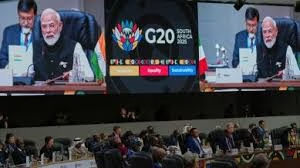
At the 2025 G20 Summit held in Johannesburg, South Africa, Prime Minister Narendra Modi emphasized the urgent need for a coordinated global effort to combat the intertwined threats of drug trafficking and terrorism. Highlighting the rapid spread of lethal synthetic drugs like fentanyl, Modi warned that this nexus poses a severe threat to public health, social stability, and global security. He proposed a dedicated G20 initiative to dismantle these networks, curtail financing channels for terror groups, and bolster a unified healthcare response system to tackle health emergencies worldwide.
Key Developments
During his address on November 22, 2025, PM Modi underlined that drug trafficking is no longer a standalone criminal issue but is deeply interconnected with international terrorism. He singled out fentanyl—a synthetic opioid far more potent than morphine—as a particularly dangerous substance that has become a lethal public health hazard and a significant source of terror financing. Modi called for the G20 nations to adopt a cohesive approach combining finance, governance, and security mechanisms to weaken the drug-terror economy effectively.
PM Modi also advocated for the establishment of a G20 Global Healthcare Response Team comprising medical experts from member countries. This team would be ready to respond rapidly to pandemics, health emergencies, and natural disasters, reflecting lessons learned from recent global health crises.
Expert Perspectives
Dr. Anjali Mehta, a public health specialist not involved in the summit, noted, “PM Modi’s focus on fentanyl is well placed since its misuse is fueling unprecedented overdose deaths worldwide. Coordinating international policy and law enforcement is critical to cutting off supplies and financing.” Security analyst Rajiv Kumar added, “The nexus between drug trafficking and terrorism is a vital concern, as illicit drug money often funds extremist activities. Multilateral cooperation, as proposed at the G20, is essential for global security.”
Context and Background
The global narcotics trade, especially involving synthetic opioids, has surged in recent years, with fentanyl derivatives increasingly available via digital supply chains and transnational cartels. The opioid crisis worldwide has drastically worsened public health outcomes by increasing addiction rates and overdose mortality. Moreover, drug trafficking routes often serve as financial arteries for terrorist organizations, complicating security efforts.
India, aiming to become drug-free by 2047, has intensified cooperation with foreign agencies such as the US Drug Enforcement Administration (DEA) to crack down on cross-border drug networks. Recent international operations have dismantled major drug cartels trafficking between the US, Europe, Australia, and India, showcasing the importance of global coordination in enforcement.
Implications for Public Health
The G20 initiative would mean stronger surveillance and crackdown on trafficking routes and improved availability of resources for addiction treatment and prevention. By addressing drug trafficking and terrorism as linked issues, nations can better allocate resources and policies to mitigate the multifaceted impacts on societal stability and health. The proposed healthcare response team also suggests enhanced readiness for future pandemics and disasters, promoting global resilience.
Limitations and Counterarguments
While PM Modi’s proposals are ambitious, experts caution that implementation depends on political will and effective international cooperation. Differences in national priorities, legal frameworks, and resource availability might challenge seamless collaboration. Additionally, although law enforcement is vital, public health experts emphasize treatment and harm reduction strategies as key components in confronting the drug crisis.
Medical Disclaimer
Medical Disclaimer: This article is for informational purposes only and should not be considered medical advice. Always consult with qualified healthcare professionals before making any health-related decisions or changes to your treatment plan. The information presented here is based on current research and expert opinions, which may evolve as new evidence emerges.
References