 0
0
 0
0
Chandigarh, May 17:
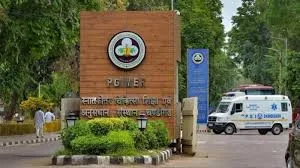
The Post Graduate Institute of Medical Education and Research (PGIMER), Chandigarh, reaffirmed its commitment to the early diagnosis and holistic management of celiac disease during a dedicated awareness and education programme held on Celiac Disease Day. The event, organized by the Division of Paediatric Gastroenterology and Hepatology, brought together medical professionals, patients, and their families to highlight the importance of timely detection, strict dietary management, and comprehensive psycho-social support for children affected by the condition.
PGIMER’s Pioneering Role in Celiac Disease Management
Professor Sadhna Lal, head of the division, addressed the gathering and spotlighted PGIMER’s longstanding leadership in the field. “PGIMER has been at the forefront of diagnosing and managing celiac disease in India since the 1980s. Our dedicated clinic has treated nearly 18,000 patients to date, making it one of the largest such centres in the world,” she said.
She noted that celiac disease is particularly prevalent in north-western Indian states such as Punjab, Haryana, Himachal Pradesh, Uttarakhand, and Rajasthan, primarily due to genetic predisposition and wheat-based diets. However, many cases remain undiagnosed because symptoms are often subtle or non-specific, likening the disease to an iceberg with most of its burden hidden beneath the surface.
Changing Clinical Profiles and the Need for Vigilance
Professor Lal explained that while growth failure was previously the most common sign, nearly half of the children diagnosed today display normal growth, making detection more challenging. “Iron deficiency and anaemia remain the most common features, but increased clinical suspicion is now necessary,” she added.
She warned of the long-term consequences of untreated celiac disease, stating, “Continued intake of gluten acts like a slow poison, causing progressive and silent damage to internal organs. Complete avoidance of gluten is essential to prevent complications.”
Family Involvement and Real-Life Lessons
The event also highlighted the critical role of families in managing the disease. Professor Lal shared the story of a young patient who suffered liver failure due to non-compliance with a gluten-free diet, underscoring the importance of parental understanding and commitment. “Strict dietary compliance requires the cooperation of the entire family,” she emphasized.
Practical Guidance and Support
The programme featured interactive dietary counselling, gluten-free recipe demonstrations, and a Q&A session with experts. Participants received practical tips on maintaining a home-based gluten-free diet, disciplined eating habits, and the importance of regular meal times. Parents were advised never to send children to school without a proper breakfast and to actively involve children in managing their condition.
Professor Lal reiterated PGIMER’s commitment to enhancing awareness, promoting early detection, and providing research-backed care to improve outcomes for children living with celiac disease.
Disclaimer:
This article is based on information provided by The Week and statements made during the Celiac Disease Day event at PGIMER, Chandigarh. It is intended for informational purposes only and should not be considered a substitute for professional medical advice, diagnosis, or treatment. For any health concerns, please consult a qualified healthcare provider.
Citations: