 0
0
 0
0
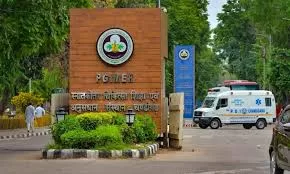
CHANDIGARH — In a move that reinforces India’s growing commitment to evidence-based healthcare, the Post Graduate Institute of Medical Education and Research (PGIMER), Chandigarh, has been awarded the title of “Best Health Technology Assessment (HTA) Institution” in India for the second consecutive year.
The prestigious recognition, conferred by the Department of Health Research (DHR) under the Union Ministry of Health and Family Welfare, underscores a critical but often overlooked pillar of modern medicine: Health Technology Assessment. This field serves as the scientific bridge between medical innovation and public policy, ensuring that the drugs, devices, and procedures introduced into the healthcare system are not only effective but also economically sustainable.
The Science of “Value for Money” in Medicine
While patients typically focus on the immediate results of a treatment, HTA institutions like the one at PGIMER work behind the scenes to answer a more complex question: Is this new technology better than what we already have, and does it justify its cost?
The HTA Resource Centre at PGIMER, led by the Department of Community Medicine and School of Public Health, has spent the last several years evaluating a vast array of medical interventions. From the cost-effectiveness of universal screening for certain cancers to the viability of high-tech surgical robots, the center’s work directly influences which treatments are prioritized in government-funded health schemes, such as Ayushman Bharat.
“Retaining this award is a testament to the rigorous methodology and the interdisciplinary approach we take toward public health,” said a representative from the PGIMER team following the ceremony. “Our goal is to ensure that every rupee spent in the public health sector provides the maximum possible health benefit to the population.”
Why This Matters for the General Public
For the average citizen, the work of an HTA institution might seem academic, but its impact is felt at the pharmacy counter and in the hospital ward.
When a new medical device—such as a drug-eluting stent or a specific type of insulin pump—is introduced, it often comes with a high price tag. HTA researchers analyze clinical trial data, hospital outcomes, and economic models to determine if the technology significantly improves life expectancy or quality of life compared to older, cheaper alternatives.
Key areas of PGIMER’s recent impact include:
-
Policy Formulation: Providing data that helps the government decide which medicines should be included in the National List of Essential Medicines (NLEM).
-
Resource Allocation: Identifying “low-value” care—treatments that are commonly used but provide little clinical benefit—thereby freeing up funds for more effective interventions.
-
Standardizing Care: Helping to create clinical guidelines that ensure patients across different regions receive a similar, high standard of evidence-based treatment.
Expert Perspectives: The Global Shift Toward Evidence
Independent experts suggest that PGIMER’s success reflects a global trend where healthcare is moving away from “eminence-based medicine” (decisions based on the opinions of senior doctors) toward “evidence-based medicine.”
“In a country with a population as large and diverse as India’s, we cannot afford to invest in medical technologies that haven’t been rigorously vetted for our specific demographic and economic context,” says Dr. Arindam Bose, a public health policy analyst not affiliated with the PGIMER study. “PGIMER has set a benchmark for how academic institutions can partner with the government to make healthcare more equitable. Their work ensures that innovation doesn’t just benefit the elite, but is scalable for the masses.”
However, the path to implementation is not without challenges. Some critics of the HTA process argue that a heavy focus on cost-effectiveness can sometimes delay the introduction of niche, “orphan” drugs for rare diseases which, by their nature, are expensive and serve fewer people.
Statistical Context and Growth
The Department of Health Research established the HTAIn (Health Technology Assessment India) body to formalize this process. Since its inception, the number of assessments conducted annually has grown by over 40% nationwide. PGIMER’s resource center has been a primary contributor, consistently producing high-impact reports that have been adopted by the National Health Authority.
According to data from the World Health Organization (WHO), countries that integrate HTA into their decision-making processes see a more stabilized growth in healthcare spending and better outcomes in chronic disease management. For India, where out-of-pocket expenditure remains a significant burden for many families, the work of PGIMER is a vital shield against financial catastrophe caused by unnecessary or overpriced medical interventions.
Looking Ahead: The Future of Health Innovation
As PGIMER celebrates this milestone, the institution is already looking toward the next frontier: Digital Health and Artificial Intelligence. The HTA center is reportedly beginning frameworks to evaluate AI-driven diagnostic tools, ensuring they are accurate and safe before they become commonplace in Indian clinics.
For the health-conscious consumer, this award serves as a reminder that the “latest” treatment is not always the “best” treatment. The rigorous vetting process led by institutions like PGIMER ensures that when a treatment reaches a patient, it has been tested not just for its ability to heal, but for its ability to function sustainably within the broader heartbeat of the nation’s health system.
Medical Disclaimer: This article is for informational purposes only and should not be considered medical advice. Always consult with qualified healthcare professionals before making any health-related decisions or changes to your treatment plan. The information presented here is based on current research and expert opinions, which may evolve as new evidence emerges.
Reference Section
Primary Source:
-
Medical Dialogues Bureau. (2024). “PGI Chandigarh secures Best Health Technology Assessment Institution Award for second year.” Link to Source.