 0
0
 0
0
PHILADELPHIA — A Pennsylvania jury has found pharmaceutical giant Johnson & Johnson (J&J) liable for contributing to a woman’s fatal ovarian cancer through her long-term use of talc-based baby powder. On February 13, 2026, the Court of Common Pleas in Philadelphia awarded the family of Gayle Emerson $250,000, concluding a high-stakes trial that further intensifies the decade-long legal battle over one of the world’s most recognizable consumer products. The verdict comes as health organizations worldwide re-evaluate the safety of talc, once a staple of hygiene routines across the globe.
The Verdict: Negligence and Failure to Warn
The case, Emerson v. Johnson & Johnson, centered on Gayle Emerson, a resident of York, Pennsylvania, who used J&J’s baby powder for decades. Ms. Emerson filed her lawsuit six months before her death from ovarian cancer in November 2019. Her family alleged that J&J was aware for years that its talc products could be contaminated with asbestos—a known carcinogen—but failed to warn consumers of the potential risks.
After three days of deliberation, the jury awarded:
-
$50,000 in compensatory damages for the family’s losses.
-
$200,000 in punitive damages, specifically citing the company’s negligence and product liability.
While the monetary award is significantly lower than some previous multi-million dollar verdicts, legal experts suggest the inclusion of punitive damages is a blow to the company’s defense. Plaintiffs’ attorney Chris Tisi argued that internal documents showed J&J was aware of “carcinogen contamination” in its supply chain for decades.
In response, J&J executive Erik Haas stated the “minimal verdict” actually reflected the jury’s skepticism of the plaintiffs’ claims, maintaining that the allegations were not grounded in sound science. The company has already announced its intent to appeal.
The Science: Why Talc is Under the Microscope
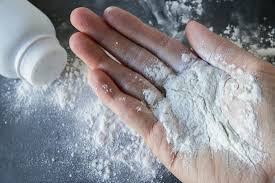
Talc is a naturally occurring mineral composed of magnesium, silicon, and oxygen. In powder form, it absorbs moisture and reduces friction. However, in its natural state, some talc contains asbestos, which is known to cause cancers in and around the lungs when inhaled.
The concern regarding ovarian cancer specifically involves the “migration theory.” Scientists suggest that when talc is applied to the genital (perineal) area, microscopic particles may travel through the reproductive tract to the ovaries. Once there, these particles can cause chronic inflammation, which may eventually lead to DNA damage and the formation of cancerous tumors.
Shifting Classifications
The scientific community’s stance on talc has sharpened recently:
-
IARC Reclassification: In 2024, the International Agency for Research on Cancer (IARC), an arm of the World Health Organization (WHO), upgraded talc to “probably carcinogenic to humans” (Group 2A).
-
Epidemiological Data: Some studies indicate that women who regularly use talc for perineal hygiene face a 20% to 30% higher risk of developing ovarian cancer than those who do not.
-
Absolute vs. Relative Risk: It is important to note that the lifetime risk of ovarian cancer is relatively low, at approximately 1.3%. A 30% increase would raise that lifetime risk to roughly 1.7%.
Expert Perspectives: Causation vs. Association
While the legal victories for plaintiffs mount, medical experts remain cautious about declaring a definitive “cause and effect” relationship.
Dr. Lydia Gaba, an oncologist at Hospital Clínic de Barcelona who is not involved in the litigation, explains the nuance: “While talc use is associated with an increased likelihood of ovarian cancer, causation remains unproven in a strict clinical sense. The IARC’s 2A classification reflects strong mechanistic evidence—meaning we see how it could happen in cell studies—but we still lack the definitive human trials that prove it does happen in every case.”
Critics of the litigation point out that many studies rely on “recall bias,” where patients diagnosed with cancer are more likely to remember using a specific product than healthy individuals. Furthermore, J&J continues to assert that its talc was asbestos-free and met all regulatory safety standards during its time on the market.
The Broader Impact: A Global Shift
This Philadelphia verdict is just one of nearly 90,000 lawsuits currently pending against Johnson & Johnson. The company discontinued talc-based baby powder in the United States and Canada in 2020, shifting to a cornstarch-based formula. By 2023, it had halted talc sales globally.
| Key Metric | Status/Data |
| Pending Lawsuits | 70,000 – 90,000+ |
| Recent California Verdict (Dec 2025) | $40 million award |
| Primary Alternative | Cornstarch-based powder |
| Ovarian Cancer Survival Rate | ~30% (when diagnosed at advanced stages) |
Implications for Public Health
For consumers, the primary takeaway is one of precaution. While the absolute risk of developing cancer from talc remains low, the high fatality rate of ovarian cancer—often called the “silent killer” because it is rarely caught early—makes any avoidable risk a significant concern.
Public health bodies now generally recommend:
-
Avoiding perineal talc use: Especially for those with a family history of ovarian or breast cancer (BRCA mutations).
-
Using alternatives: Cornstarch-based powders provide similar moisture-wicking properties without the same mineral-related cancer risks.
-
Consulting Professionals: Women concerned about past exposure should discuss their specific risk factors with a gynecologist.
Looking Ahead
The legal pressure on J&J shows no signs of waning. With several state court trials scheduled for the remainder of 2026 and a massive federal multidistrict litigation (MDL) proceeding in New Jersey, the company may face renewed pressure to reach a global settlement.
For now, the $250,000 award in Philadelphia serves as a reminder that juries are increasingly willing to hold corporations accountable for “failure to warn,” even when the underlying scientific consensus is still evolving.
Medical Disclaimer: This article is for informational purposes only and should not be considered medical advice. Always consult with qualified healthcare professionals before making any health-related decisions or changes to your treatment plan. The information presented here is based on current research and expert opinions, which may evolve as new evidence emerges.
References
https://www.reuters.com/world/pennsylvania-jury-finds-johnson-johnson-liable-cancer-latest-talc-trial-2026-02-13/