 0
0
 0
0
A key parliamentary committee has urged the Indian government to accelerate the integration of modern allopathic medicine with traditional AYUSH systems, criticizing current efforts as “half-hearted.” This call comes in the 168th report of the Department-related Parliamentary Standing Committee on Health and Family Welfare, presented in the Rajya Sabha in mid-December 2025, focusing on action taken on the Ministry of AYUSH’s Demands for Grants 2025-26.
The report highlights the need for collaborative healthcare delivery to enhance public health outcomes while preserving India’s rich traditional knowledge. Chaired by Prof. Ram Gopal Yadav, the committee recommends establishing AYUSH departments in all AIIMS institutions nationwide on a time-bound basis, equipped with sufficient manpower and resources.
Key Committee Recommendations
The committee expresses strong dissatisfaction with the Ministry of AYUSH’s slow pace in expanding AYUSH centers within premier institutions like AIIMS and other government hospitals. It reiterates the demand for dedicated AYUSH departments across all 26 AIIMS to provide seamless services to the public.
Further, the panel calls for a joint effort between the Ministries of AYUSH and Health & Family Welfare to build a “pluralistic healthcare system.” This includes regular joint meetings involving the National Medical Commission (NMC), National Commission for Indian System of Medicine (NCISM), National Commission for Homoeopathy (NCH), and AYUSH research councils to resolve policy grey areas.
The committee also proposes setting up a dedicated AYUSH center in the Parliament Complex for MPs, former MPs, and staff, aiming to popularize these systems nationwide as parliamentarians advocate for them in their constituencies. It emphasizes shifting from an “antagonistic relationship” to a “cooperative and collaborative approach” for treating various diseases.
Background on AYUSH-Allopathy Integration Efforts
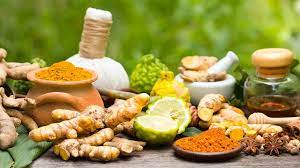
AYUSH encompasses Ayurveda, Yoga & Naturopathy, Unani, Siddha, and Homeopathy—traditional systems integral to India’s cultural heritage. Integration initiatives have gained momentum, aligning with the World Health Organization’s Traditional Medicine Strategy 2025-2034, which stresses evidence-based incorporation.
The government has mainstreamed AYUSH into primary healthcare via the National AYUSH Mission (NAM) and Ayushman Bharat Health and Wellness Centres (AB-HWCs). Over 43,000 studies on the Ayush Research Portal cover clinical trials, drug development, and preclinical research, supporting evidence for integration. AYUSH services feature in Pradhan Mantri Jan Arogya Yojana (PM-JAY) with 172 treatment packages across 27 insurers.
Collaborations like the Ayush-ICMR Advanced Centre for Integrative Health Research at AIIMS exemplify progress, focusing on joint research in non-communicable diseases. State-level models, such as co-located clinics, promote cross-referrals and holistic care.
Expert Perspectives and Potential Benefits
Experts view integration as a pathway to holistic, cost-effective care, especially for chronic conditions where AYUSH excels in prevention and wellness. Dr. Lipsa Shah, Ayurvedic Consultant at Saifee Hospital, stresses clear role-setting, NABH accreditation for AYUSH centers, and evidence-based protocols to build trust.
Proponents highlight benefits like improved rural access, cultural relevance, and reduced reliance on expensive allopathic interventions for lifestyle diseases. A multidimensional analysis notes enhanced patient satisfaction through inter-stream referrals and interdisciplinary collaboration. For India’s 1.4 billion population, this could optimize public health delivery, with AYUSH addressing underserved areas via low-cost, natural therapies.
Integration models include shared facilities in hospitals, unified foundational medical education, and digital cross-referral pathways, potentially positioning Indian healthcare globally.
Challenges and Counterarguments
Despite enthusiasm, skeptics among allopathic practitioners cite epistemological differences in anatomy, physiology, and treatment philosophies. Lack of large-scale randomized controlled trials (RCTs) for many AYUSH therapies raises safety and efficacy concerns.
The committee notes some AYUSH bodies merely “noted” prior recommendations without concrete action, indicating implementation gaps. Regulatory hurdles, such as harmonizing licensing and liability across systems, persist. Critics warn of potential curricular dilution in unified education and medico-legal ambiguities in mixed treatments.
Quality assurance remains critical; experts call for more research, standardized protocols, and AI-driven decision support to validate integrative approaches.
Public Health Implications
Successful integration could alleviate India’s healthcare burden, where non-communicable diseases account for over 60% of deaths. AYUSH’s preventive focus complements allopathy’s curative strengths, potentially reducing out-of-pocket expenses—currently at 55% of health spending.
For patients, this means accessible, personalized care: yoga for mental health alongside chemotherapy, or Ayurveda for post-surgical recovery. In rural Punjab and similar regions, co-located centers could bridge urban-rural divides. Practical steps include consulting certified practitioners for complementary therapies, verifying NABH accreditation, and prioritizing evidence-backed options.
However, patients must discern credible providers amid unregulated practices. Policymakers should prioritize phased rollout—starting with pilot integrative clinics—to monitor outcomes.
Limitations and Path Forward
The report’s recommendations lack specific timelines or funding details, relying on ministerial collaboration. Ongoing challenges include manpower shortages; India has about 5.2 lakh AYUSH practitioners versus 13 lakh allopaths, but distribution favors urban areas.
Future steps involve mid-term evaluations of NAM, as suggested in related committee reports, and expanding research via ICMR-AYUSH centers. Balanced integration demands rigorous evidence, regulatory reforms, and stakeholder sensitization to avoid dilution of either system’s strengths.
This parliamentary push signals a maturing healthcare ecosystem, blending tradition with modernity for equitable access.
Medical Disclaimer: This article is for informational purposes only and should not be considered medical advice. Always consult with qualified healthcare professionals before making any health-related decisions or changes to your treatment plan. The information presented here is based on current research and expert opinions, which may evolve as new evidence emerges.
References:
-
Medical Dialogues. (2026, Jan 10). Parliamentary committee calls for Allopathy-AYUSH integration. https://medicaldialogues.in/news/health/parliamentary-committee-calls-for-allopathy-ayush-integration-162446medicaldialogues+1