 0
0
 0
0
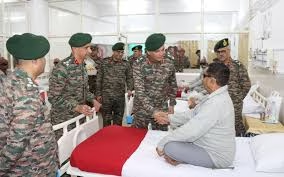
BHUJ, GUJARAT – In a significant boost to public health infrastructure along India’s western border, over 200 residents of the Kutch district—including military veterans and their dependents—have had their sight restored following a high-tech surgical eye camp conducted by the Indian Army.
The three-day intensive medical mission, held at the Military Hospital in Bhuj, provided life-changing surgeries and comprehensive screenings to more than 2,500 individuals from some of the most geographically isolated villages in the country. By bringing world-class ophthalmic care to the doorstep of the “Rann,” the initiative has bridged a critical gap in rural healthcare delivery.
Precision in the Desert: The Surgical Mission
The camp was not merely a screening exercise but a sophisticated surgical theater operation. Led by Brigadier Sanjay Kumar Mishra, a renowned ophthalmologist with a career record of over 100,000 successful procedures, a specialized team from the Army Hospital (Research and Referral) in New Delhi was flown in to execute the mission.
The primary focus of the surgical intervention was cataract extraction. In rural India, cataracts remain the leading cause of preventable blindness. For many in the Kutch region, the dual barriers of financial constraints and the vast distances to urban medical centers often mean that a treatable condition like a cataract leads to permanent disability.
“Such initiatives significantly improve the quality of life for veterans and local residents alike,” said Lt Gen Dhiraj Seth, General Officer Commanding-in-Chief, Southern Command, during his visit to the facility. He emphasized that the military’s role in these “strategically sensitive areas” extends beyond defense to ensuring the holistic well-being of the local population.
Key Statistics of the Outreach:
-
Total Screenings: 2,500+ patients
-
Successful Surgeries: 200+ (primarily advanced cataract procedures)
-
Duration: 3-day intensive camp
-
Demographics: Veterans, dependents, and civilians from remote border villages
The Public Health Context: Why Kutch?
Kutch is India’s largest district, characterized by rugged terrain and the vast salt marshes of the Rann. For residents of frontier villages, a “simple” medical appointment can involve a day-long journey.
According to the National Programme for Control of Blindness & Visual Impairment (NPCBVI), India needs to perform approximately 6.6 million cataract surgeries annually to clear the existing backlog. Remote regions like Kutch often fall behind due to a lack of specialized equipment and sub-specialist doctors.
“When we talk about ‘preventable blindness,’ we are talking about a massive economic and social burden,” says Dr. Aruna Deshmukh, a public health expert not involved in the camp. “Restoring the sight of an elder in a village doesn’t just help that individual; it frees up a younger family member from the role of a full-time caregiver, allowing them to return to work or school.”
Beyond Surgeries: Early Detection and Prevention
While the 200 surgeries captured the headlines, the screening of 2,500 others is equally vital for long-term community health. The specialized team utilized advanced diagnostic tools to identify:
-
Glaucoma: Often called the “silent thief of sight” because it has no symptoms until vision is lost.
-
Diabetic Retinopathy: A growing concern in India as diabetes rates rise in rural populations.
-
Refractive Errors: Providing prescriptions for corrective lenses that can immediately improve productivity and safety for farmers and artisans.
By detecting these conditions early, the Army medical team prevented future cases of irreversible blindness, demonstrating a proactive rather than reactive approach to healthcare.
“Service Before Self”: The Military-Civilian Bond
The camp operates under the Indian Army’s broader mandate of “Sadbhavana” (Goodwill) and the ethos of “Service Before Self.” For the veterans living in these regions, the camp represents a fulfillment of the “Ex-Servicemen Contributory Health Scheme” (ECHS) in areas where empaneled private hospitals are non-existent.
Lt Gen Seth noted that these programs foster “enduring bonds” with border communities. In regions where the military is the most visible arm of the state, providing high-quality medical care serves as a powerful tool for social integration and national security.
Challenges and Limitations
Despite the success of the camp, experts point out the limitations of “camp-based” healthcare. Sustaining the post-operative care is crucial.
-
Follow-up Care: Patients who undergo cataract surgery require specific post-operative drops and protection from dust—a challenge in the windy environment of Kutch.
-
Infrastructure Gaps: While the Army can provide “surgical strikes” on blindness, the long-term solution remains the permanent enhancement of local primary health centers (PHCs).
Medical observers suggest that the next step should involve training local health workers in basic ophthalmic screening to ensure that the “backlog” does not simply refill by next year.
What This Means for You
If you or a family member are living in a region with limited access to specialized care, initiatives like these highlight three critical health takeaways:
-
Don’t Ignore “Cloudy” Vision: Cataracts are treatable, and modern surgery is quick with a high success rate.
-
Regular Screenings: If you are over 40, an annual eye check-up can catch conditions like glaucoma before they cause permanent damage.
-
Utilize Public Initiatives: Keep abreast of government and military outreach programs, which often bring specialists from top-tier urban hospitals to rural areas.
As the team from the Army Hospital (R&R) returns to New Delhi, they leave behind 200 individuals who can now see the faces of their grandchildren and the horizon of their homeland with clarity once again.
References
- https://www.lokmattimes.com/health/over-200-patients-regain-vision-at-indian-army-eye-camp-in-kutch-1/#:~:text=camp%20in%20Kutch-,Bhuj%2C%20Feb%204%20Over%20200%20individuals%2C%20including%20veterans%2C%20their,Military%20Hospital%20in%20Bhuj%2C%20Gujarat.
Medical Disclaimer: This article is for informational purposes only and should not be considered medical advice. Always consult with qualified healthcare professionals before making any health-related decisions or changes to your treatment plan. The information presented here is based on current research and expert opinions, which may evolve as new evidence emerges.