 0
0
 0
0
February 17, 2026
ENFIELD, LONDON — Health authorities in North London are on high alert following a “fast-spreading” measles outbreak that has infected at least 34 children across several schools. The UK Health Security Agency (UKHSA) confirmed Monday that the cluster, which originated in the borough of Enfield in January, has now spread to at least seven schools and is showing signs of emerging in the neighboring borough of Haringey. With one in five infected children requiring hospitalization, officials are intensifying a regional vaccination drive to contain what has become the most significant spike in local cases this year.
A Concentrated Surge in the Capital
The 34 laboratory-confirmed cases in Enfield represent more than a third of the 96 total measles cases recorded across all of England in the first month of 2026. This concentration has prompted an urgent response from local government and the NHS.
“The outbreak has mainly affected children, and some have required additional care with a short stay in hospital,” said Enfield Councillor Alev Cazimoglu. “Vaccination is the most effective way to protect yourself and your family. We urge everyone who is not fully vaccinated to act now.”
The clinical reality of the outbreak is stark. Local general practitioners (GPs) reporting to the BBC noted that approximately 20% of the infected children in this cluster were admitted to the hospital for complications. Crucially, medical records indicate that every child hospitalized in this outbreak was either partially vaccinated or had received no doses of the Measles, Mumps, and Rubella (MMR) vaccine.
The “Gold Standard” of Contagion
Measles is not merely a “childhood rash”; it is one of the most contagious diseases known to medicine. To visualize its spread, epidemiologists often use the $R_0$ (basic reproduction number). While seasonal influenza typically has an $R_0$ of about 1.5, measles has an $R_0$ ranging from 12 to 18. This means a single infected person can, on average, spread the virus to up to 18 unprotected individuals.
The virus remains active and contagious in the air or on infected surfaces for up to two hours. Because it is respiratory, it spreads through coughing and sneezing long before the tell-tale rash appears.
Understanding the Symptoms
The progression of measles usually follows a specific timeline:
-
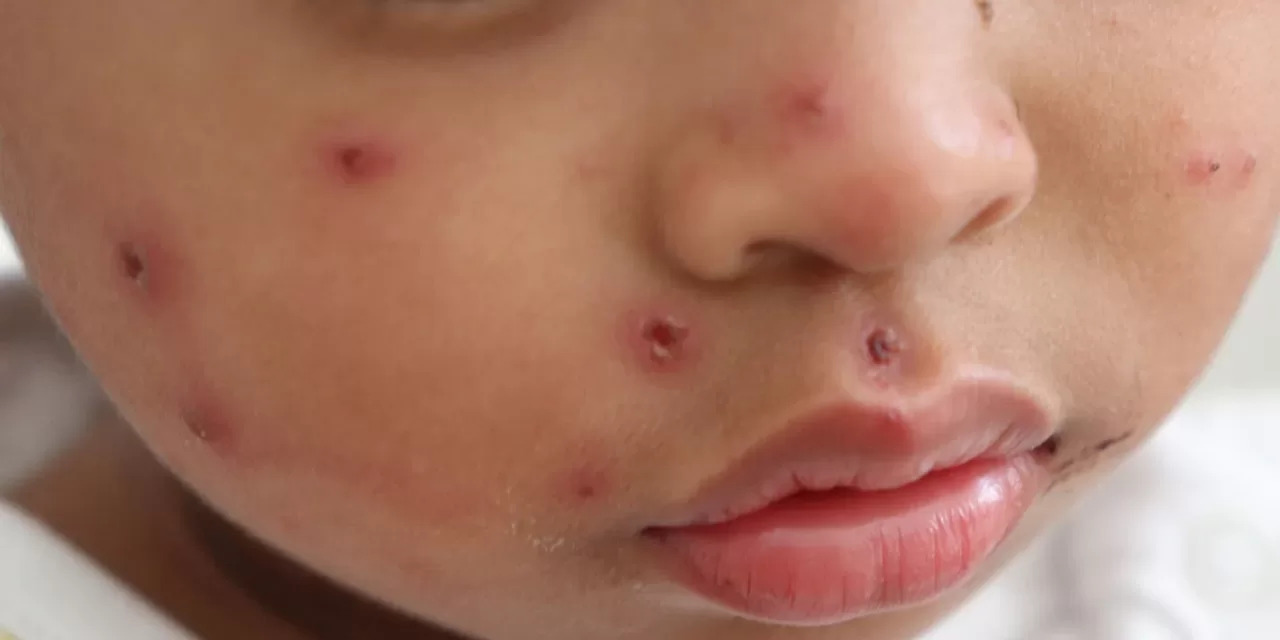
The Prodromal Phase: High fever, cough, coryza (runny nose), and conjunctivitis (red, watery eyes).
-
Koplik Spots: Small white spots may appear inside the cheeks 2-3 days after symptoms begin.
-
The Rash: A distinctive red, blotchy rash typically starts at the hairline and spreads downward to the neck, trunk, and extremities.
Expert Insights: Why Now?
The resurgence of measles in North London is viewed by experts as a symptom of “immunity gaps”—pockets of the population where vaccination rates have fallen below the 95% threshold required for “herd immunity.”
“Measles is a nasty illness for any child, but for some, it can lead to long-term complications and tragically death,” says Dr. Vanessa Saliba, a consultant epidemiologist at UKHSA. She noted that the current outbreak is “mostly affecting unvaccinated children under 10 in schools and nurseries.”
Dr. Helen Bedford, Professor of Child Health at University College London (UCL), who is not involved in the Enfield response, explains that the post-pandemic landscape has contributed to these gaps. “During the pandemic, some routine immunizations were delayed. While the NHS has worked hard to catch up, we are still seeing the consequences of those missed appointments. Measles is an expert at finding the unprotected.”
Public Health Implications and Complications
While most children recover, the risk of severe complications is a primary concern for public health officials. According to the World Health Organization (WHO), common but serious complications include:
-
Pneumonia: The most common cause of measles-related death in children.
-
Encephalitis: Swelling of the brain that can lead to permanent neurological damage.
-
Ear Infections: Which can result in permanent hearing loss.
Furthermore, measles causes a phenomenon known as “immune amnesia.” Research published in Science suggests the virus can “erase” the body’s immune memory of other diseases, leaving children vulnerable to other bacterial and viral infections for months or even years after recovering from measles.
The Push for “Catch-Up” Vaccination
In response to the Enfield surge, the NHS has launched a series of pop-up clinics and school-based vaccination drives. The MMR vaccine is being offered free of charge to any child or adult who has missed their two-dose regimen.
Health officials are particularly concerned about the upcoming Easter holiday travel. Measles is frequently imported and exported via international travel; an unvaccinated child traveling from a high-incidence area can easily trigger a new cluster in a different region.
The Safety Profile
Despite historical misinformation, the MMR vaccine remains one of the most scrutinized and proven medical interventions in history. Multiple large-scale studies, including a 2019 study of over 650,000 children published in the Annals of Internal Medicine, have reaffirmed that there is no link between the vaccine and autism. Side effects are generally mild, such as a sore arm or a low-grade fever.
Conclusion: A Call to Action
The North London outbreak serves as a potent reminder that “eliminated” diseases can return rapidly when vigilance wanes. For parents in Enfield, Haringey, and beyond, the message from the UKHSA is clear: check the “Red Book” (personal child health record) or contact your GP to verify vaccination status.
Two doses of the vaccine provide approximately 97% lifelong protection. In the face of a virus as aggressive as measles, that protection is the only definitive barrier between a minor outbreak and a public health crisis.
References
- https://www.daijiworld.com/news/newsDisplay?newsID=1306636
Medical Disclaimer: This article is for informational purposes only and should not be considered medical advice. Always consult with qualified healthcare professionals before making any health-related decisions or changes to your treatment plan. The information presented here is based on current research and expert opinions, which may evolve as new evidence emerges.