 0
0
 0
0
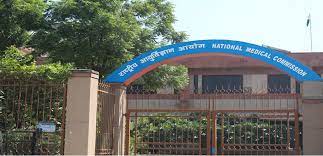
New Delhi: The National Medical Commission (NMC) has turned down a proposal from Shri Mata Vaishno Devi Institute of Medical Excellence (SMVDIME), Katra, to place 100 percent of its MBBS seats under the All India Quota (AIQ) to be filled through the Medical Counselling Committee (MCC), reaffirming the current 85:15 state-to-AIQ policy for MBBS admissions in India.
What NMC Decided And Why It Matters
An NMC official confirmed that the regulator declined SMVDIME’s request on the grounds that shifting all seats to AIQ would conflict with existing policy and cannot be done for a single college in isolation. The official stressed that any change in the AIQ–state quota balance requires consultation with all states and key stakeholders, given its impact on nationwide seat distribution and regional access to medical education.
Under prevailing rules, 85 percent of MBBS seats in a government or government-supported medical college are reserved for the state quota, while 15 percent are allocated to the AIQ and filled through centralized counselling by MCC. The NMC decision therefore keeps SMVDIME aligned with the broader national framework that aims to balance national mobility for students with state-level needs and domicile-based access.
Background: Protests, Demands And Admission Pattern
The institute’s request came amid a politically and communally charged controversy over the first batch of MBBS admissions at the Katra-based college. After the J&K Board of Professional Entrance Examinations (JKBOPEE) released a list of 50 candidates for SMVDIME, 42 were reported to be from Kashmir and eight from Jammu; of those who had joined by that stage, 36 students were from Kashmir and three from Jammu.
Local protests, supported by the BJP’s Udhampur MLA and organisations such as Vishwa Hindu Parishad (VHP) and Bajrang Dal, argued that a medical college established with donations to the Vaishno Devi shrine “should not be dominated” by students from the Muslim community and demanded that seats be reserved for Hindu students. However, since SMVDIME is not notified as a minority institution, the current regulations do not permit reserving seats explicitly for a religious group, and its MBBS seats must follow the usual state quota and AIQ norms.
How MBBS Seat-Sharing Works
For most government medical colleges across India, the standard pattern is:
-
85 percent of MBBS seats under the state quota, filled by the respective state counselling authority, often with domicile conditions.
-
15 percent of MBBS seats under the All India Quota, filled via MCC counselling and open to eligible NEET candidates from any state.
The AIQ was introduced to promote national integration and ensure that students can compete for a portion of seats outside their home states, while the larger state quota allows state governments to address local health workforce needs and preserve opportunities for residents. MCC manages AIQ counselling for MBBS and BDS seats contributed by states, central institutions, and certain deemed universities, subject to each state’s participation and contribution policy.
Jammu & Kashmir historically followed a distinct pattern, with state authorities filling 100 percent of seats in many institutions for several years; more recently, newer colleges such as SMVDIME have been integrated into the broader 85:15 framework under NMC oversight, though state admission rules and reservation categories still apply to the state quota portion.
Why SMVDIME Wanted 100% AIQ
According to officials, SMVDIME sought to place all its MBBS seats under the AIQ to “widen the pool” of candidates and potentially reduce local political tensions by relying solely on a national merit list for admission. In theory, shifting to 100 percent AIQ could:
-
Diversify the student body by attracting candidates from across India.
-
Reduce the direct role of state-level counselling in deciding who enters the college.
However, this would also mean that students from Jammu & Kashmir would compete entirely in the all-India pool, without a protected state quota in that institution, which could diminish access for local aspirants unless offset by other state-level seats.
Expert Views: Policy, Access And Equity
Health policy experts note that India’s seat-sharing structure attempts to strike a balance between mobility and equity. One medical education specialist from a central government teaching hospital, who was not involved in the matter, explained that a unilateral shift to 100 percent AIQ in one college can disrupt that balance. The concern is that if one high-profile institution is allowed to bypass the 85:15 rule, other colleges or states may demand similar exemptions, fragmenting a system designed for predictability and fairness.
Another education policy analyst pointed out that the current framework allows the NMC and states to plan seat creation and reservation around local health-system needs—for example, by prioritizing students who are more likely to serve in underserved districts or stay in the region. From this perspective, a blanket AIQ allocation could weaken tools that states use to manage their medical workforce pipelines.
Communal Angle Raises Ethical Concerns
The protests at SMVDIME, framed around the religious identity of admitted students, have raised alarm among public health ethicists and medical educators who emphasise that medical admissions should be guided by merit, transparent reservations, and constitutional principles—not religious majoritarian demands. Experts warn that communalising admission patterns risks undermining trust in the fairness of medical education and could set a precedent for similarly targeted campaigns elsewhere.
India’s reservation framework and seat-sharing rules already include multiple layers—such as Scheduled Caste, Scheduled Tribe, Other Backward Classes, Economically Weaker Sections, and disability quotas—which are designed to address historical and socio-economic inequities rather than religious identity per se. Public health specialists argue that adding religion-based claims outside the minority-institution framework would erode the secular character of medical education policy and could ultimately harm patient care by narrowing, rather than widening, the diversity of the medical workforce.
Implications For Students And Public Health
For MBBS aspirants, the immediate impact is that SMVDIME will continue to operate under the same 85 percent state quota and 15 percent AIQ structure as other government-linked colleges, with admissions routed through JKBOPEE for the state quota and MCC for AIQ seats, as applicable. Students from Jammu & Kashmir will still have substantial opportunities through the state quota, while candidates from other states can access the limited AIQ seats according to NEET ranking and reservation norms.
At a broader level, the NMC’s stance signals that any reconsideration of the AIQ–state quota formula will be treated as a systemic policy question rather than a case-specific adjustment. Public health planners caution that abrupt shifts toward 100 percent AIQ in select institutions could disproportionately reduce training capacity for local students in regions already struggling with doctor shortages, ultimately affecting availability of care in remote and underserved areas.
Limitations, Unanswered Questions And The Road Ahead
The current episode also highlights gaps in transparency and communication. While media reports and official comments outline the broad rationale, detailed written reasoning from NMC and SMVDIME has not yet been fully published in the public domain, making it harder for stakeholders to scrutinise the decision-making process. Questions also remain about how future seat expansions, new colleges, or changes in J&K’s admission architecture might alter the role of AIQ versus state quota in the region.
Policy analysts note that the controversy underscores the need for:
-
Clear public documentation of how AIQ and state quota allocations are determined for each new college.
-
Proactive communication with local communities to prevent misinformation and communal polarisation around admission outcomes.
-
Regular review of seat-sharing rules to ensure they align with evolving health workforce needs and constitutional mandates.
For now, the NMC decision reinforces the principle that structural changes in MBBS seat-sharing must be approached through broad-based consultation rather than piecemeal responses to local unrest.
Medical Disclaimer: This article is for informational purposes only and should not be considered medical advice. Always consult with qualified healthcare professionals before making any health-related decisions or changes to your treatment plan. The information presented here is based on current research and expert opinions, which may evolve as new evidence emerges.
References
- https://timesofindia.indiatimes.com/india/nmc-rejects-vaishno-devi-med-college-request-to-place-all-its-mbbs-seats-under-all-india-quota/articleshow/125602507.cms
- https://medicaldialogues.in/news/education/medical-colleges/nmc-rejects-vaishno-devi-medical-colleges-request-to-put-100-percent-mbbs-seats-under-aiq-159529