 0
0
 0
0
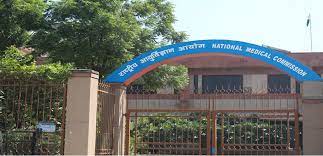
NEW DELHI — In a pivotal turn of events for India’s medical education landscape, the National Medical Commission (NMC) has agreed to revise its stringent guidelines regarding online class compensation for Foreign Medical Graduates (FMGs). The decision follows intensive protests and subsequent high-level dialogues held on March 16–17, 2026, between NMC officials and student representatives. The move signals a potential reprieve for thousands of doctors-in-training whose transition into the Indian healthcare workforce was stalled by regulatory requirements they termed “retrospective and unfair.”
The Core of the Conflict: Quality vs. Reality
The controversy ignited on March 5, 2026, when the NMC’s Undergraduate Medical Education Board (UGMEB) issued a clarification that fundamentally altered the path to licensure for FMGs. The board mandated that any MBBS coursework conducted online due to the COVID-19 pandemic or geopolitical disruptions (such as the war in Ukraine) must be compensated with equivalent physical, onsite clinical and theory training.
Crucially, the NMC initially stated that simple “compensation certificates” issued by foreign universities would no longer suffice. For the estimated 50,000 FMGs currently navigating the Indian system, this meant that months—or even years—of online learning during global lockdowns might have to be repeated in a physical setting before they could sit for the Foreign Medical Graduate Examination (FMGE), the mandatory licensing test for practicing in India.
Students Take to the Streets
The regulatory tightening sparked immediate backlash. On March 15, 2026, hundreds of medical graduates, organized by the All Foreign Medical Graduates Association (AFA) and the All India Medical Students Association (AIMSA), gathered outside the NMC headquarters in New Delhi.
Protesters argued that the March 5 notice unfairly penalized students for circumstances beyond their control. Many pointed out that they had already completed internships and passed rigorous exams abroad, only to be met with a “moving goalpost” upon returning home.
“This achievement is a result of our collective unity and commitment,” said Dr. Mohammad Momin Khan, Vice President of AIMSA, following the negotiations. “We thank the NMC for their positive consideration of the evidence we presented regarding prior practices of accepting online compensations.”
The Compromise: What Changes for FMGs?
While the NMC has yet to publish the formal revised notification, joint statements from the AFA and AIMSA-FMSW indicate a significant shift in the commission’s stance. Key expected changes include:
-
Acceptance of Compensation Letters: The NMC has reportedly committed to validating compensation letters from foreign institutions, reverting to a practice that was previously accepted.
-
Grandfathering Provisions: The revisions aim to protect students who were admitted before the Foreign Medical Graduate Licentiate (FMGL) Regulations were notified on November 18, 2021.
-
Clarification on “Physical” Training: The updated notice is expected to provide a more nuanced definition of what constitutes acceptable clinical exposure during the pandemic years.
Expert Analysis: Balancing Standards and Supply
The NMC’s dilemma reflects a broader global challenge: maintaining the integrity of medical training while acknowledging the reality of a post-pandemic world.
Dr. Rahul Sharma, a public health expert at AIIMS Delhi (not involved in the protests), suggests that flexibility is essential for public health. “The NMC’s intent is to uphold training standards equivalent to Indian MBBS graduates, where hands-on clinical exposure is non-negotiable,” Dr. Sharma noted. “However, punishing students for global disruptions risks exacerbating India’s doctor shortage, which remains a critical hurdle in rural healthcare.”
Current data from the Rural Health Statistics 2023 indicates that India still faces a shortage of approximately 600,000 doctors. With over 30,000 FMGs passing the FMGE annually, these graduates are a vital component of the primary care workforce.
However, some experts urge caution. Dr. Priya Mehta, an education consultant, warns that blanket exemptions could be problematic. “Accepting prior compensations without any verification could potentially dilute the quality of care,” she explained. “A balanced audit mechanism—one that recognizes the displacement of students from regions like Ukraine while ensuring basic clinical competency—would be the most equitable path forward.”
Public Health Implications
The resolution of this dispute has direct consequences for the Indian public. The World Health Organization (WHO) recommends a doctor-to-population ratio of 1:1,000. In many parts of India, particularly rural sectors, that ratio lags at 1:1,800.
By streamlining the path for FMGs to enter the workforce, the government can:
-
Reduce Wait Times: Increase the volume of practitioners available for primary screenings.
-
Support Rural Health: FMGs often fill positions in underserved areas where recruitment of domestic graduates remains difficult.
-
Address Mental Health: For the students themselves, the resolution mitigates the severe mental and financial strain caused by prolonged professional limbo.
Remaining Hurdles
Despite the optimism following the March 17 meeting, several questions remain. The NMC has not yet provided a definitive timeline for the release of the revised guidelines. Until the official document is signed, many students remain in a state of uncertainty regarding their eligibility for the upcoming FMGE sessions.
Furthermore, critics of the original policy argue that the NMC must improve its communication strategy to avoid “policy-by-surprise,” ensuring that future regulations are prospective rather than retrospective.
References
-
Saha, A. (2026, March 17). FMGs Claim Victory as NMC Agrees to Revise FMGE Guidelines. Medical Dialogues. [https://medicaldialogues.in/news/education/study-abroad/fmgs-claim-victory-as-nmc-agrees-to-revise-fmge-guidelines-following-protest-over-online-class-compensation-166698]
Medical Disclaimer: This article is for informational purposes only and should not be considered medical advice. Always consult with qualified healthcare professionals before making any health-related decisions or changes to your treatment plan. The information presented here is based on current research and expert opinions, which may evolve as new evidence emerges.