 0
0
 0
0
Published: March 17, 2026
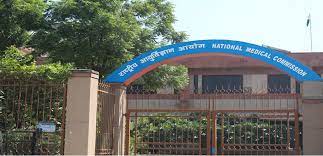
NEW DELHI — In an unprecedented crackdown on financial opacity within medical education, the National Medical Commission (NMC) has imposed a staggering penalty of ₹1 crore each on seven medical colleges across India. The enforcement action, announced this week, follows the institutions’ failure to disclose mandatory stipend details for MBBS interns and postgraduate (PG) residents. This move signals a definitive shift in regulatory oversight, moving from intermittent warnings to severe financial sanctions to ensure that the “backbone” of India’s healthcare system—its trainee doctors—are paid fairly and transparently.
The Crackdown: Why the NMC Acted Now
The penalties were levied after the seven institutions ignored multiple deadlines to furnish data regarding the remuneration of their medical trainees. Under the National Medical Commission Act, 2019, the regulator has the authority to monitor whether colleges are adhering to the Compulsory Rotating Medical Internship (CRMI) Regulations, 2021, and the Postgraduate Medical Education Regulations (PGMER).
The defaulting colleges are spread across Karnataka, Jharkhand, Rajasthan, Andhra Pradesh, Madhya Pradesh, Uttar Pradesh, and Haryana. Notably, the list includes the prominent government-run Pt B.D. Sharma Post Graduate Institute of Medical Sciences (PGIMS) in Rohtak. While most institutions have remained silent, PGIMS Rohtak has indicated it may challenge the order, asserting that it had complied with the digital upload requirements.
A Systemic Issue: The “Shadow” Labor of Trainees
At the heart of this regulatory battle is the lived experience of thousands of junior doctors. Medical interns and residents are not merely students; they provide essential clinical services, often working 80 to 100 hours a week, handling emergency rooms, and managing bedside care.
“Stipends are not a grant or a favor; they are a livelihood,” says Dr. Arpit Sharma, a health policy researcher not involved in the NMC proceedings. “When a college refuses to disclose what they pay, it often masks a reality where students are either underpaid compared to government standards or forced to sign ‘ghost’ receipts for money they never fully receive.”
Current data suggests a wide disparity in pay across the country:
-
Central Institutions (e.g., AIIMS): Interns typically earn approximately ₹17,900 per month, while Junior Residents can earn upwards of ₹64,000.
-
State Variations: In Assam, stipends can reach ₹30,000, while in Karnataka, they hover around ₹19,975.
-
The Conflict: Private and deemed universities are legally required to match the stipend rates of government colleges in their respective states, a rule that is frequently flouted.
The Legal and Public Health Context
The NMC’s aggressive stance follows intense scrutiny from the Supreme Court of India. In recent sessions, the Court criticized the “exploitation” of young doctors, noting that some private colleges charge exorbitant fees while denying students the very stipends meant to sustain them during their residency.
From a public health perspective, the implications are significant. Financial stress among residents is a documented contributor to physician burnout. When trainee doctors are preoccupied with basic survival costs—housing, food, and the high cost of medical exams—the quality of patient care can suffer.
“A doctor who is worried about how to pay their rent is a doctor who is at higher risk for clinical errors,” notes a representative from a national medical teachers’ association. “Transparency is the first step toward mental well-being for our frontline workers.”
Expert Perspectives: Is ₹1 Crore Enough?
While many celebrate the fines as a “wake-up call,” some advocates argue that for-profit private institutions might view a ₹1 crore fine as a mere “cost of doing business.”
“The penalty is a strong signal, but it must be followed by more stringent actions like the withdrawal of recognition or the suspension of new admissions for repeat offenders,” suggests a senior faculty member from a Delhi-based medical college. “Otherwise, the lack of transparency will simply be factored into the college’s annual budget.”
Limitations and Counterarguments
The situation is not without its complexities. The logistical challenge of auditing over 700 medical colleges nationwide is immense. Furthermore, the NMC’s “parity” rule—matching private stipends to state government rates—creates friction in states where government stipends are low, leading to a “race to the bottom” in some regions.
There is also the risk of “informal deductions.” Students have reported that even when a college officially “pays” the full stipend to a bank account, they are sometimes coerced into withdrawing a portion of it to return to the administration in cash—a practice that digital disclosure alone may not fully solve.
What This Means for Future Doctors
For prospective medical students, this enforcement action provides a new layer of protection. The NMC’s goal is to create a searchable, public database where students can verify stipend amounts before they commit to a five-year degree or a three-year residency.
As the legal challenges from the penalized colleges unfold, the medical community will be watching closely to see if the NMC maintains its “zero-tolerance” policy. For now, the message is clear: the days of keeping trainee compensation in the dark are coming to an end.
Medical Disclaimer
This article is for informational purposes only and should not be considered medical advice. Always consult with qualified healthcare professionals before making any health-related decisions or changes to your treatment plan. The information presented here is based on current research and expert opinions, which may evolve as new evidence emerges.
References
- https://medicaldialogues.in/health-news/nmc/nmc-slaps-rs-1-crore-penalty-each-on-7-medical-colleges-for-not-disclosing-mbbs-intern-pg-resident-stipend-details-166566