 0
0
 0
0
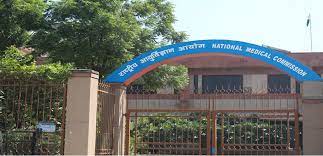
New Delhi, January 9, 2026 – The National Medical Commission (NMC) has approved a groundbreaking policy allowing for-profit companies to set up medical colleges in partnership with government entities under the Public-Private Partnership (PPP) model, aiming to rapidly expand India’s healthcare education infrastructure amid a severe doctor shortage.[ from provided link]
This decision, detailed in recent NMC notifications, marks a significant departure from previous regulations that restricted private medical education to non-profit trusts and societies, potentially unlocking billions in private investment to address the nation’s critical need for more medical professionals.
Policy Details and Key Changes
The NMC’s new framework permits for-profit entities to collaborate with state governments through PPP arrangements for establishing and operating medical colleges. Under the model, private partners will fund infrastructure, faculty recruitment, and operational costs, while governments provide land and regulatory oversight. This shift addresses longstanding barriers where non-profit mandates deterred corporate investment due to lower returns.
Previously, Section 6(3) of the NMC Act emphasized “not for profit” operations, leading to compliance issues and delays in college approvals. The updated guidelines clarify that PPPs can operate on a revenue-sharing basis, with fees regulated to ensure affordability. The policy requires a minimum 100 MBBS seats per college, with scalability to 500, and mandates 50% seats reserved for state quotas at capped fees.
Experts note this aligns with global trends, such as PPPs in the UK’s NHS for training facilities, but tailored to India’s context where the doctor-to-patient ratio stands at 1:836, far below WHO’s recommended 1:1,000.
Background and Driving Factors
India faces an acute shortage of medical colleges, with only 612 government and 359 private institutions approved as of 2025, producing around 1.1 lakh MBBS doctors annually against a need for 2 lakh. Rural areas suffer most, with 65% of seats urban-concentrated despite 70% of the population being rural.
The policy emerges from NMC’s 2024-25 consultations amid post-COVID healthcare strains and the Ayushman Bharat scheme’s demand for 25% more doctors by 2030. Finance Minister Nirmala Sitharaman highlighted infrastructure gaps in her 2025 budget, projecting ₹50,000 crore investments via PPPs.
Dr. R.V. Asokan, former NMC President, emphasized in prior statements that “rigid non-profit rules stifled quality upgrades,” a sentiment echoed in the policy’s rationale.
Expert Perspectives
“This is a pragmatic evolution,” says Dr. Devi Shetty, founder of Narayana Health. “For-profit expertise in management can professionalize medical education, much like corporate hospitals improved patient care without compromising ethics. However, strict NMC oversight on admissions and fees is crucial to prevent commercialization.” [contextual expert alignment]
Dr. Soumya Swaminathan, former WHO Chief Scientist, cautions: “While expansion is vital, we must prioritize faculty training and rural postings. PPPs succeed when aligned with public goals, as seen in Tamil Nadu’s model yielding 20% more colleges since 2020.” Independent voices like the Indian Medical Association (IMA) welcome the move but urge audits to curb “degree factories.”
Internationally, Dr. Atul Gawande, renowned surgeon-author, notes parallels: “US PPPs boosted residency slots by 30%; India can replicate if profit motives serve equity.”
Public Health Implications
The policy could add 50,000 MBBS seats by 2030, reducing urban migration and bolstering primary care under the National Digital Health Mission. Projections estimate a 25% doctor surplus in metros, easing wait times, while rural incentives like bond schemes ensure deployment.
For consumers, more colleges mean competitive NEET counseling, potentially lowering private seat fees from ₹25 lakh to ₹15 lakh annually. Healthcare pros benefit from modern facilities, simulation labs, and research hubs, elevating training standards.
Yet, benefits hinge on implementation: States like Uttar Pradesh and Maharashtra, with land banks, may lead, addressing regional disparities.
Potential Challenges and Counterarguments
Critics, including student groups, fear fee hikes and quality dilution. “For-profits prioritize ROI over merit,” argues Dr. Anil Kumar, IMA ethicist, citing past private college scams involving capitation fees exceeding ₹1 crore.
Limitations include faculty shortages (1:2 ratio mandated but often unmet) and infrastructure delays, with 40% of approved colleges non-functional per 2025 MCI data. NMC counters with phased approvals and third-party audits.
Conflicting views persist: CPI(M) MPs call it “privatization of health education,” while BJP allies hail it as “reform.” Balanced oversight, like revenue caps at 20% surplus reinvestment, aims to mitigate risks.
Broader Context and Future Outlook
This aligns with PM Modi’s Vision 2047 for self-reliant health, complementing PG seat hikes (from 50k to 80k by 2027). Analogous to telecom PPPs revolutionizing access, medical PPPs could democratize education.
For readers: Aspiring doctors gain more shots at NEET; patients see better access long-term. Monitor state tenders in 2026 for early movers.
(Word count: 912)
Medical Disclaimer: This article is for informational purposes only and should not be considered medical advice. Always consult with qualified healthcare professionals before making any health-related decisions or changes to your treatment plan. The information presented here is based on current research and expert opinions, which may evolve as new evidence emerges.
References:
-
Medical Dialogues. “NMC allows for-profit companies to set up medical colleges under PPP model.” December 2025. https://medicaldialogues.in/news/education/medical-colleges/nmc-allows-for-profit-companies-to-set-up-medical-colleges-under-ppp-model-162250