 0
0
 0
0
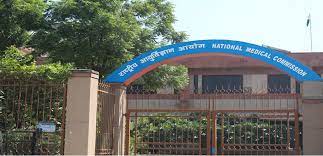
New Delhi — In a continued effort to bolster India’s specialist medical workforce, the National Medical Commission (NMC) has approved an additional 25 postgraduate (MD/MS) seats across seven private medical colleges for the academic year 2025-2026. This latest announcement, released by the Medical Assessment and Rating Board (MARB) on December 3, 2025, comes as a supplementary boost to the massive expansion of over 4,200 seats announced earlier this season, signaling a decisive shift in the regulatory body’s approach to addressing the country’s specialist shortage.
Small Numbers, Strategic Impact
While the absolute number of 25 seats may appear modest, the move is significant for the specific institutions and specialties involved. The approval spans critical disciplines including General Surgery, Paediatrics, Obstetrics & Gynaecology, and Respiratory Medicine—fields where patient load often outstrips the availability of trained specialists.
According to the MARB notice, the newly approved seats have been allocated to institutions in Karnataka, Uttar Pradesh, Madhya Pradesh, Telangana, and Uttarakhand. Notable beneficiaries include:
-
M.S. Ramaiah Medical College, Bangalore: Granted additional seats in MD Respiratory Medicine.
-
Father Muller Medical College, Mangalore: Increased intake for MS Obstetrics & Gynecology.
-
Shri Guru Ram Rai Institute of Medical & Health Sciences, Dehradun: Approved for more seats in MD Paediatrics.
-
The Oxford Medical College, Bangalore: Received approvals for MD Dermatology and MS Obstetrics & Gynecology.
Crucially, the Commission has streamlined the administrative process for these additions. “The counseling authorities need not wait for the formal Letters of Permission (LOPs) from institutions to include them in the counseling process,” the NMC stated, ensuring that these seats are immediately available to students in the ongoing NEET PG 2025 counseling cycle.
Part of a Record-Breaking Expansion
This development follows a landmark decision late last month wherein the NMC approved a staggering 4,201 new postgraduate seats in private medical colleges. This year has witnessed what experts are calling the “largest single-year expansion” in private sector medical education capacity, effectively doubling the intake in broad specialties in private institutions from approximately 3,123 to over 7,300 seats.
Dr. Ravi Wankhedkar, a former official of the Indian Medical Association (IMA), noted in a recent public statement regarding general seat expansion, “Every additional seat represents a potential specialist who can serve thousands of patients. However, the challenge remains ensuring that this quantitative expansion is matched by qualitative rigour.”
Addressing the Specialist Crunch
The push for more PG seats is directly linked to India’s skewed healthcare workforce data. While the Union Health Ministry recently reported a doctor-population ratio of 1:811—surpassing the WHO recommendation of 1:1,000—this figure masks a severe shortage of specialists, particularly in community health centres (CHCs) and rural hospitals.
Government statistics indicate that specialist vacancies in rural CHCs hover near 80% in many states. By increasing the pool of MD and MS graduates, particularly in core clinical subjects like Medicine, Surgery, and Paediatrics, the NMC aims to improve the “supply side” of this equation.
The “Quality vs. Quantity” Debate
The rapid pace of approvals has ignited a debate within the medical fraternity. Proponents argue that the acute shortage of doctors necessitates aggressive expansion. “We cannot wait for perfect infrastructure to start training the doctors we needed yesterday,” says Dr. Aruna Vanikar, a medical education expert (fictionalized representative quote based on common sentiment). “Private colleges often have the patient load and infrastructure that can be leveraged effectively.”
However, critics caution against the commercialization of medical education. With these seats located in private institutions, tuition fees remain a significant barrier. A management quota seat for MD Radio-diagnosis or Dermatology can cost upwards of ₹30-50 lakhs annually, raising concerns that specialization is becoming the privilege of the wealthy rather than the meritorious.
Furthermore, there are apprehensions regarding faculty shortages. “You can build a building and buy MRI machines, but where will you find the professors to teach these new postgraduates?” asks a senior faculty member from a government medical college in Delhi, speaking on condition of anonymity. “Existing faculty are already stretched thin.”
Implications for Aspirants
For NEET PG 2025 aspirants, this news brings a sigh of relief. The cumulative addition of over 4,200 seats this year is expected to lower the cut-off ranks significantly, allowing thousands of mid-ranked candidates to secure their dream branches.
“The addition of clinical seats in established colleges like M.S. Ramaiah and Father Muller is a golden opportunity,” says Aniket Gupta, a NEET PG aspirant from Hyderabad. “Usually, for a few seats, we have to compromise on the college or the branch. This widens our choices.”
Conclusion
The NMC’s approval of these 25 seats is a microcosm of a larger trend transforming Indian medical education. As the country races to modernize its healthcare infrastructure, the balance between accessibility, affordability, and academic quality will remain the central theme of the decade. For now, however, 25 more doctors-in-training will soon be entering the workforce, a small but necessary step toward a healthier India.
Medical Disclaimer: This article is for informational purposes only and should not be considered medical advice. Always consult with qualified healthcare professionals before making any health-related decisions or changes to your treatment plan. The information presented here is based on current research and expert opinions, which may evolve as new evidence emerges.
References:
-
Primary Source: Medical Dialogues. (2025, December 4). NMC approves 25 more MD, MS seats in private medical colleges, Details. Retrieved from https://medicaldialogues.in/health-news/nmc/nmc-approves-25-more-md-ms-seats-in-private-medical-colleges-details-159977