 0
0
 0
0
December 8, 2025
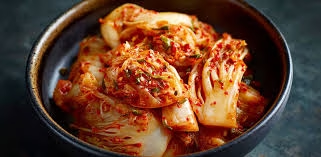
SEOUL — For centuries, kimchi has been a staple of Korean cuisine, revered not just for its complex, spicy flavor but for its perceived health benefits. Now, a groundbreaking clinical study provides the first molecular evidence of how this fermented superfood actively recalibrates the human immune system.
Published recently in the npj Science of Food, the study conducted by the World Institute of Kimchi (WiKim) utilizes advanced genetic analysis to demonstrate that kimchi does not merely “boost” immunity in a vague sense. Instead, it acts as a “precision regulator,” simultaneously sharpening the body’s defense against pathogens while curbing the chronic inflammation often linked to modern lifestyles.
The Science Behind the Crunch
The 12-week clinical trial, funded by South Korea’s Ministry of Science and ICT, focused on overweight adults—a demographic often characterized by low-grade chronic inflammation. Researchers divided participants into three groups: one consuming a placebo, one eating naturally fermented kimchi, and a third consuming kimchi made with a specialized starter culture.
Using single-cell transcriptomics (scRNA-seq)—a cutting-edge technology that allows scientists to analyze gene expression at the individual cell level—the research team tracked changes in peripheral blood mononuclear cells (PBMCs).
The findings were distinct. Participants who consumed kimchi showed a marked enhancement in the function of antigen-presenting cells (APCs). These cells are the immune system’s sentinels; they detect foreign invaders like viruses or bacteria and signal the rest of the immune army to attack.
Simultaneously, the study observed a balancing effect on CD4+ T cells, which differentiated into both defense cells and regulatory cells. This dual action suggests kimchi helps the body mount a robust response to threats without spiraling into the excessive inflammation that characterizes autoimmune issues or severe allergic reactions.
“Our research has proven for the first time in the world that kimchi has two different simultaneous effects: activating defense cells and suppressing excessive response,” said Dr. Woo Jae Lee, the lead researcher at the World Institute of Kimchi.
Starter Culture vs. Natural Fermentation
While both types of kimchi provided benefits, the study highlighted a potential future for “functional” foods. Kimchi produced with a specific starter culture showed a more pronounced ability to strengthen antigen recognition than its naturally fermented counterpart. This suggests that the health benefits of fermented foods could be systematically enhanced through microbiological engineering.
Expert Perspectives and Public Health Implications
The study arrives as global interest in fermented foods reaches an all-time high, with the market projected to exceed $1 trillion by 2032. However, experts caution that understanding the mechanism is key to safe consumption.
“We often hear that 70% of our immune system resides in the gut, but seeing the specific modulation of T-cells gives us a concrete mechanism of action,” says Dr. Khushma Shah, a clinical dietitian not involved in the study. “The ability of a food to act as a regulator—damping down bad inflammation while boosting virus-fighting capability—is the ‘holy grail’ of immune health.”
However, nutritionists also emphasize balance. “While these findings are promising, kimchi is traditionally high in sodium,” notes Dr. Shah. “For individuals with hypertension or salt sensitivity, the benefits must be weighed against sodium intake. Moderation remains critical.”
Limitations and Future Research
While the use of single-cell analysis offers unprecedented detail, the study has limitations. The sample size was relatively small, with roughly 13 participants per group, and the focus was on overweight adults. Further research is needed to determine if these “precision regulatory” effects apply equally to the general population or those with specific autoimmune conditions.
Additionally, the study distinguishes between “natural” and “starter” fermentation, a variable that consumers cannot always control when purchasing commercial brands.
What This Means for You
For the average consumer, this research validates the inclusion of fermented foods in a balanced diet, particularly during flu season.
-
Be Consistent: The study tracked changes over 12 weeks, suggesting that sporadic consumption may not yield the same immune-regulating benefits as a daily habit.
-
Check the Label: As starter cultures prove more effective, future products may explicitly label the bacterial strains used.
-
Watch the Salt: Consider lower-sodium varieties or consume kimchi as a side dish rather than a main course to mitigate sodium intake.
“We plan to expand international research on kimchi and lactic acid bacteria in relation to immune and metabolic health in the future,” Dr. Lee added, signaling that this study is just the first step in decoding the complex relationship between our diet and our defenses.
Medical Disclaimer
Medical Disclaimer: This article is for informational purposes only and should not be considered medical advice. Always consult with qualified healthcare professionals before making any health-related decisions or changes to your treatment plan. The information presented here is based on current research and expert opinions, which may evolve as new evidence emerges.
References
Study Citation:
-
Lee, W., Moon, H., Choi, H., et al. (2025). “Single-cell RNA sequencing reveals that kimchi dietary intervention modulates human antigen-presenting and CD4⁺ T cells.” npj Science of Food. DOI: 10.1038/s41538-025-00593-7. Published November 17, 2025.